



 18d $6,360 China, End to End
 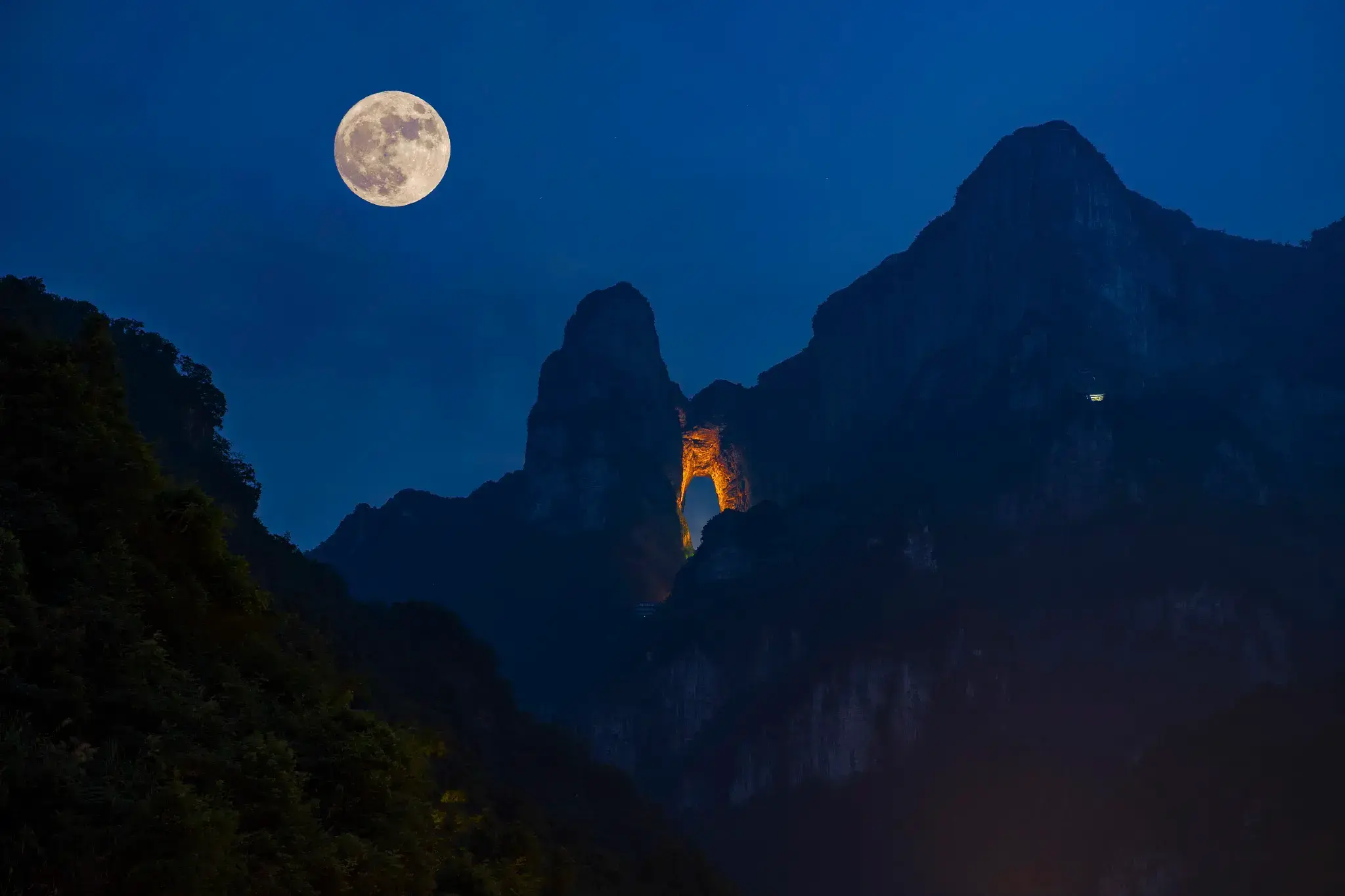 5d $1,430 Above the Pillars, Then Below
 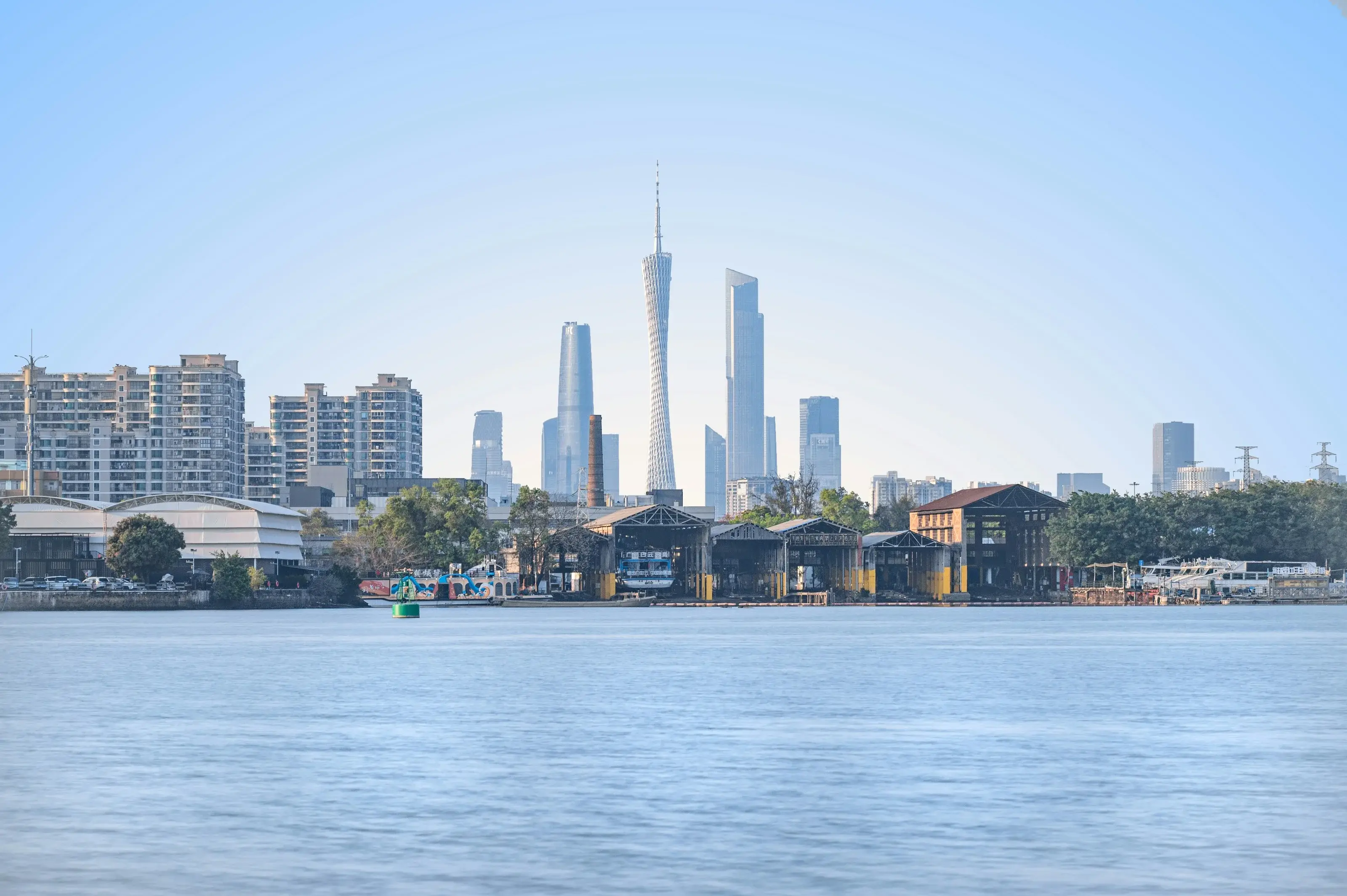 3d $840 After the Last Booth
 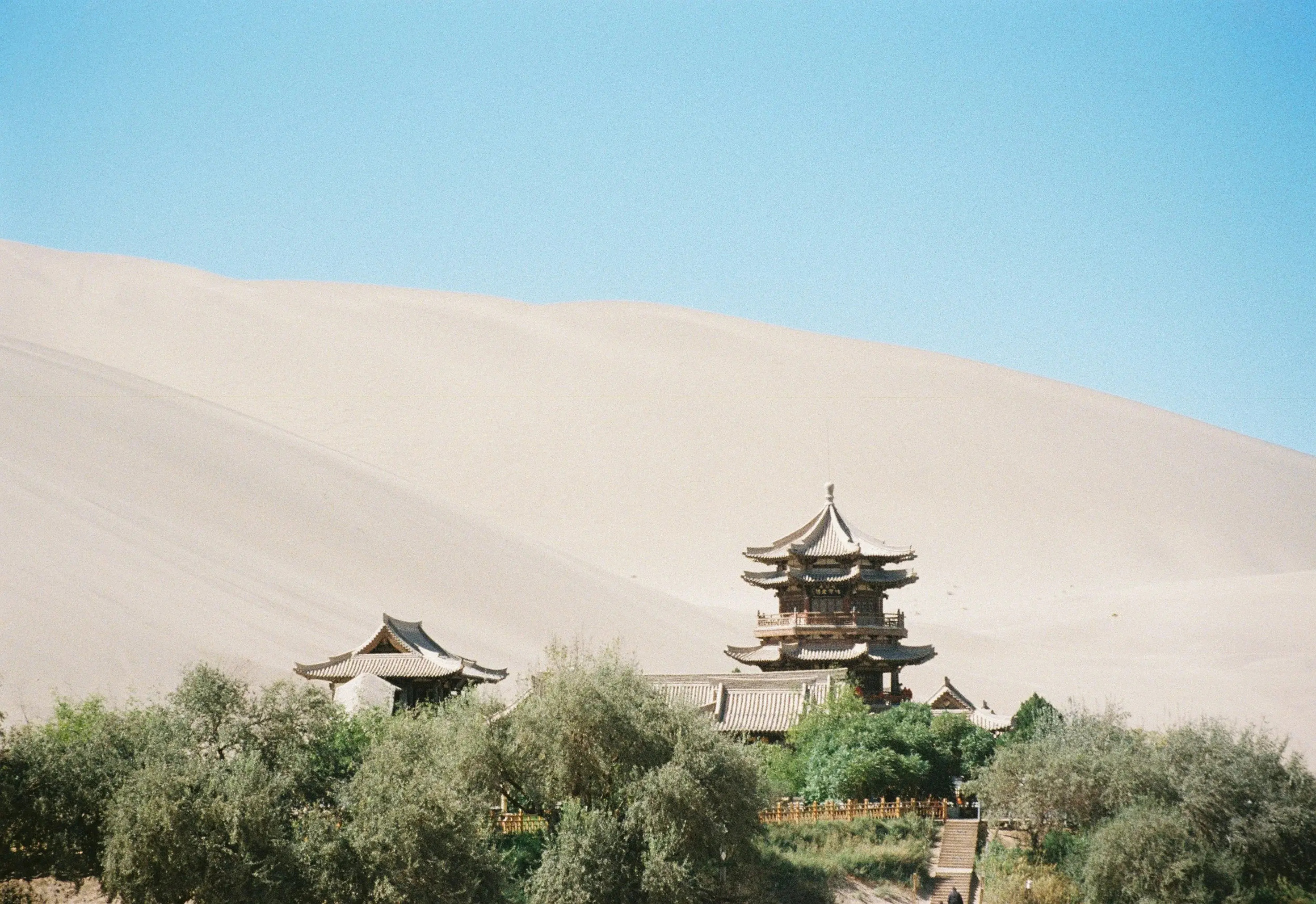 13d $3,500 All the Way West
 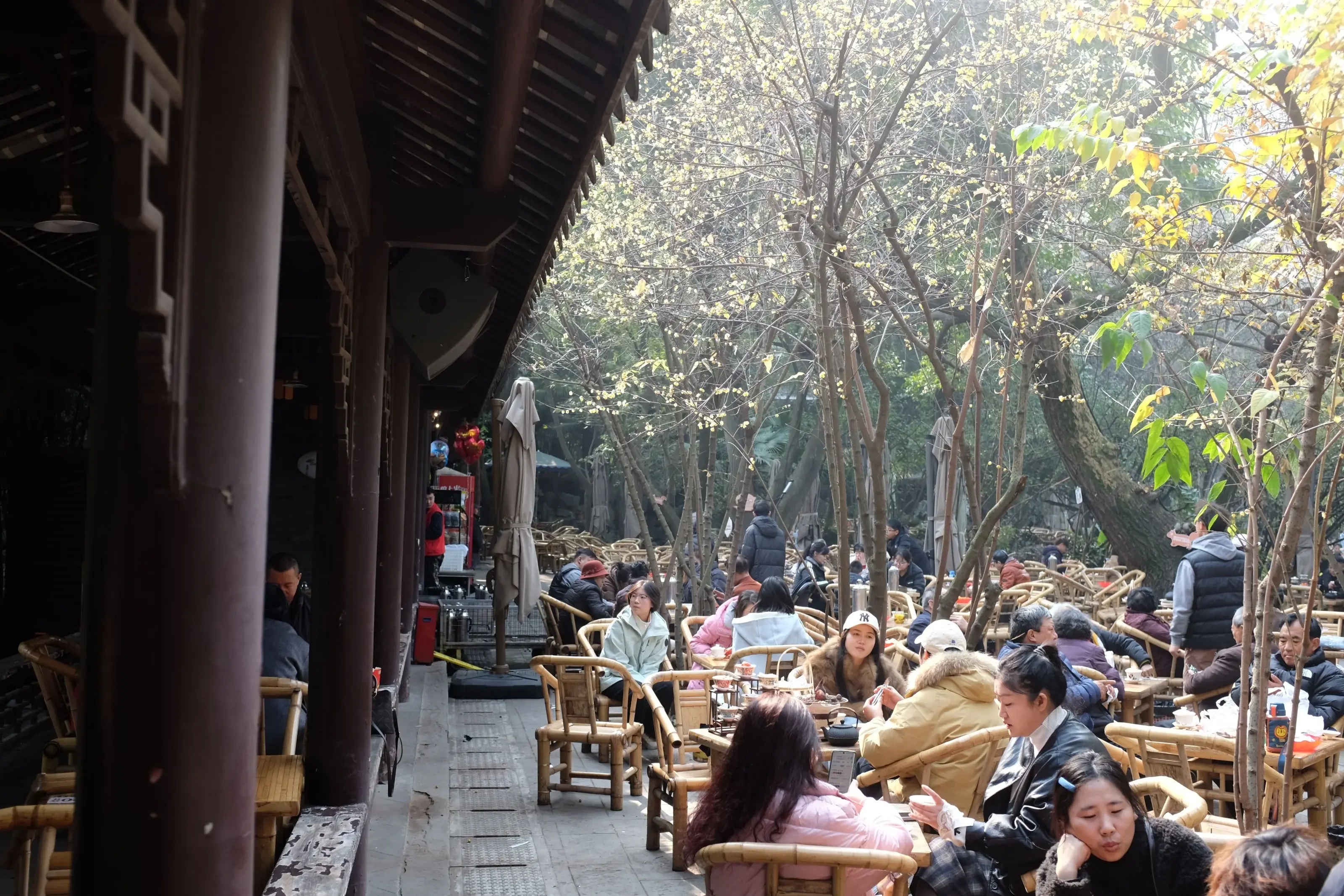 12d $4,060 Axis to Kitchen Table
What Is the Mid-Autumn Festival — and When Is It in 2026? A Traveler's Guide to Mooncakes, Moon-Viewing and Where to See It in China
The Mid-Autumn Festival is China's harvest-moon holiday — a night for family reunion, moon-viewing, and mooncakes, held on the 15th day of the 8th lunar month. In 2026 it falls on Friday, September 25, with a three-day public holiday from September 25 to 27. That is the answer most travelers are looking for. This guide gives you the rest.
We're a travel company, not a mooncake seller or a mythology site, so we're going to skip the long retelling of the Chang'e legend that every other page leads with and spend the space on what actually helps you: what the public holiday means on the ground (what closes, what gets crowded), where in China you can genuinely walk into the festival, and the mooncakes decoded so you know what you're buying. LyrikTrip plans private, family-focused trips through China, so these are the questions our travelers actually ask us in the weeks before they fly.
Think of this as the page for someone deciding whether to book late September — and, if they do, which city to spend the festival night in.
Key Takeaways
- Mid-Autumn Festival 2026 is Friday, September 25, with a mainland-China public holiday of September 25–27 (three days). - A Chinese public holiday does not mean things close. Attractions, restaurants, and shops all stay open and get busier; it's banks and government offices that shut. This catches most first-time visitors out. - It's a short holiday, not a week-long travel crush like Chinese New Year or National Day — busy for a long weekend, but rewarding and atmospheric if you book transport and hotels early. - The best festival nights are in the south. Hong Kong's Tai Hang fire dragon and Guangzhou's lantern fair are the two most distinctive Mid-Autumn spectacles in the country — and they sit an hour apart by train. - Not all mooncakes are the same. The salted egg yolk inside a Cantonese mooncake is meant to be the "full moon," not a mistake — see the decoder table below before you buy. - The Lantern Festival is a different holiday (元宵节, in February–March), even though lanterns appear at both. - In 2026 the festival sits three working days before National Day (Oct 1–7), so if your trip spans both, plan around the bigger holiday.
When Is the Mid-Autumn Festival in 2026? (Dates and Holiday)
In 2026, the Mid-Autumn Festival falls on Friday, September 25. Mainland China observes a three-day public holiday from September 25 to 27. TravelChinaGuide puts the 2026 festival on September 25 with the holiday running September 25–27 (checked 2026-07-04), and ChinaHighlights and ChinaTravel.com give the same dates. We still recommend re-checking the official State Council holiday-arrangement notice before you lock in travel, as the exact holiday schedule and any make-up workdays are set year by year.
The date moves every year because it tracks the lunar calendar. The festival is always the 15th day of the 8th lunar month — the night of the year's fullest, brightest moon — which translates to anywhere from mid-September to early October on the Western calendar. That's why it's September 25 in 2026 but a different date each year.
| 2026 | Notes | |
|---|---|---|
| Festival day | Friday, September 25, 2026 | 15th day, 8th lunar month |
| Public holiday (mainland) | September 25–27, 2026 | 3 days (verify against the official calendar before booking) |
| Hong Kong public holiday | The day following the festival | Hong Kong traditionally takes the day after, not the day itself — verify the 2026 gazette |
| Next holiday | National Day, October 1–7 | Only three working days later |
Is the Mid-Autumn Festival a Public Holiday in China? (What Closes, What Gets Crowded)
Yes — Mid-Autumn is one of mainland China's statutory public holidays, and in 2026 it runs Friday September 25 through Sunday September 27. But a Chinese public holiday behaves almost the opposite of a Western one: shops, restaurants, and tourist sights all stay open and get busier, while banks and government offices close. If you're picturing a Thanksgiving-style shutdown where you can't find dinner, relax — the problem during a Chinese holiday is crowds, never access.
This is the single most misread thing about traveling in China during a holiday, so here it is plainly:
| What | Status, Sep 25–27 | What it means for you |
|---|---|---|
| Attractions, museums, parks | Open — and noticeably busier | Book timed entry wherever it's offered; arrive at opening, not mid-morning |
| Restaurants, shops, malls | Open, often on extended holiday hours | No food-access problem — but see the reunion-dinner note below |
| Banks, government offices, visa and admin services | Closed | Do anything administrative before the 25th or after the 27th |
| Domestic trains and flights | Running, but tight | Book as early as the sales window allows; the 25th and the 27th are the worst days to move — see our China train travel guide |
| Intercity roads | Heavy on the first and last holiday day | If you can, travel on the 26th instead of the 25th or 27th |
Two practical wrinkles worth planning around:
The reunion dinner books out restaurants on festival night. Mid-Autumn is fundamentally a family dinner — the Chinese equivalent of Thanksgiving evening. On the night of the 25th, good restaurants in any city fill with multi-generation family tables, and many run set holiday menus. If you want to eat somewhere specific that night, reserve well ahead; if you'd rather avoid the crush, that's the night to be out watching lanterns and eating street food instead.
The three-day holiday is built by adjustment, not by three statutory days. Mid-Autumn carries one statutory day off, and the surrounding weekend and any make-up workdays (调休) are arranged annually by the State Council. That's why the length can shift between years, and why we keep telling you to verify the official notice — in some years the "bridge" creates a make-up workday on an adjacent weekend.
And then there's the timing trap specific to 2026: the holiday ends Sunday September 27, and National Day's Golden Week starts Thursday October 1. That leaves only three working days (September 28–30) between China's two autumn holidays. If your trip spans that gap, you are effectively traveling inside a two-week holiday corridor, and you should plan transport at Golden Week intensity rather than long-weekend intensity.
Where Can You See the Mid-Autumn Festival in China?
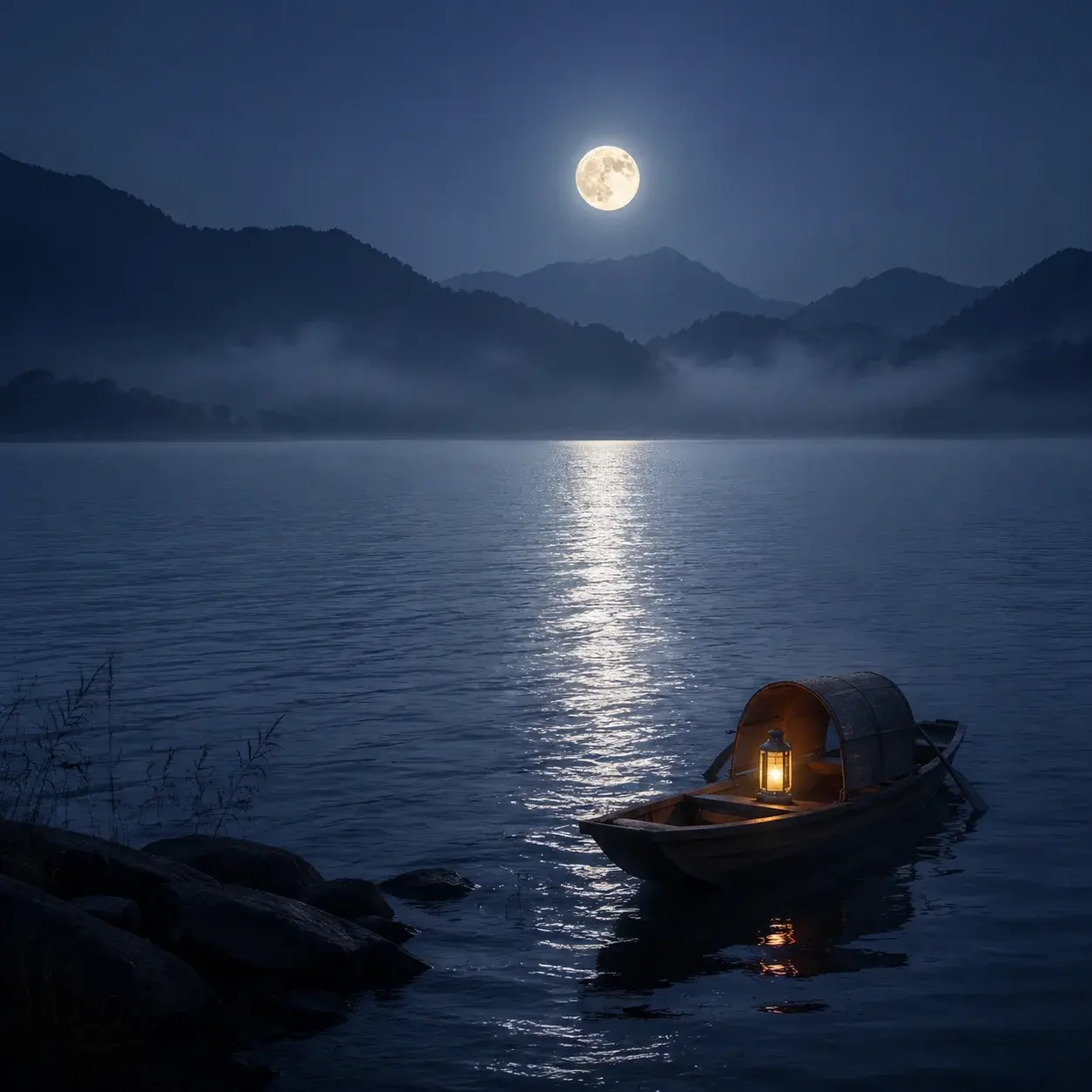
For sheer spectacle, go south: Hong Kong's Tai Hang fire dragon dance and Guangzhou's Cultural Park lantern fair are the two most distinctive Mid-Autumn events in the country. For the quiet, actual moon-viewing the festival is named for, go to water and gardens instead — a lake, a classical garden, or an ancient village. Those are two genuinely different trips, and the choice matters more than the city does.
Festival programming is set year by year and most organisers had not published their 2026 schedules at the time of writing (July 2026), so treat every specific date below as indicative and confirm with the organiser before you build a night around it.
| City | In one line | The signature event | Best for |
|---|---|---|---|
| Hong Kong | Most photogenic, most international | Tai Hang fire dragon dance + Victoria Park lantern carnival | First-timers who want spectacle |
| Guangzhou | The most authentically Lingnan family festival | Cultural Park Mid-Autumn lantern fair | Travelers who want tradition, not a show |
| Shanghai | Moon-viewing under a modern skyline | Bund full moon + Huangpu river cruise; Yu Garden light show | Couples, city-first itineraries |
| Shenzhen | Modern China, and the Bay Area hub | "Iron flower" (打铁花) molten-metal performance at OCT East | Families wanting a wow moment |
| Beijing | Imperial moon-viewing pedigree | Beihai Park, plus full moon over the Great Wall | History-led trips |
Hong Kong: the fire dragon, and the one unmissable Mid-Autumn sight
If you only see one Mid-Autumn event in your life, make it the Tai Hang Fire Dragon Dance. A 67-metre (220-foot) dragon built on a straw frame and studded with something like 72,000 burning incense sticks is carried through the narrow lanes of Tai Hang by a team of around 300 performers, for three consecutive nights around the festival. The tradition has run for well over a century, it is a listed item of Hong Kong's intangible cultural heritage, and it is the only Mid-Autumn event in the country that combines heritage, fire, and night-time drama in one place. Discover Hong Kong publishes the schedule each year; in 2025 it ran three evenings from roughly 19:30, but the 2026 nights and times are still to be confirmed. Come early — the lanes fill, and the dragon passes a given point only once.
If you want the backstory first, the Tai Hang Fire Dragon Heritage Centre in the same district explains the dance and the neighbourhood's Hakka origins.
The easier, free companion is the Victoria Park Mid-Autumn lantern carnival, run by Hong Kong's Leisure and Cultural Services Department — giant lantern installations, Cantonese opera, a festival market, and lantern riddles. It's the low-effort family option: no tickets, no queueing in an alley, and a stroller can get through. Add the Lee Tung Avenue lantern corridor in Wan Chai and the themed displays outside the Tsim Sha Tsui Cultural Centre and you have three nights of lanterns within a few metro stops.
One planning note: Hong Kong is a separate immigration jurisdiction, and it traditionally observes the day after the festival as its public holiday rather than the day itself — so the crowd pattern differs from the mainland's. If Hong Kong is the anchor of your trip rather than a side visit, our Hong Kong family tour guide covers the city end to end.
Guangzhou: the most traditional Cantonese Mid-Autumn
Guangzhou is where the Cantonese mooncake in your gift box comes from — the double-yolk, white-lotus box most travelers picture is a Guangdong invention — and its Mid-Autumn feels like a family festival rather than a tourist event. The anchor is the Cultural Park Mid-Autumn lantern fair — southern China's signature lantern display, with giant lantern sets, a lighting ceremony, a schoolchildren's lantern-making competition, riddle games, and folk performances. In 2024 it ran across roughly ten days spanning the festival and into the National Day window; 2026 sessions are still to be confirmed.
Around it you'll still see the old Lingnan custom of shu zhongqiu (竖中秋), "raising the Mid-Autumn" — hoisting bright lanterns high on poles and rooftops so the whole lane glows — and the celebrated coloured-lantern craft of Foshan that supplies it, itself a recognised heritage skill; Hong Kong's own carnival regularly invites Foshan masters to demonstrate. Yuexiu Park, home to the city's Five Rams statue, adds an easy in-city lantern stroll. This is the city to choose if you'd rather join a festival than watch one.
Shanghai: the full moon over a modern skyline
Shanghai's Mid-Autumn angle is one nowhere else can offer: the year's fullest moon rising over the Bund's colonial waterfront and the Pudong skyline, ideally from a Huangpu river cruise "chasing the moon." It is the modern, metropolitan version of an ancient ritual, and it photographs like nothing else in China.
For a traditional evening instead, Zhujiajiao water town gives you bridges, canals, and a teahouse to watch the moon from, an hour from the city centre. Classical spots like Guyi Garden, Guilin Park, and Sheshan add open water and garden settings. Our Shanghai travel guide covers the city itself.
One clarification, because it trips people up constantly: Yu Garden's famous giant lantern festival is the Lantern Festival in the January–March window, not Mid-Autumn. Yu Garden does run a separate Mid-Autumn light-and-shadow installation in September (shanghai.gov.cn listed it across most of September in 2024; 2026 dates and any ticketing still to be confirmed) — a good evening, but not the huge new-year lantern spectacle you may have seen photos of. If those photos are what you're chasing, you want a different trip entirely.
Shenzhen: molten metal, and the Bay Area base
Shenzhen's standout is the "iron flower" (打铁花, dǎ tiě huā) performance at OCT East — a heritage craft in which performers strike molten iron into the air so it explodes into a canopy of sparks overhead. At night it is genuinely astonishing, and it reliably appears around the Mid-Autumn and National Day window (2026 sessions and ticketing still to be confirmed). The city's theme parks — Window of the World, Splendid China, Happy Valley — run seasonal festival programming too, and several parks set up old-style moon-viewing scenes with lanterns and hanfu dress-up, which children tend to love.
Shenzhen's real value, though, is positional: it's the hinge of the Greater Bay Area route below.
Beijing: imperial moon-viewing
Beijing's claim is historical depth. Beihai Park was where emperors and senior officials went to view the Mid-Autumn moon, and the lake still does the job — the moon doubled on the water, inside a former imperial garden. For something more dramatic, a full moon over the Great Wall is the most cinematic moon-viewing in the country, offered by some hotels and tour operators as an evening excursion. In the city, the CCTV Tower's revolving restaurant sells a moon-viewing dinner at 238 metres, and the Liangma River night cruise gives a low-effort riverside version. Build the rest of the stay with our Beijing travel guide.
And if you want the quiet version
Everything above is spectacle. The festival's own poetry is about gazing at the moon, and that is better served away from crowds:
| Where | Why go | Plan the destination |
|---|---|---|
| Erhai Lake, Dali (Yunnan) | Boat moon-viewing, moonlight spread across open water | Dali travel guide |
| West Lake, Hangzhou | "Three Ponds Mirroring the Moon" — candle-lit stone pagodas reflecting the full moon | Hangzhou / West Lake |
| Classical gardens near Suzhou | Lantern-lit garden evenings with opera and pingtan storytelling | Water towns near Shanghai |
| Xidi and Hongcun villages (near Huangshan) | Intimate village celebrations, fewer crowds, real local texture | Huangshan travel guide |
Our honest steer: big cities are for spectacle, small towns are for stillness. Families especially — a child holding a paper lantern in a quiet village square, hunting for the jade rabbit in the moon, is a far better night than being jostled in a crowd.
Can You See Mid-Autumn in Guangzhou, Shenzhen and Hong Kong on One Trip?
Yes — and it's the best-value Mid-Autumn itinerary in China, because the three cities sit inside a roughly one-hour high-speed-rail triangle and each does a completely different version of the same festival. Nobody planning around a single city gets this; it only works if you treat the Greater Bay Area as one destination.
The logic, in the order that makes sense:
| City | What you're there for | The feeling | |
|---|---|---|---|
| Night 1 | Guangzhou | Cultural Park lantern fair; Cantonese mooncakes at their source | Traditional, family, Lingnan |
| Night 2 | Shenzhen | "Iron flower" molten-metal performance at OCT East | Modern, spectacular |
| Night 3 | Hong Kong | Tai Hang fire dragon, then Victoria Park lanterns | Heritage, international, unforgettable |
Three caveats, because this is the part that needs real dates:
- The fire dragon traditionally runs the three nights around the festival, which is what anchors the sequence — but until Discover Hong Kong publishes the 2026 evenings, the order above is a template, not a booked itinerary. Build the rest around whichever nights the dragon actually runs. - Hong Kong is a separate immigration jurisdiction. Crossing from Shenzhen is routine but it is a border, with its own entry requirements — our China arrival and entry guide covers the mainland paperwork side. - The rail triangle is fast but the holiday is exactly when those trains are fullest. Book the Guangzhou–Shenzhen and Shenzhen–Hong Kong legs as soon as the sales window opens.
Is the Mid-Autumn Festival a Good Time to Visit China?
Yes — with caveats. Mid-Autumn is a short three-day holiday, not a week-long travel crush like Chinese New Year or National Day, so it's a rewarding, atmospheric time to visit as long as you book transport and hotels early and expect busy sights over the long weekend. No competitor answers this honestly, so here's the straight version: the truth sits between "don't come, it's chaos" and pretending nothing changes. It's long-weekend busy, not nationwide-migration paralyzed.
| Verdict | Detail | |
|---|---|---|
| ✅ The good | Peak atmosphere, pleasant weather, a real local moment | Lanterns, moon-viewing, and mooncakes everywhere; early autumn is comfortable; a genuine family holiday, not a tourist show |
| ⚠️ Watch out | Transport and top sights fill for three days | Domestic trains, flights, and headline attractions get crowded over the long weekend — book ahead |
| 🔴 Timing trap | 2026 sits three working days before National Day (Oct 1–7) | A trip spanning both is inside a two-week holiday corridor — plan at Golden Week intensity and verify the official schedule |
The single most important planning point: Mid-Autumn is not Chinese New Year and it's not National Day. Those are the week-long travel surges when hundreds of millions of people move at once. Mid-Autumn's three days behave more like a busy long weekend. It's worth coming for — just remember what sits right behind it in 2026.
What Is the Mid-Autumn Festival? (And Why the Moon?)
The Mid-Autumn Festival (中秋节, Zhōngqiū Jié) is a harvest-and-reunion holiday built around the year's fullest moon, which stands for completeness and family togetherness. That single idea explains almost everything about the night: a round, full moon symbolizes a whole, reunited family, so relatives travel home to sit together, share round mooncakes, and watch the moon rise. It's often described as China's answer to Thanksgiving.
The legend behind it, in brief: Chang'e, the moon goddess, is said to have swallowed an elixir of immortality and drifted up to live on the moon, where a jade rabbit keeps her company. People still point children toward the shadows on a full moon and tell them to look for the rabbit. That's genuinely as much mythology as most travelers need — the festival is felt through food and light far more than through the story.
It's worth knowing that Mid-Autumn is celebrated far beyond mainland China — across Hong Kong, Taiwan, and Chinese communities throughout Southeast Asia and the world, each with local twists.
Mooncakes Decoded: The Types Every Traveler Should Know (Mooncake Festival)
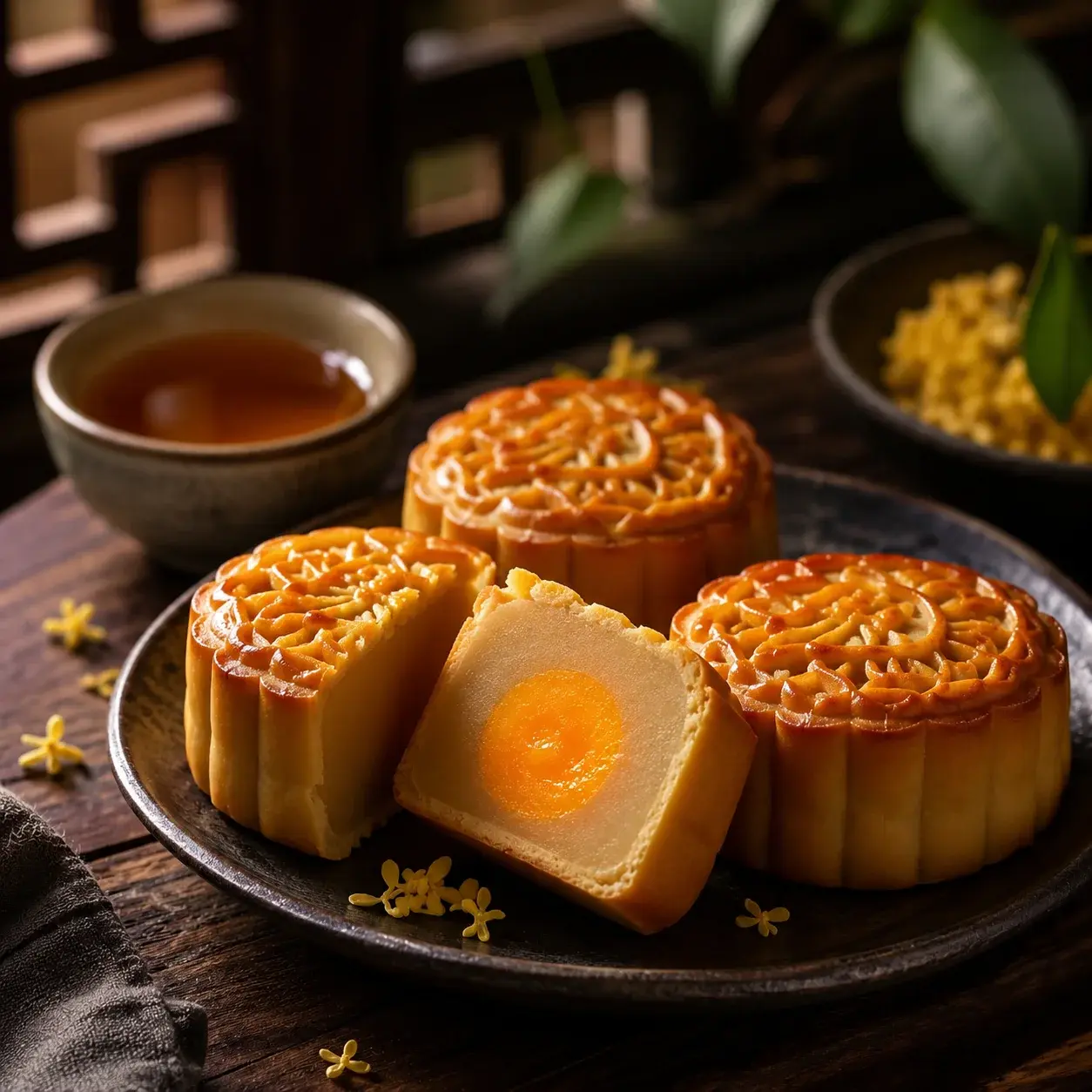
A mooncake is a dense, round pastry stamped with an auspicious design, and the fillings range from sweet lotus-seed paste to savory five-kernel to modern molten custard. Knowing the difference is the difference between a delightful gift and a confusing surprise — because the first time you bite into a Cantonese mooncake and find a whole salted egg yolk in the middle, you'll assume something went wrong. It didn't: that orange yolk is deliberately shaped to look like the full moon, the whole point of the night.
The Mooncake Festival, as it's often nicknamed, is really a food festival, and the styles below are regional traditions worth telling apart. Fillings and regional origins are confirmed by TravelChinaGuide and ChinaHighlights (both checked 2026-07-04); the taste notes and buying advice are ours.
| Mooncake type | What's inside | Sweet or savory | Where you'll find it | Traveler tip |
|---|---|---|---|---|
| Cantonese (广式) | Smooth lotus-seed or red-bean paste, often 1–2 salted egg yolks | Sweet (yolk adds savory) | Nationwide; the default gift box | The safe classic — the egg yolk is the "full moon" |
| Suzhou-style (苏式) | Flaky layered pastry; savory minced pork, or sweet rose/red-bean | Savory or sweet | Jiangsu, Suzhou, Shanghai | The warm pork version is surprisingly friendly to Western palates — like a flaky little meat pie |
| Five-kernel (五仁) | Mixed nuts and seeds — walnut, almond, sesame, melon seeds | Savory-nutty | Traditional, especially northern China | Polarizing even among locals; try a piece before buying a whole box |
| Snow-skin (冰皮) | No-bake chilled mochi-like skin, fruit or custard filling | Sweet, light | Hong Kong, modern bakeries | Kid-friendly and served cold; no salted egg to negotiate |
| Molten custard (流心) | Runny salted-egg-and-custard center | Rich, sweet-savory | Trendy premium brands | The "it" mooncake — best eaten fresh, sometimes warmed so the center flows |
| Yunnan ham (云腿) | Xuanwei ham with honey, lard, and sugar | Sweet-and-salty | Yunnan (easy to buy near Dali/Kunming) | A regional treat for anyone who loves a bacon-and-maple flavor |
| Ice-cream mooncake | Frozen ice cream in a chocolate shell | Sweet | Modern chains | A novelty, not a tradition — fun for kids, not a cultural moment |
So how do you choose? For a gift or a safe first taste, the Cantonese lotus-seed mooncake is the classic. Traveling with children? Steer toward snow-skin or a plain custard and skip the salted-egg and five-kernel varieties. Want to eat like a local? Hunt down a warm Suzhou-style pork mooncake. And the easiest place to buy any of them is a regular supermarket, where boxed sets appear from around August onward. Prices swing wildly between a plain supermarket box, a mid-range brand gift set, and a hotel or designer premium box, so we're not quoting figures here — treat any price you see as indicative and check locally.
How Do People Celebrate? (Moon-Viewing, Lanterns and Reunion)
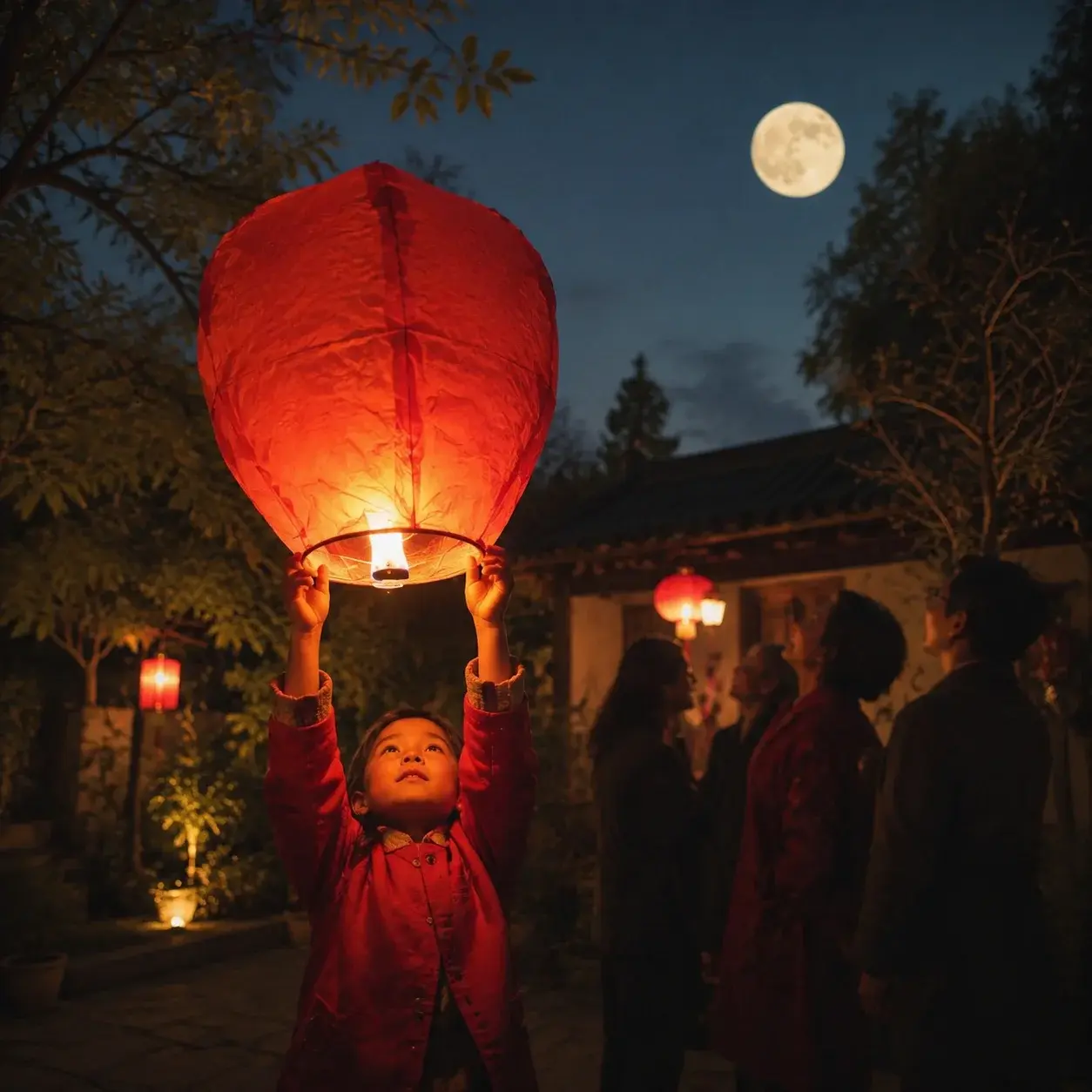
Three things anchor the night: a family reunion dinner, moon-viewing, and lanterns. Around those, you'll find lantern riddles, osmanthus wine and cakes scenting the autumn air, and regional flourishes like the fire-dragon dances of the south. Here's the quick version, and where a family fits into each.
| Tradition | What it is | For families and travelers |
|---|---|---|
| Reunion dinner | The whole family gathers for a meal; "roundness" is the theme | The reason everyone is traveling home — China's Thanksgiving moment, and why restaurants book out on festival night |
| Moon-viewing | Admiring the fullest moon of the year, ideally over water | Teach kids to spot the "jade rabbit" in the moon — the most magical minute of the night |
| Lanterns | Carrying, hanging, and lighting lanterns; solving lantern riddles | A child carrying a glowing lantern is the heart of the evening; the south adds fire-dragon dances |
| Osmanthus (桂花) | Osmanthus wine and cakes, the season's signature fragrance | That sweet scent in the air is the smell of Mid-Autumn — look for osmanthus-flavored treats |
For a family, the emotional center of the whole festival is small and simple: a child carrying a paper lantern through a lantern-lit garden, looking up to find the rabbit in the moon. You don't need a big spectacle for that — often the quieter the setting, the better it lands.
Mid-Autumn Lanterns vs. the Lantern Festival — Are They the Same?
No — they're two different festivals. Lanterns show up at both, which is exactly why travelers mix them up, but they fall on opposite ends of the year and mark different things. The Lantern Festival (元宵节, Yuánxiāo Jié) is the 15th day of the first lunar month (roughly February–March), and it marks the end of the Chinese New Year season. The Mid-Autumn Festival is the 15th of the eighth lunar month, in late September or early October.
| Mid-Autumn Festival | Lantern Festival | |
|---|---|---|
| Chinese name | 中秋节 (Zhōngqiū Jié) | 元宵节 (Yuánxiāo Jié) |
| Lunar date | 8th month, 15th day | 1st month, 15th day |
| Western calendar | Late Sep–early Oct (2026 = Sep 25) | February–March |
| Signature | Full moon, mooncakes, moon-viewing, reunion | Lanterns, sweet glutinous tangyuan, riddle games |
| What it marks | Autumn harvest and family reunion | The close of the Chinese New Year period |
This is also the source of the single most common Mid-Autumn planning mistake: booking a September trip expecting Yu Garden's enormous lantern spectacle in Shanghai, which is a Lantern Festival event months earlier. If you came here really wanting those displays, our Lunar New Year travel guide covers China's other great family festival and where the Lantern Festival fits into it.
Frequently Asked Questions
When is the Mid-Autumn Festival in 2026? In 2026, the Mid-Autumn Festival falls on Friday, September 25. Mainland China observes a three-day public holiday from September 25 to 27 (TravelChinaGuide, checked 2026-07-04). Confirm the official schedule before booking, as make-up workdays are set annually.
Is the Mid-Autumn Festival a public holiday in China? Yes. It's a statutory mainland public holiday, observed September 25–27 in 2026. Unlike a Western holiday, shops, restaurants, and attractions stay open and get busier — banks and government offices are what close. Hong Kong traditionally takes the day after the festival.
Does anything close during the Mid-Autumn holiday in China? Banks, government offices, and visa or administrative services close. Attractions, museums, restaurants, shops, and transport all run — just far more crowded. Restaurants also fill on festival night itself, because the reunion dinner is the heart of the holiday.
How many days is the Mid-Autumn holiday in China? Three days in 2026 (September 25–27). The festival carries one statutory day off, and the surrounding weekend plus any make-up workdays are arranged annually by the State Council, so the total length can differ between years.
Where can I celebrate the Mid-Autumn Festival in China? For spectacle, Hong Kong's Tai Hang fire dragon dance and Guangzhou's Cultural Park lantern fair are the most distinctive events in the country. For quiet moon-viewing, head for water and gardens: Erhai Lake in Dali, West Lake in Hangzhou, the gardens near Suzhou, or the villages near Huangshan.
What is the Mid-Autumn Festival? It's China's harvest-moon holiday, held on the 15th day of the 8th lunar month, centered on family reunion, moon-viewing, and eating mooncakes. The round full moon symbolizes a whole, reunited family, so relatives travel home to celebrate together.
What is the difference between the types of mooncakes? The main split is regional and by filling: Cantonese (sweet lotus-seed with a salted egg yolk), flaky Suzhou-style (often savory pork), nutty five-kernel, chilled snow-skin, molten custard, and Yunnan ham. Sweet-versus-savory and softness vary widely — see the decoder table above.
Is the Mid-Autumn Festival a good or bad time to visit China? Good, with caveats. It's a short three-day holiday, not a week-long crush like Chinese New Year or National Day, so it's atmospheric and rewarding if you book early. Note that in 2026 it sits just three working days before National Day (Oct 1–7).
Is the Mid-Autumn Festival the same as the Lantern Festival? No. The Lantern Festival (元宵节) falls on the 15th day of the first lunar month (February–March) and ends the Chinese New Year season. Mid-Autumn is the 15th of the eighth lunar month. Lanterns appear at both, which causes the confusion.
Planning Your Mid-Autumn Trip
If you take three things from this guide, make them these: Mid-Autumn 2026 is Friday, September 25 with a three-day holiday through the 27th; the holiday means crowds rather than closures, so plan around busy sights and full trains instead of worrying about access; and the two best festival nights in China are the Tai Hang fire dragon in Hong Kong and the lantern fair in Guangzhou, an hour apart by train. It's a rewarding, atmospheric time to visit — not a chaotic one — as long as you book early and keep an eye on the National Day window three working days behind it.
For families who'd like to experience a real Mid-Autumn night in China — a fire dragon, a lantern-lit garden, a lake moon-viewing, the right mooncakes for the kids — without navigating the holiday crowds and border logistics alone, that's exactly the kind of trip we're built to plan. Start with a city that does the festival beautifully, and we'll help you build the rest around it.