



 18d $6,360 China, End to End
  5d $1,430 Above the Pillars, Then Below
  3d $840 After the Last Booth
  13d $3,500 All the Way West
 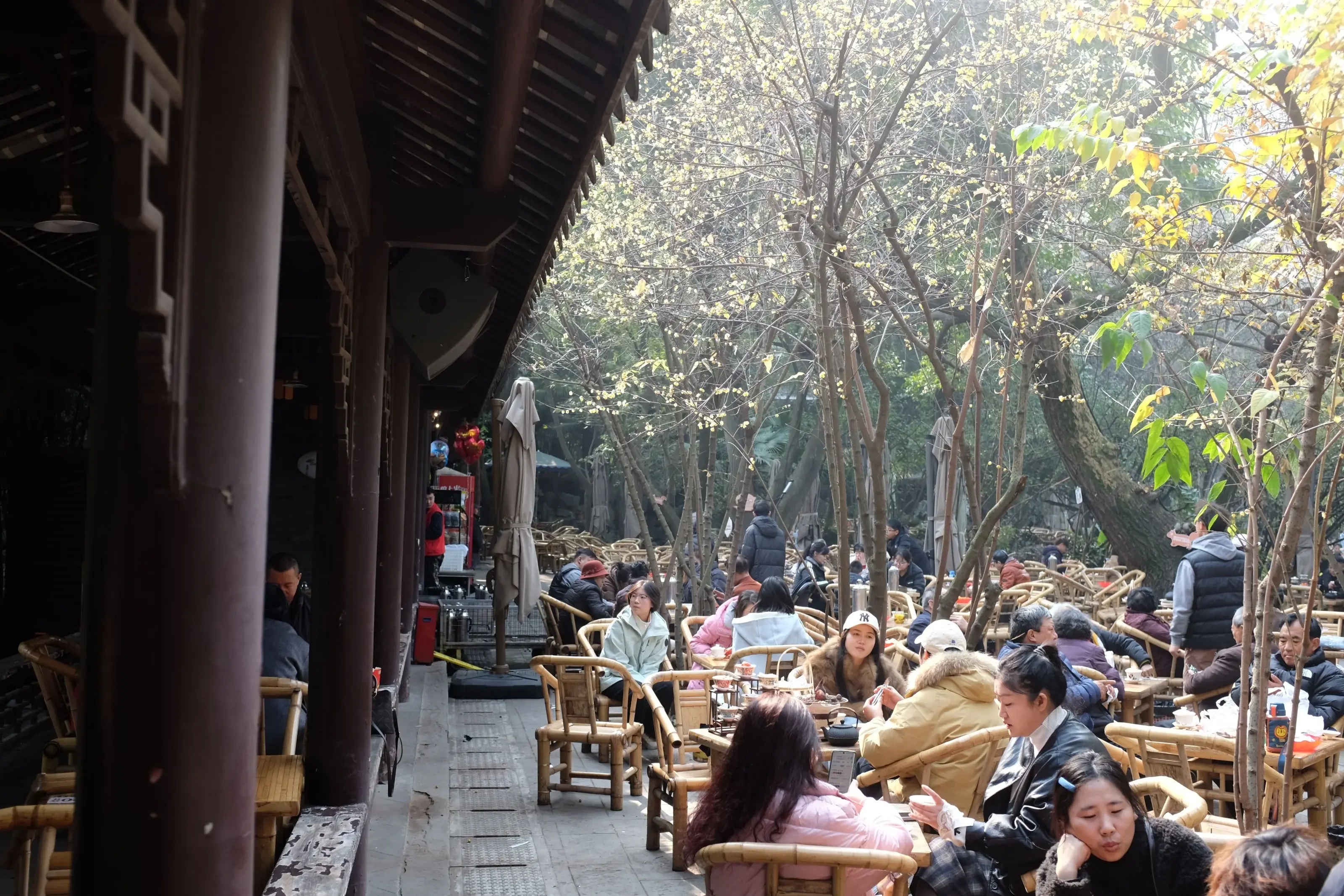 12d $4,060 Axis to Kitchen Table
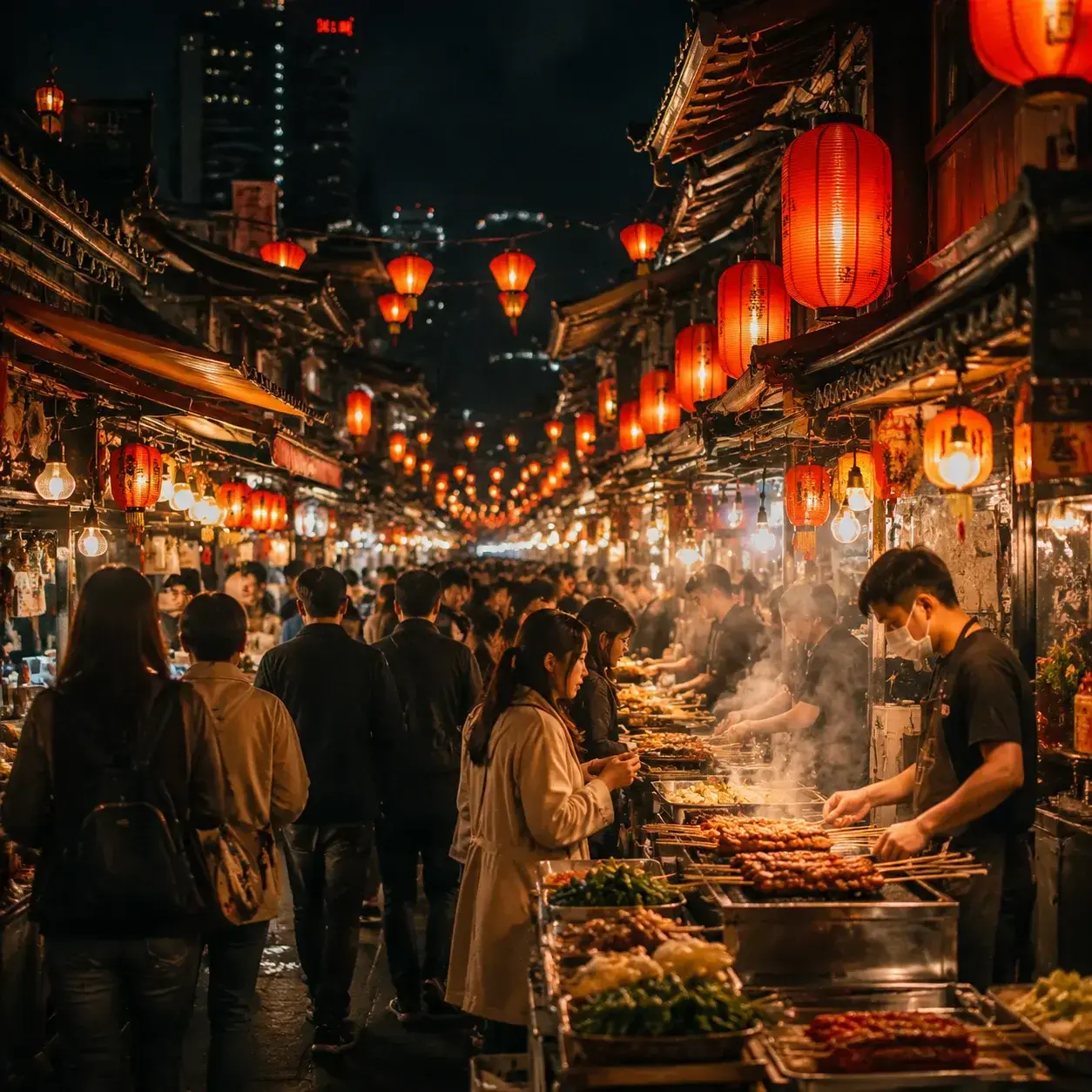
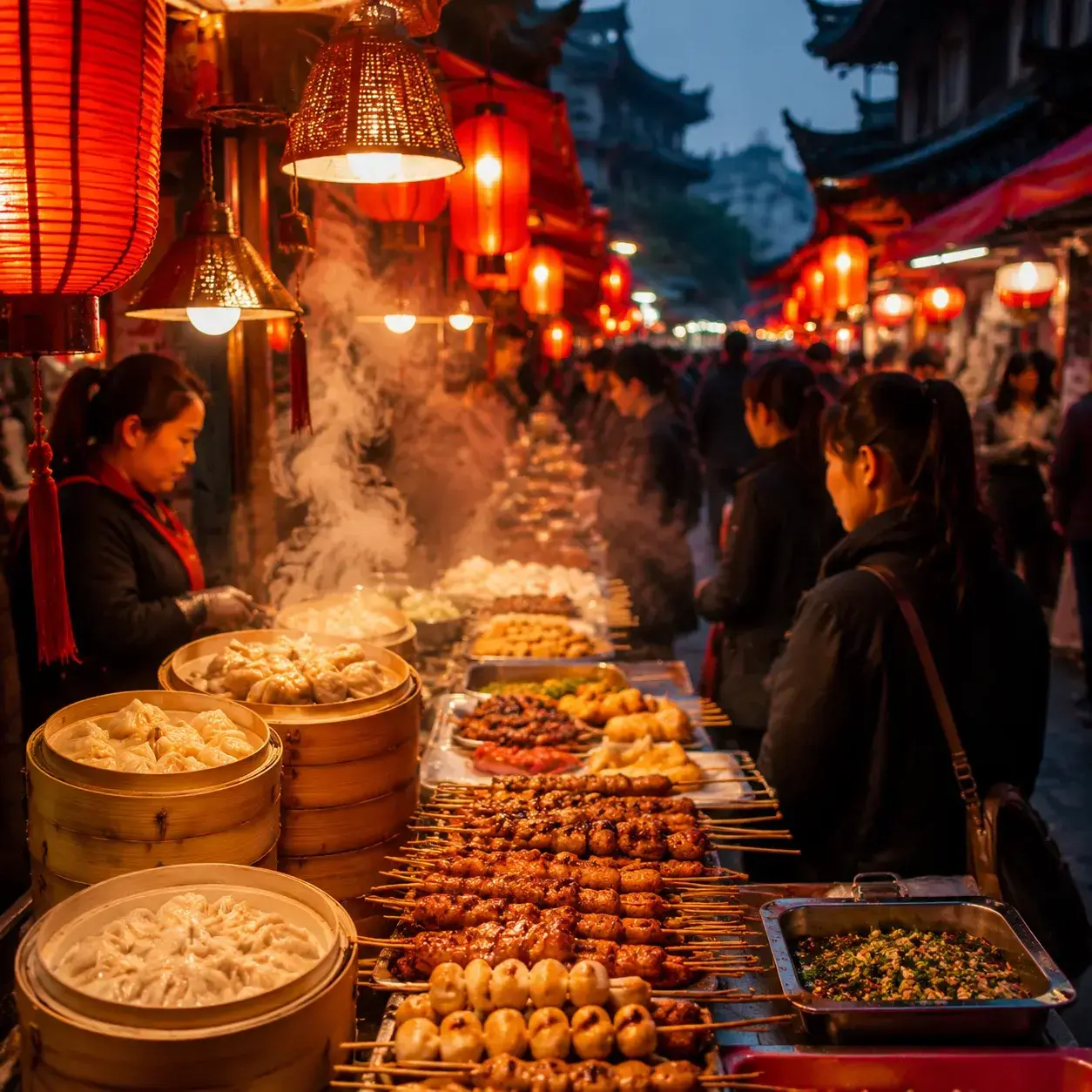
 When travelers think of Chinese street food, they often picture a bustling night market filled with red lanterns and sizzling skewers. The reality is broader and better than that. Street food in China is not just food from roadside carts: it is a neighborhood breakfast window serving steaming soy milk, a decades-old noodle shop tucked in an alleyway, a vibrant Muslim food street, a wet-market stall, or a late-night barbecue stand.
At LyrikTrip we build food-first routes across China, and the lesson from hundreds of trips is that the best eating is deeply regional — what you eat in Beijing barely overlaps with Chengdu or Guangzhou. Order the right dish in the wrong city and you get a mediocre version of something that would have been extraordinary 800 miles away.
So this guide is organised the way the food actually works: the dishes first, with what each should cost and which city does it best, then where to eat them.
Quick answer: if you try only six things, make them jianbing, chuanr (lamb skewers), roujiamo, malatang, liangpi and tanghulu. The three strongest street-food cities are Xi'an (easiest for first-timers), Chengdu (best for spice) and Wuhan (best for breakfast). If you have exactly one food-focused evening in China, spend it in Xi'an.
The 15 Best Chinese Street Foods to Try
Fifteen dishes, each with the city where it is native and a rough idea of what a local pays. All prices below are indicative street-stall ranges in RMB and should be verified locally — tier-one cities, tourist food streets, and sit-down versions all run higher than a neighborhood stall, and prices drift year to year.
1. Jianbing (煎饼) — the breakfast crepe
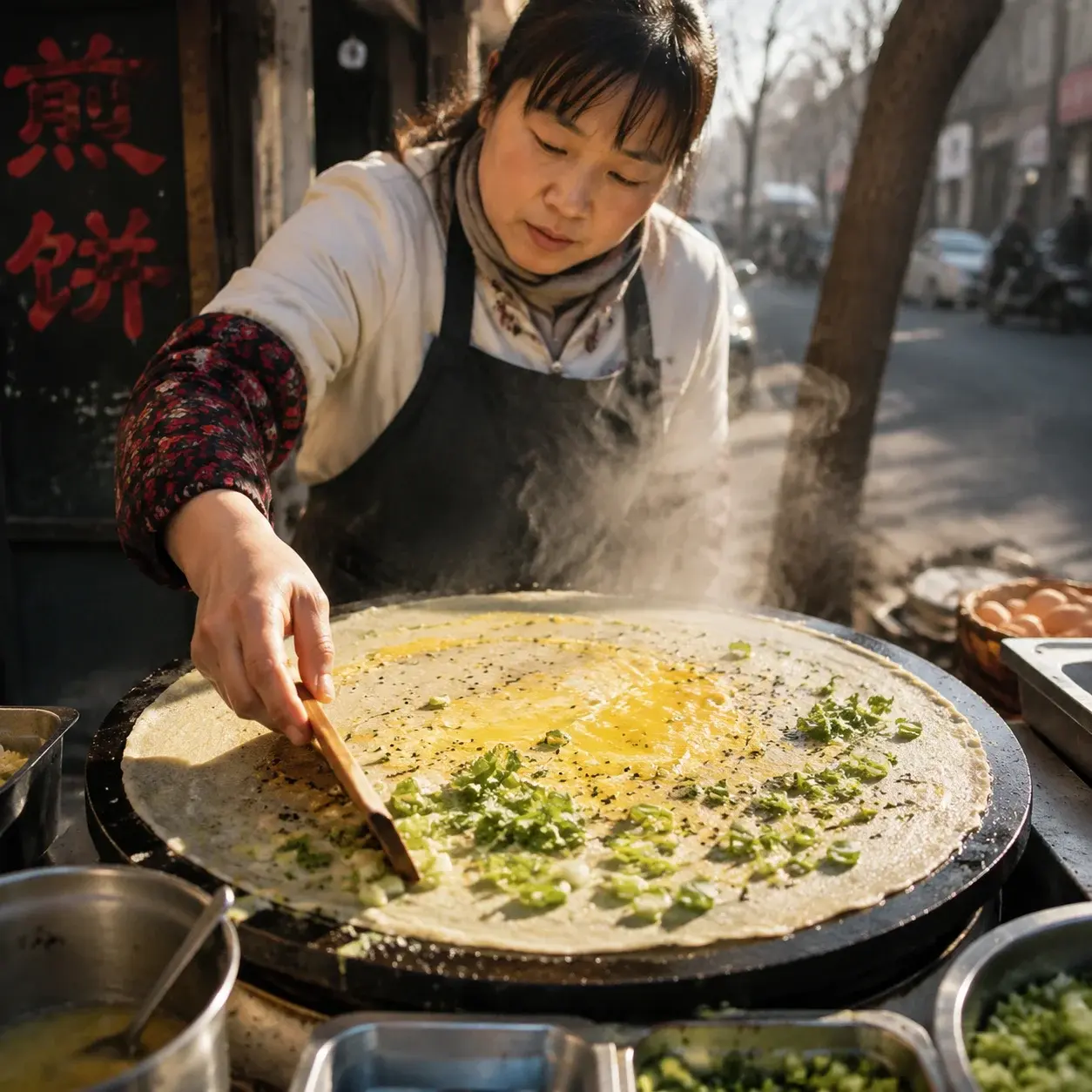
A thin batter crepe spread on a hot griddle, cracked with an egg, brushed with sweet bean paste and chili, scattered with scallion and coriander, then folded around a sheet of crisp fried cracker (baocui) that shatters when you bite it. It is the single best introduction to Chinese street food: made in front of you in ninety seconds, portable, and forgiving. Best in Beijing, where the neighborhood windows still make it properly, though you will find versions nationwide. Ask for less chili if you are unsure — the sauce carries most of the heat. Indicative: ¥6–12.
2. Chuanr (串儿) — cumin lamb skewers
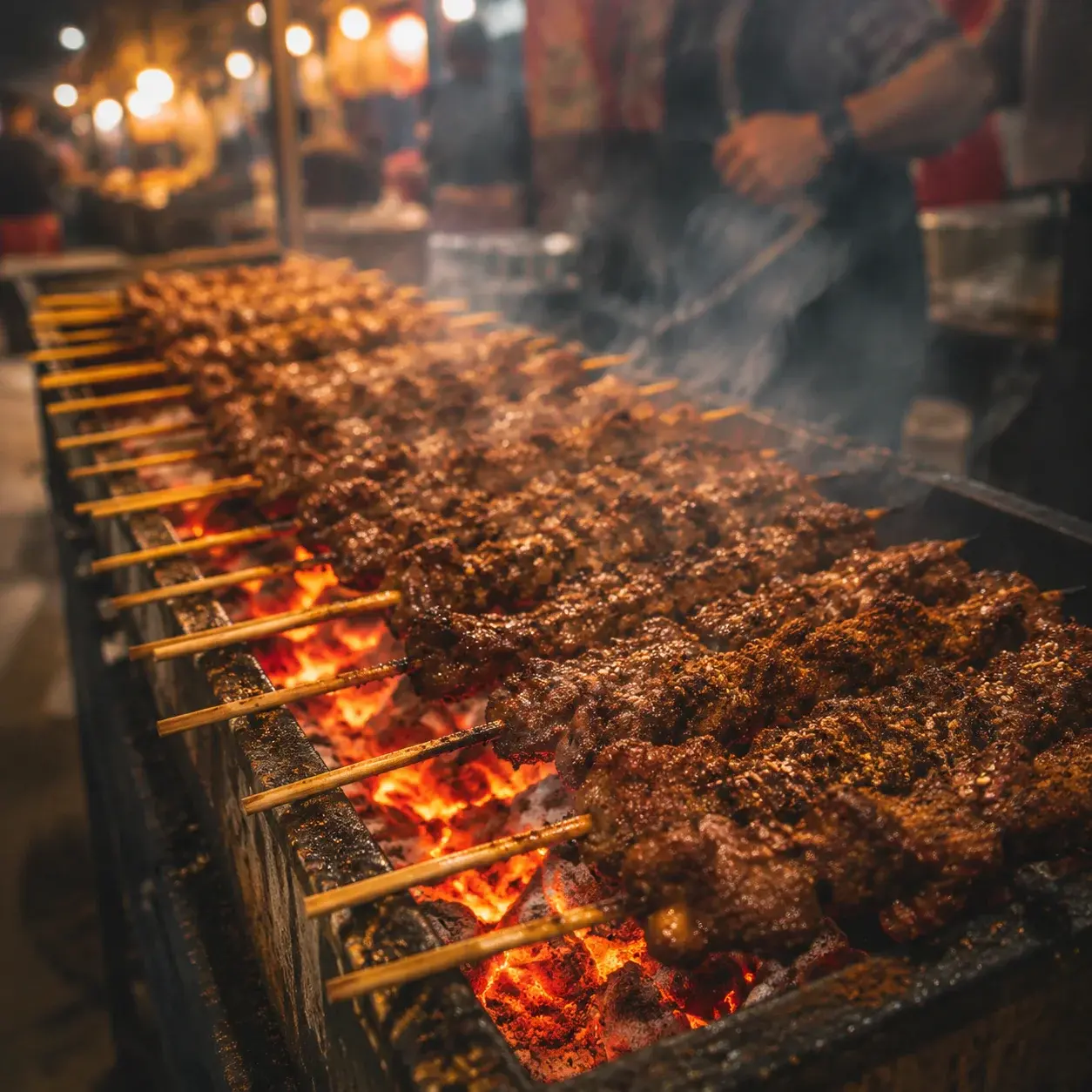
Charcoal-grilled skewers dusted heavily with cumin and chili, the smell of which is essentially the smell of a Chinese night market after dark. Lamb is the classic; chicken wings, beef, mushrooms, and lamb fat all follow. Xinjiang-style stalls do the definitive version, and they are everywhere — Xi'an, Beijing, and every northern night market. Order five or ten at a time and keep the sticks so the vendor can count them. Indicative: ¥3–8 per skewer.
3. Roujiamo (肉夹馍) — the original meat sandwich
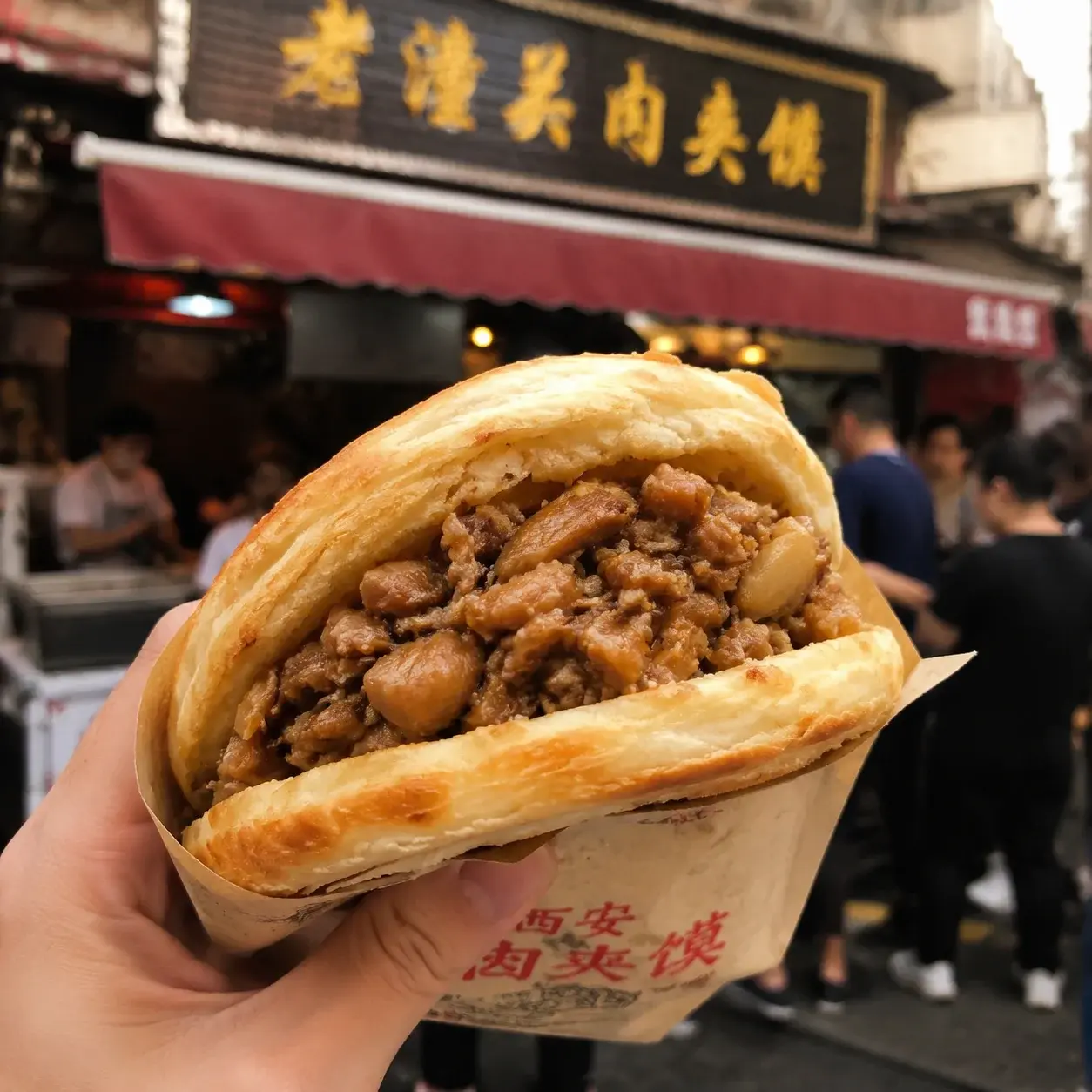
Slow-braised, heavily spiced pork (or lamb, at Muslim-quarter stalls) chopped fine and packed into a crisp round flatbread baked on the spot. It is often called a Chinese hamburger, which undersells it — the bread is better and the meat has been braising for hours. Native to Xi'an, and the reason Xi'an tops most first-timer lists. The lamb version in the Muslim Quarter and the pork version elsewhere are different dishes; try both. Indicative: ¥8–15.
4. Liangpi (凉皮) — cold chewy noodles
Wide, translucent, slippery-chewy noodles made from wheat starch, served cold and tossed with cucumber, bean sprouts, wheat gluten, black vinegar, garlic and a generous pour of chili oil. In the heat it is the most refreshing thing on any street in China, and it is the natural partner to roujiamo — locals order the two together. Native to Xi'an. Vegetarian by default at most stalls, which makes it a rare easy win. Indicative: ¥8–15.
5. Biangbiang noodles (biángbiáng面) — hand-slapped belt noodles
Noodles pulled and slapped against the counter until they are as wide as a belt, then dressed with hot oil poured over chili flakes, garlic and vinegar. Famous partly for its character — the biang glyph is one of the most complex in written Chinese — but worth ordering for the texture, which is chewier and more substantial than any Italian pasta. Native to Xi'an and Shaanxi. Indicative: ¥15–25.
6. Shengjianbao (生煎包) — pan-fried soup buns
Bread-dough buns filled with pork and gelatinised broth, pan-fried so the bottom forms a deep golden crust while the top stays pillowy, finished with sesame and scallion. Bite a small hole and drink the soup first or you will wear it. The definitive city is Shanghai, where they are a breakfast item, not a dinner one — the good shops sell out by mid-morning. Indicative: ¥8–18 for four.
7. Xiaolongbao (小笼包) — soup dumplings
The more delicate cousin: thin translucent wrappers holding pork and a mouthful of hot broth, steamed in a small bamboo basket. Lift from the top pleat, rest it on your spoon, nick the skin, drink, then eat. Shanghai and the wider Jiangnan region own this one, with Nanxiang the traditional benchmark. The soup is genuinely hot — every traveler burns their mouth on the first one. Indicative: ¥15–30 per basket.
8. Baozi (包子) — steamed filled buns
The everyday breakfast of hundreds of millions of people: fluffy steamed buns filled with minced pork and scallion, beef and onion, egg and chive, or sweet red bean. Cheap, filling, available on virtually every street before 9am, and the safest possible order when you are tired and can't read the menu. Nationwide. Point at the tray and hold up fingers. Indicative: ¥2–5 each.
9. Malatang / chuan chuan (麻辣烫 / 串串) — build-your-own spicy hotpot
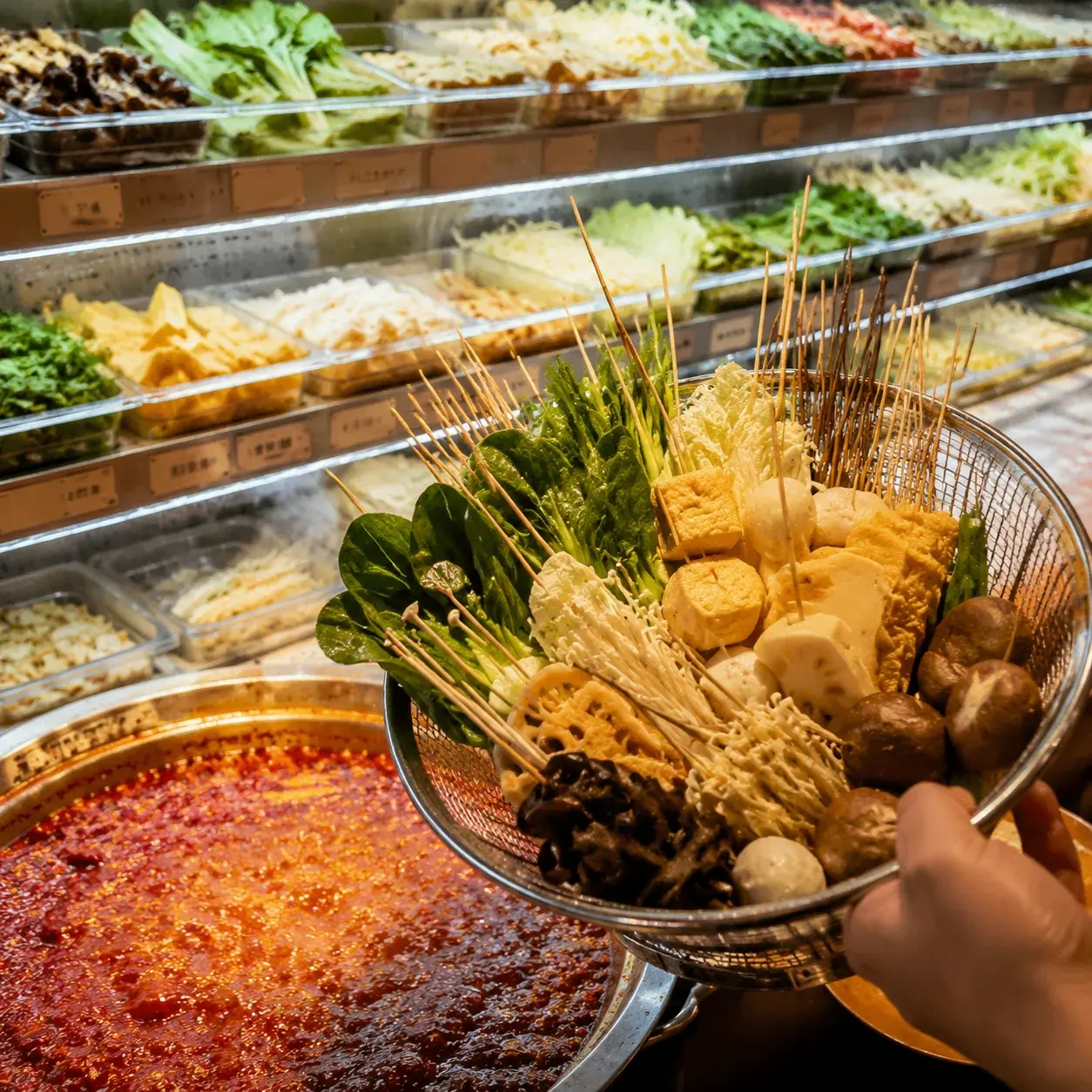
You take a basket, load it with skewered vegetables, tofu, noodles, mushrooms and meat from a chilled wall of ingredients, hand it over, and it comes back cooked in numbing-spicy broth. It is the most interactive street food in China and the best value meal on this list, because you control exactly what goes in. Chengdu and Sichuan do the real thing; chuan chuan is the sit-down cousin. Say wei la (微辣) for mild. Indicative: ¥30–60, priced by weight.
10. Re gan mian (热干面) — hot dry noodles
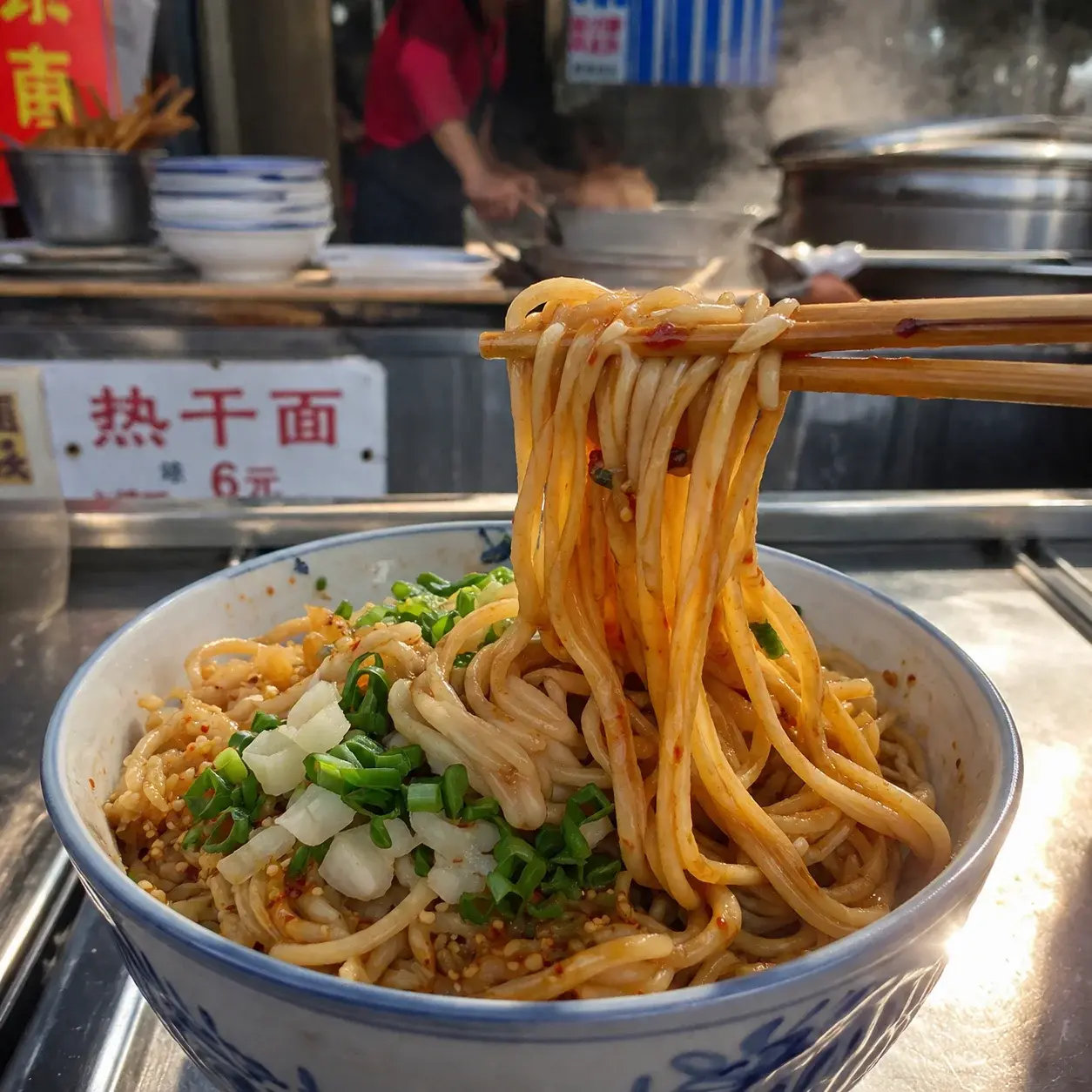
Thick alkaline noodles blanched, drained, and tossed — not in soup — with sesame paste, chili oil, pickled radish and scallion, eaten standing up, walking, or waiting for a bus. This is the breakfast of Wuhan, a city with a genuine claim to the best morning food culture in China, where the ritual has its own name (guo zao, 过早). Mix it hard and fast before the sesame paste sets. Indicative: ¥6–12.
11. Cheung fun (肠粉) — silky rice noodle rolls
Rice batter steamed into a paper-thin sheet, rolled around shrimp, beef or egg, cut into lengths and flooded with sweetened soy. The texture is the point: satin-slippery, barely holding together. Guangzhou and Cantonese Guangdong are its home, and it is the ideal dish for travelers who want authentic street food with zero heat. Breakfast and all-day. Indicative: ¥8–15.
12. Wonton noodles (云吞面) — shrimp wontons in clear broth
Springy thin egg noodles under a handful of delicate shrimp-and-pork wontons in a clear, deeply savory broth, usually with a few leaves of greens. Restrained, precise, and the antidote to a week of chili. Guangzhou and Hong Kong, where noodle shops have been refining it for generations. Indicative: ¥12–25.
13. Stinky tofu (臭豆腐) — better than it smells
Fermented tofu deep-fried until the outside crackles, split, then loaded with chili, garlic and pickled vegetables. The smell is genuinely confronting from thirty paces; the taste is savory, mild, and much closer to a strong cheese than the aroma suggests. Most associated with Changsha, where the black Hunan version is a night-market institution. Order one portion and split it — you will either want six more or none. Indicative: ¥8–15.
14. Tanghulu (糖葫芦) — candied fruit on a stick
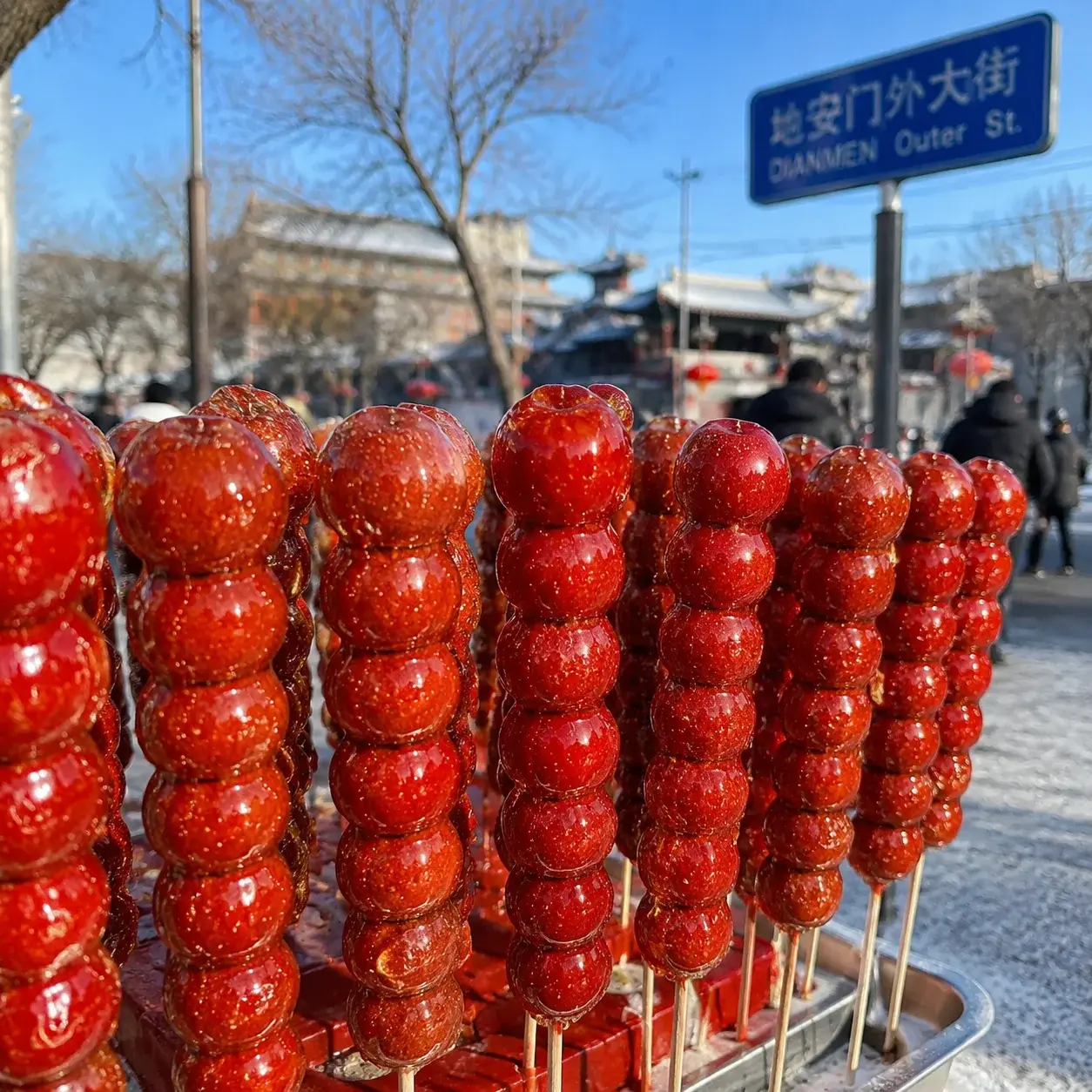
Hawthorn berries — or strawberries, grapes, mandarin segments — threaded on a bamboo skewer and dipped in molten sugar that sets into a glass shell. It cracks loudly, the sugar is bracingly sweet, and the hawthorn underneath is sharply sour. A winter tradition in Beijing and the north, now sold year-round. The most photographed street snack in China, and the easiest sell to children. Indicative: ¥5–12.
15. Bingfen (冰粉) — the ice jelly that saves you
A clear, wobbly jelly set from the seeds of a wild fig, served in iced syrup with brown sugar, crushed peanuts, raisins, and sometimes fermented rice. It exists for one reason: to put out the fire after chili. You will find it sold directly beside the spiciest stalls in Chengdu and Chongqing, which tells you everything about how it is meant to be used. Indicative: ¥6–12.
Where to Eat It: A City-by-City Street Food Guide
For first-time travelers, Xi'an is the easiest street-food city in China. Chengdu is best for spice, Shanghai for breakfast snacks, Guangzhou for mild Cantonese flavors, and Wuhan for breakfast culture. Order the right dish in the right city and it is a different food.
Tip: screenshot this table for your trip planning.
| City | Best For | What to Try | Best Time | Good For | Watch Out For |
|---|---|---|---|---|---|
| Xi'an | First-timers, Muslim food, dense food walks | Roujiamo, liangpi, lamb skewers, paomo | Evening | Meat lovers, history buffs | Heavy carbs and large portions |
| Beijing | Hutong snacks, old-school flavors, Muslim food | Jianbing, baozi, zhajiangmian, tanghulu | Morning & Day | Sightseers, culture lovers | Some acquired tastes, including offal |
| Shanghai | Breakfast counters, old snack shops, soup dumplings | Shengjianbao, xiaolongbao, scallion noodles | Morning | Cautious eaters, architecture fans | Sweet flavor profiles |
| Chengdu | Spicy grazing, slow eating, market stalls | Chuan chuan, dan dan noodles, ice jelly | Evening & Night | Spice lovers, slow travelers | Numbing Sichuan peppercorns |
| Guangzhou | Non-spicy Cantonese snacks, rice noodle rolls | Cheung fun, wonton noodles, double-skin milk | All Day | Families, mild palates | Less late-night street food culture |
| Chongqing | Intense spice, noodles, late-night stalls | Xiaomian, hotpot, bingfen | Night | Adventurous eaters, spice addicts | Extremely spicy and oily dishes |
| Wuhan | Epic breakfast culture, known locally as guo zao | Hot dry noodles, doupi, youtiao | Morning | Breakfast lovers, carb fans | Fast-paced, eat-while-walking vibe |
| Changsha | Loud night markets, spicy snacks, crayfish | Stinky tofu, barbecue, fruit tea | Late Night | Night owls, youth culture | Crowds and intense heat |
| Northeast China | Morning markets, winter food, barbecue | Chicken rack, cold noodles, sticky bean buns | Early Morning | Repeat travelers, winter trips | Freezing winter temperatures |
Xi'an: The Easiest First Street-Food Evening
Xi'an is arguably the best city for a first-time visitor wanting to dive into Chinese street food. The food is dense, highly visible, and deeply tied to the old city's history. While the main Muslim Quarter is famous, do not reduce Xi'an to just one street — explore Sajinqiao, Xiaonanmen, and Yongxingfang as well.
You must try roujiamo, liangpi, biangbiang noodles, and lamb skewers. If you have time, sit down for yangrou paomo (lamb and bread soup); the bread is traditionally broken by hand into tiny pieces by the diner before the chef cooks it in a rich broth. Our Xi'an food guide goes deeper on the city, and if you keep halal, the Muslim Quarter is one of China's most reliable eating districts — see our halal food in China guide.
Beijing: Hutong Snacks, Muslim Food, and Old Beijing Flavors
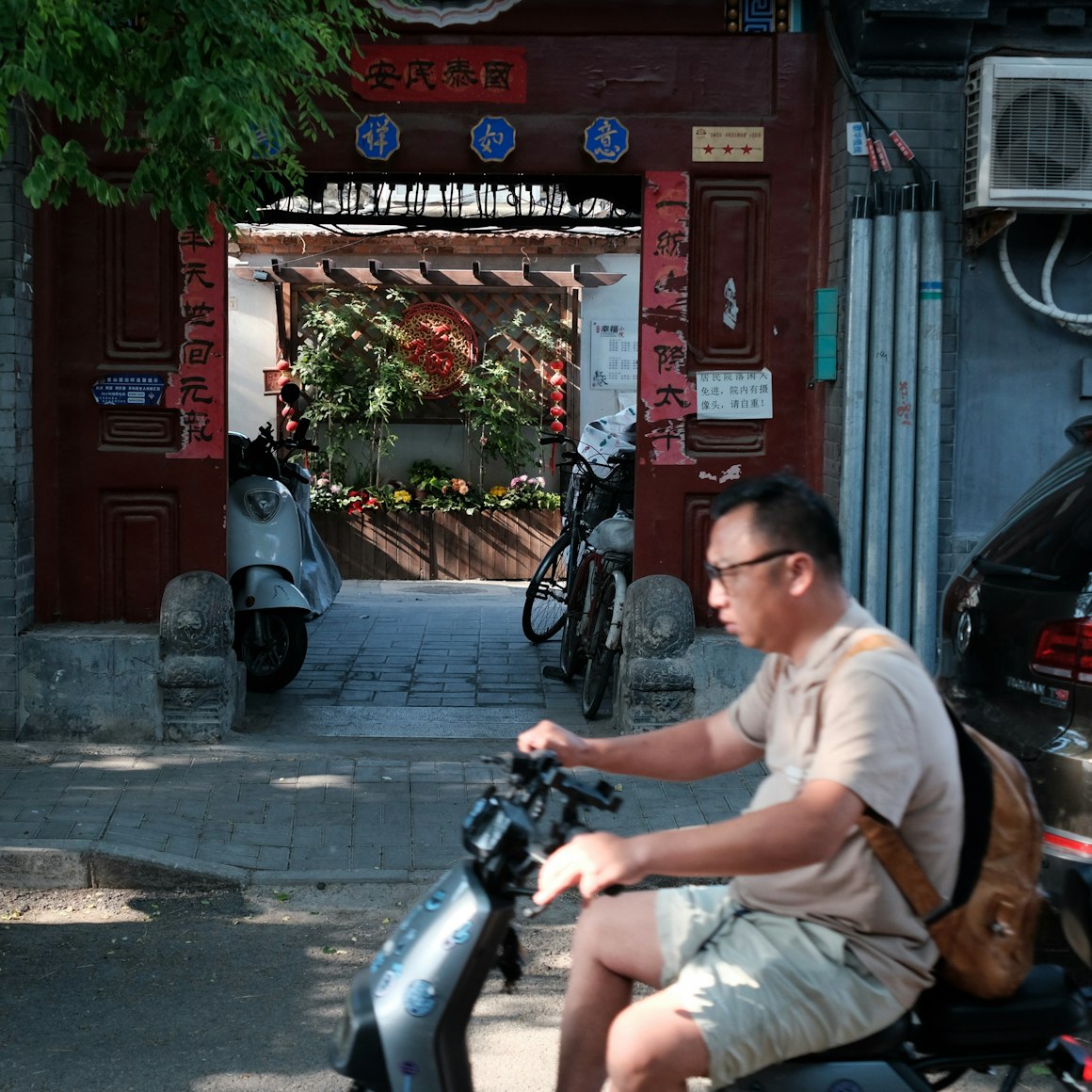
Beijing may not be the wildest street food city, but it is incredibly practical for travelers because food is easily combined with sightseeing. A Beijing hutong walk will often lead you past vendors selling jianbing, baozi, and tanghulu.
For a concentrated food experience, head to Niujie for excellent Muslim beef and lamb snacks, or Huguosi for historic Beijing treats. Be honest with your palate: some old Beijing foods, like chao gan or miancha, are acquired tastes, but trying them is part of understanding the city. Our dedicated Beijing street food guide covers which markets are tourist traps and where locals actually eat.
Shanghai: Breakfast Counters and Old-School Snacks
Do not expect massive, sprawling night markets in Shanghai. This city is best understood through its breakfast shops, old snack counters, and neighborhood noodle joints.
If you are planning a guided morning in Shanghai, include a stop for shengjianbao or xiaolongbao, scallion oil noodles, and cifantuan. In the afternoon, look for sweet rice cakes, Shanghai-style fried pork chop, and roasted sweet potatoes in winter. More in our Shanghai food guide.
Chengdu: Spicy, Slow, and Market-Based
Chengdu street food is not just about heat; it is about sitting, grazing, and letting the spice build slowly. It is a city of leisure, even when the chili oil is intense.
Wander through local market areas like Fuqin to find chuan chuan, spicy wontons, sweet water noodles, and refreshing ice jelly. Our Chengdu street food guide maps the spice levels and the best hidden "fly restaurants" (cangying guanzi) so you don't waste an evening on tourist-trap versions.
Guangzhou: Cantonese Snacks and Dai Pai Dong-Style Dining
Guangzhou is one of the best choices for travelers who want to experience everyday Chinese food culture without the heavy spice. Xihua Road is a fantastic street for a food walk.
Look for silky rice noodle rolls, wonton noodles, beef brisket noodles, dry-fried beef hor fun, double-skin milk, and ginger milk pudding. At night, look out for dai pai dong-style open-air eateries — casual Cantonese dining spots where you can order wok-fried dishes, seafood, claypot rice, and cold beer in a lively setting. It is also the easiest major city for eating out with children.
Chongqing: Beyond Hotpot
Chongqing is famous for hotpot, but its street food scene is equally impressive. The food here is intense, spicy, and often found on steep, winding neighborhood streets like those in Nanping.
Try xiaomian (Chongqing spicy noodles), pea-and-minced-pork noodles, and skewers. When the spice becomes too much, cool down with bingfen or liangxia, two refreshing ice desserts commonly sold near spicy food stalls.
Wuhan: The Capital of Breakfast
Wuhan deserves a special mention for its morning street food. The city's fast-paced breakfast culture, guo zao, is a spectacle. Locals will literally eat bowls of hot dry noodles while walking, standing by a stall, or waiting for the bus.
Do not miss re gan mian, doupi, mianwo (a savory fried dough ring), and fresh soy milk. The best experience is not necessarily at the most famous tourist street, but in busy residential alleys where breakfast stalls move quickly and locals know exactly what they want.
Changsha: Night Markets, Smoke, Chili, and Sugar
If you love nightlife, Changsha is your city. It is loud, smoky, spicy, and obsessed with late-night eating. The streets are packed with vendors selling stinky tofu, fried skewers, barbecue, spicy crayfish, and hot braised snacks.
To balance the heat, locals drink massive cups of fruit tea, milk tea, and perilla peach drinks. Dongguashan is one of the best places to feel the city's energy after dark, especially if you do not mind crowds, queues, and chili-heavy snacks. Our Hunan food guide explains why this province's heat is different from Sichuan's.
Northeast China: Morning Markets, Barbecue, and Winter Food
For repeat travelers or those on a winter itinerary, Northeast China offers a totally different food atmosphere. Cities like Shenyang, Changchun, and Harbin are known for hearty portions, morning markets, barbecue, cold noodles, sticky bean buns, and food built for freezing temperatures.
The morning market experience is especially memorable in winter: steam rising from breakfast stalls, people eating quickly in heavy coats, vendors shouting prices, and the smell of grilled food cutting through the cold air.
Best Food Streets and Local Markets in China
Just like Nishiki Market in Kyoto or Gwangjang Market in Seoul, China has iconic food streets and neighborhoods. Here are some of the best:
| Place | City | Best For | Notes |
|---|---|---|---|
| Muslim Quarter / Beiyuanmen | Xi'an | First-time visitors, lively atmosphere | Famous and busy; great for a first look at Xi'an food. |
| Sajinqiao | Xi'an | Authentic local Muslim food | Where locals go for better prices and deeper flavors. |
| Niujie | Beijing | Halal snacks, beef, lamb, traditional sweets | Easy to combine with a Beijing hutong or cultural walking route. |
| Huguosi | Beijing | Old Beijing traditional snacks | Good for trying historic, albeit sometimes unusual, flavors. |
| Xihua Road | Guangzhou | Cantonese snacks, noodles, desserts | An excellent, walkable street for non-spicy food. |
| Fuqin Area | Chengdu | Local market vibes, chuan chuan, snacks | A great alternative to the main tourist streets. |
| Dongguashan | Changsha | Late-night snacks, sausages, barbecue | Loud, crowded, and perfectly captures Changsha's vibe. |
| Nanping | Chongqing | Neighborhood noodles, local hotpot | Steep, authentic, and intensely local. |
| Hubu Alley and Local Alleys | Wuhan | Breakfast snacks, hot dry noodles | Hubu Alley is famous, but nearby residential alleys offer the best guo zao. |
| Yongxing Morning Market | Changchun | Northeast breakfast, winter food, produce | A fantastic cold-weather morning experience. |
Best Night Markets in China for Street Food
Night markets are where Chinese cities truly come alive, but the culture varies wildly by region. Our China night market food guide covers the format in depth.
• Xi'an: One of the easiest cities for an evening food walk. From the famous Muslim Quarter to local favorites like Sajinqiao, Xiaonanmen, and student night markets, the city is built for nighttime grazing. • Changsha: Loud, neon-lit, and spicy. Changsha is famous for late-night food culture, featuring stinky tofu, fried snacks, barbecue, spicy crayfish, and massive cups of fruit tea. • Chengdu: Late-night food here is about sitting down with friends for chuan chuan (skewers cooked in hotpot broth), late-night noodles, and neighborhood snacking around areas like Fuqin. • Chongqing: The steep streets are packed with late-night noodle stands, bubbling hotpot restaurants, and vendors selling bingfen to cool the spice. • Northeast China: In cities like Shenyang and Changchun, night food often means barbecue, grilled seafood, cold beer, and hearty dishes built for cold weather. • Beijing and Shanghai: While night markets exist, these cities are not primarily night-market destinations. In Beijing, food is more area-based, such as Niujie. In Shanghai, the best experiences are found in old snack shops and neighborhood eateries rather than massive outdoor night markets.
Best Breakfast Street Food in China
Breakfast in China is a fast, cheap, and incredibly satisfying affair. In many cities, the best local food experience happens before 9 AM.
• Wuhan: Known as one of China's great breakfast capitals, Wuhan has a unique morning culture called guo zao — a fast-paced ritual of grabbing breakfast on the way to work. You must try re gan mian (hot dry noodles tossed with sesame paste, chili oil, pickled vegetables, and scallions) and doupi, a pan-fried delicacy made with sticky rice, minced meat, and a thin bean-and-egg wrapper. The golden wrapper turns crisp on the outside while holding a savory, chewy layer of rice and filling inside. • Shanghai: The classic breakfast includes youtiao (fried dough sticks), fresh soy milk, cifantuan (stuffed glutinous rice rolls), scallion oil noodles, and small wontons. • Beijing: Grab a baozi, sugar pancake, sesame cake, bowl of miancha, or a freshly made jianbing from a neighborhood window. • Guangzhou: Breakfast is delicate and fresh — think silky rice noodle rolls, comforting congee, wonton noodles, and dim sum. • Northeast China: Morning markets are legendary here. Expect sticky bean buns, massive youtiao, meat-and-egg breakfast wraps, and steaming bowls of tofu pudding. • Chengdu and Chongqing: Locals often start the day with noodles, chili-oil wontons, and hearty breakfast bowls that wake up the palate immediately.
Adventurous Chinese Street Foods: What to Try and What to Skip
If you want to dive deeper into local tastes, these dishes are beloved comfort foods for locals, though they might be an acquired taste for travelers:
• Beijing luzhu huoshao and chao gan: Rich, thick stews made with pork offal, liver, and intestines. • Shenyang chicken rack: Smoked, roasted, or fried chicken bones with just enough meat to make it a perfect beer snack. • Stinky tofu: Fermented tofu, deep-fried until crispy and topped with chili and garlic. The smell is strong, but the taste is savory and milder than many travelers expect. • Rabbit dishes in Chengdu: Spicy diced rabbit or roasted rabbit heads are a local obsession. • Duck blood vermicelli soup: A Nanjing specialty featuring cubes of congealed duck blood, intestines, tofu puffs, and vermicelli in a clear broth. • Spicy skewers: In many cities, late-night barbecue stalls serve everything from lamb and chicken wings to chicken hearts and lamb fat, often heavily seasoned with cumin and chili.
Note: These are not "weird foods" designed to shock tourists; they are genuine local staples. However, they might not be the best choice for your very first day in the country.
Is Street Food in China Safe? How to Choose a Stall
Yes — street food in China is generally safe, and the way you pick a stall matters far more than whether it has walls. A busy pavement grill with a queue of office workers is a better bet than an empty air-conditioned restaurant. Here are the six checks to run in the ten seconds before you order.
| # | The check | Why it works |
|---|---|---|
| 1 | Join the longest queue of locals | Turnover is the single best proxy for freshness. A stall that sells out daily never serves yesterday's food |
| 2 | Watch it being cooked to order | Anything that hits high heat in front of you — a grill, a wok, a fryer, a steamer — is low risk by definition |
| 3 | Skip the pre-cooked food sitting at room temperature | Cold dishes, dressed salads, and cut fruit that have been out for hours are the real risk category, not the sizzling stuff |
| 4 | Check the ratio of locals to tourists | A stall serving mostly locals is priced and cooked for people who will come back tomorrow |
| 5 | Drink bottled or boiled only | Do not drink tap water. Free tea at local stalls is normally made with boiled water and is generally fine; bottled is the safe default for sensitive stomachs |
| 6 | Ease in on day one | Give your stomach a day before heavy offal, cold seafood, raw dishes, or maximum chili. Start with cooked-to-order and build up |
A few practicalities that matter as much as hygiene:
• Payment in 2026: Cash is rarely used. Set up Alipay or WeChat Pay before you arrive. Both apps generally support international Visa and Mastercard cards, though verification and card compatibility can vary by bank. Once set up, mobile payment makes even a small street-food purchase easy. • Language: Use translation apps with picture menus, and prepare Chinese phrases for food allergies, halal needs, or vegetarian diets in advance. Wei la (微辣) means mild; bu yao la (不要辣) means no chili. • Hygiene kit: Always carry your own tissues and wet wipes — they are rarely provided at street stalls.
What Counts as Authentic Local Eats in China?
In many parts of the world, street food means a food truck or a temporary cart. In China, the concept is broader. Much of the best "street food" is actually found in tiny, hole-in-the-wall eateries that have been open for decades.
In Chengdu and other parts of China, locals sometimes call these places "fly restaurants" (cangying guanzi). The phrase does not mean the food is unhygienic. It refers to no-frills, often tiny neighborhood eateries that may look humble from the outside but are packed with loyal diners because the food is so good.
Authentic Chinese street food culture also includes morning markets where vendors sell fresh produce alongside hot breakfast snacks, neighborhood noodle shops, wet-market stalls, and dedicated food streets where locals gather after work. Just like the famous markets in Japan or Korea, where you eat in China matters just as much as what you eat. For the wider picture of regional cuisines, see our Chinese food guide.
How to Add Local Eats to a China Itinerary
If food is one of the reasons you are visiting China, plan it into your itinerary rather than leaving meals to chance. Here are some ways to combine sightseeing with eating:
• Beijing: Tour the Forbidden City, then take a hutong snack walk or visit Niujie. • Xi'an: See the Terracotta Warriors in the morning, followed by an evening food walk in Sajinqiao. • Shanghai: Combine an old-city architecture walk with stops for shengjianbao and noodles. • Chengdu: Visit the Panda Base early, then spend the afternoon grazing through market snacks. • Guangzhou: Start with morning dim sum, then explore old neighborhoods before ending the day with Cantonese snacks around Xihua Road. • Wuhan: Plan an early morning breakfast walk for re gan mian, doupi, and street-side snacks before continuing to the Yellow Crane Tower or East Lake. • Changsha: Save your appetite for a late-night food walk around Dongguashan or another local night market. • Northeast China: If traveling in winter, build in at least one early morning market visit before sightseeing.
A food-focused China tour can connect sightseeing with local food walks, markets, and neighborhood restaurants. A local guide can explain exactly what you are eating, help you order efficiently, manage dietary needs, and make sure you avoid tourist-trap versions of classic dishes.
FAQ
What is the most famous street food in China?
There is no single most famous food because China is so vast. However, iconic street foods include jianbing (savory crepes), baozi (steamed buns), roujiamo (meat-filled flatbread), xiaolongbao (soup dumplings), shengjianbao (pan-fried soup buns), lamb skewers, liangpi (cold noodles), and rice noodle rolls.
Which city in China has the best street food?
It depends on your taste. Xi’an is one of the best cities for first-timers. Chengdu and Chongqing are unmatched for spice. Guangzhou is ideal for mild Cantonese snacks. Wuhan is one of China’s great breakfast cities, and Changsha is one of the best choices for late-night food and night markets.
Is street food in China safe?
Generally, yes. To stay safe, choose busy stalls with high turnover, eat food that is cooked to order, drink bottled water, and be cautious with cold dishes, seafood, offal, and extreme spice on your first few days.
Can vegetarians or gluten-free travelers eat street food in China?
Vegetarians: It is possible but can be challenging. Many broths, sauces, and cooking oils contain meat or animal fat, even if the dish looks vegetarian. Having a translation card explaining your dietary needs is highly recommended. Gluten-free travelers: Eating gluten-free street food in China is very difficult. Soy sauce, which usually contains wheat, is used in many dishes, and cross-contamination is common. If you have celiac disease, you will need to rely on carefully chosen restaurants, prepare some of your own food, or travel with a specialized guide.
Do I need cash for street food in China?
Mobile payment is king. You will have a much easier time if you set up Alipay or WeChat Pay on your phone before your trip. You can usually link an international Visa or Mastercard, though verification and card compatibility can vary by bank.
What should I eat in Xi’an if I only have one night?
Head to the Muslim Quarter or Sajinqiao for a food walk. Make sure to try roujiamo, liangpi, lamb skewers, and local sweets. If you have time for a sit-down meal, try yangrou paomo, the city’s famous lamb and bread soup.
What is the best time of day for Chinese street food?
Breakfast and evening are usually the strongest times. Many cities have completely different food scenes in the morning and at night: Wuhan and Shanghai are excellent for breakfast, while Xi’an, Changsha, Chengdu, and Chongqing are better for evening food walks.