




Chengdu · A half-day you can book on its own
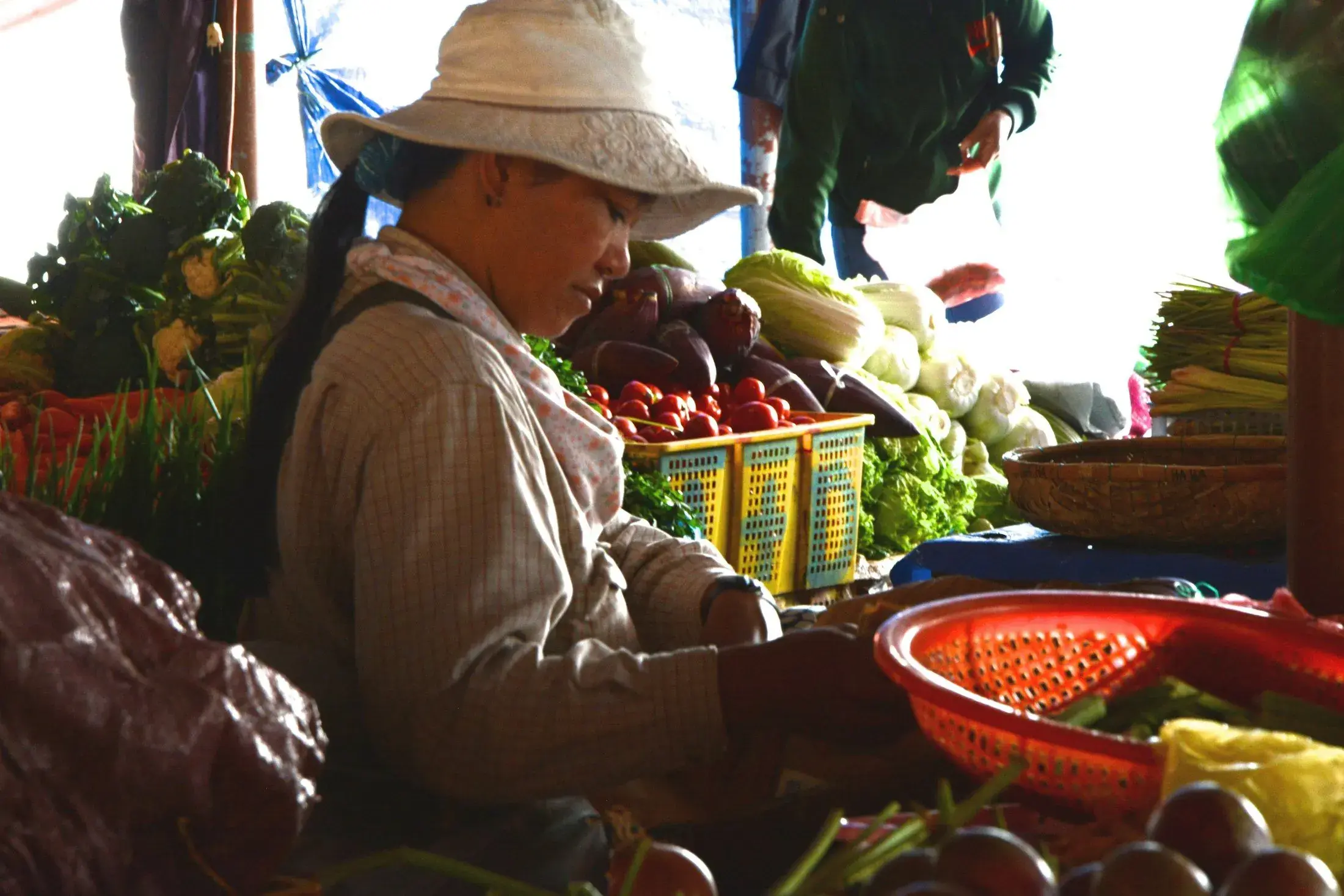
Four hours that start at a Chengdu market stall and end at a table in a private garden, eating the four or five Sichuan dishes you just made at your own wok.
Most cooking classes start with the ingredients already washed, weighed and waiting on a tray.
Which removes the half of Chinese cooking that happens before anyone turns on a flame.
So this one starts at the stalls — and ends in a private garden, eating what you made.
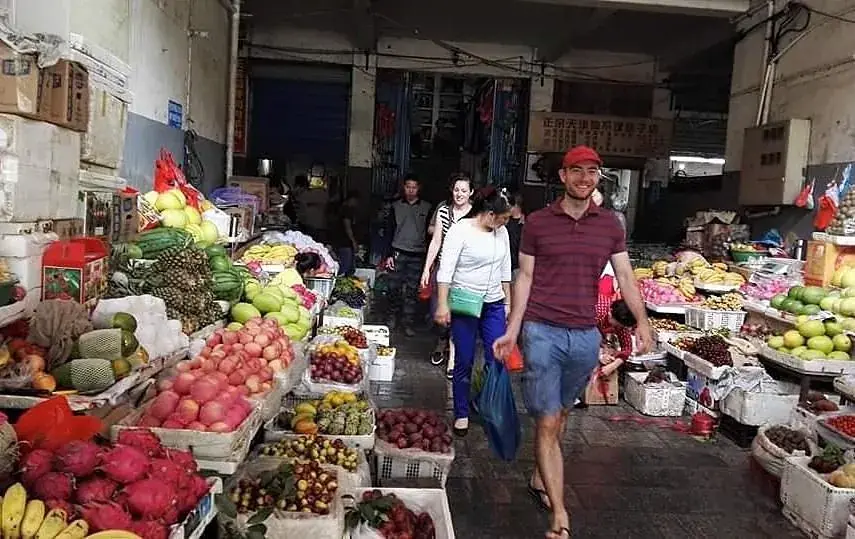
08:30With the chef
Ingredients · and a general map of Chinese cuisines
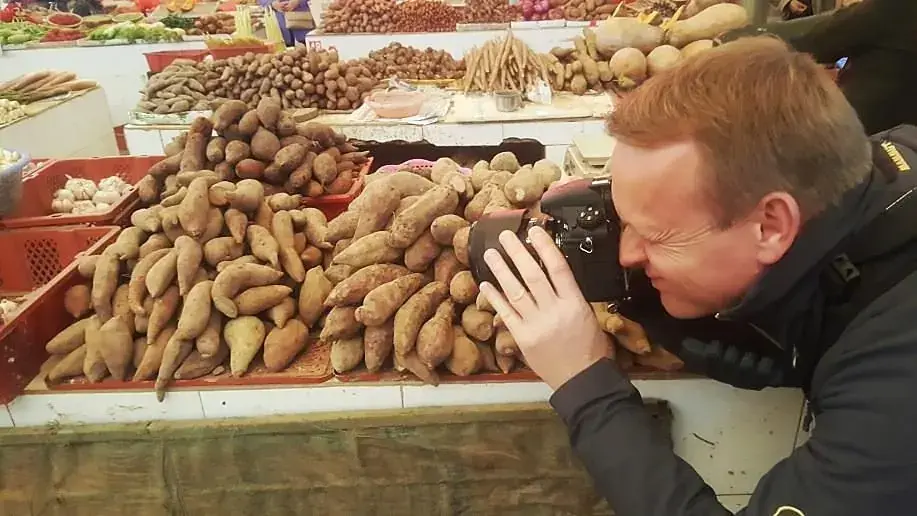
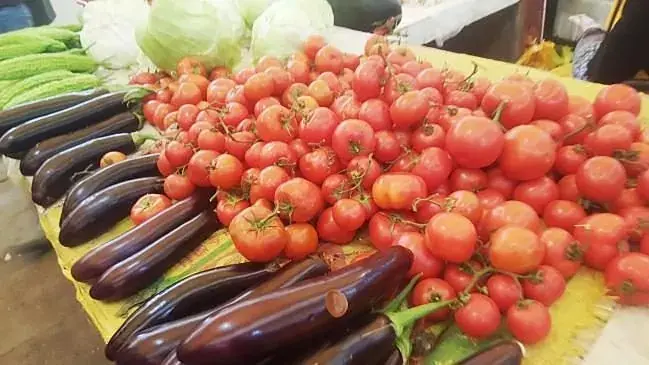
The chef joins you at the market. You buy what the class needs, and along the way get the wider picture — how the Chinese cuisines divide up, where Sichuan sits among them, and why the same three ingredients turn into completely different dishes depending on the province. Bargaining is part of it. You will be encouraged to try.
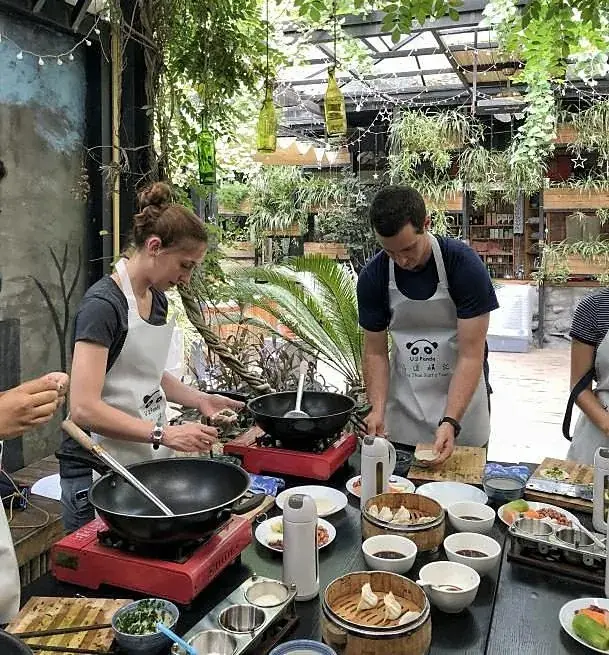
09:30Not a demonstration kitchen
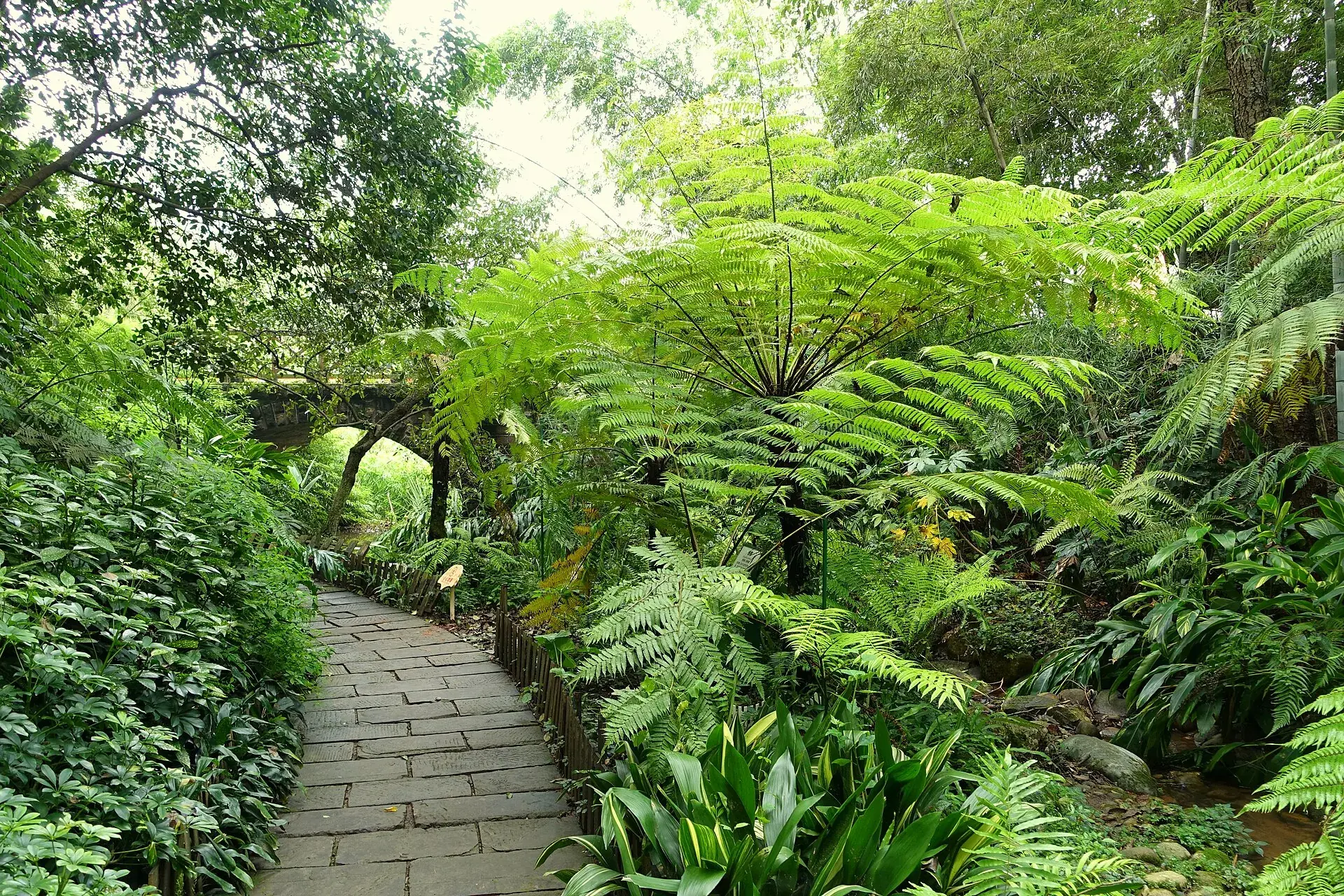
Home-style garden restaurant · individual equipment
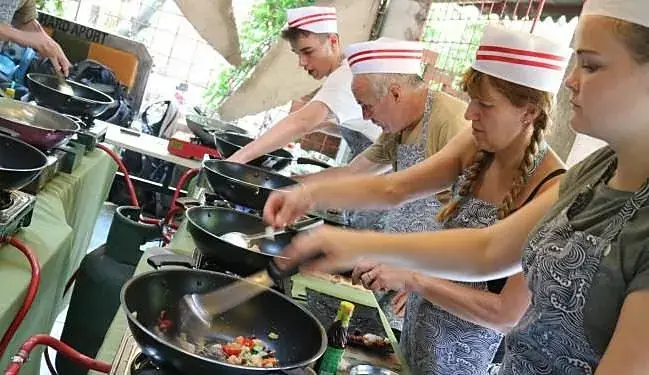
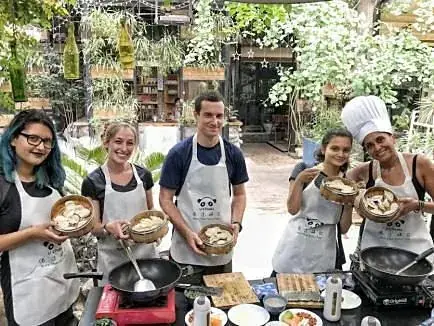
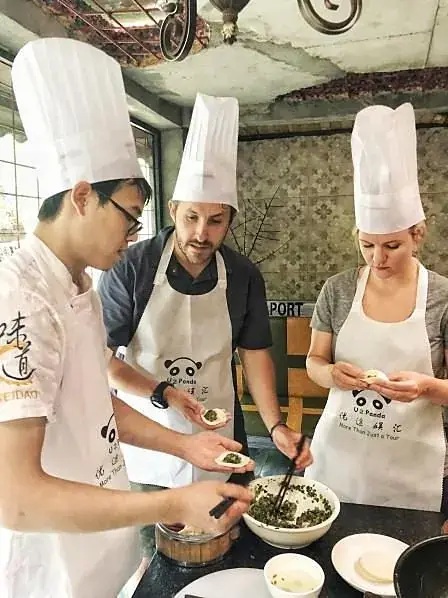
The class is held at a private home-style garden restaurant rather than a demonstration kitchen, and everyone gets their own station and their own equipment. It sounds like a small detail. It is the difference between cooking and watching someone cook.
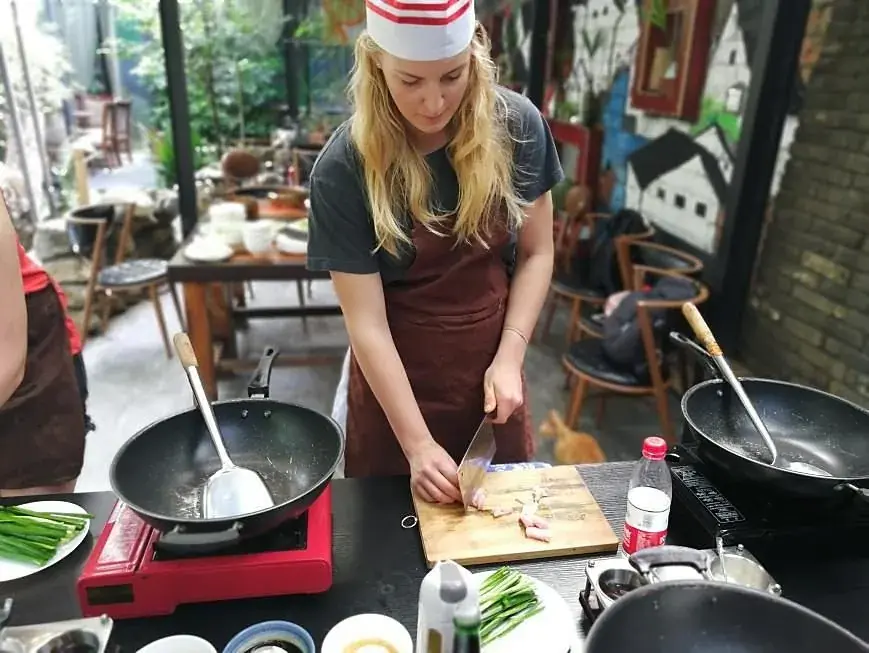
10:00The best-known dishes
Carefully selected dishes · taken one step at a time
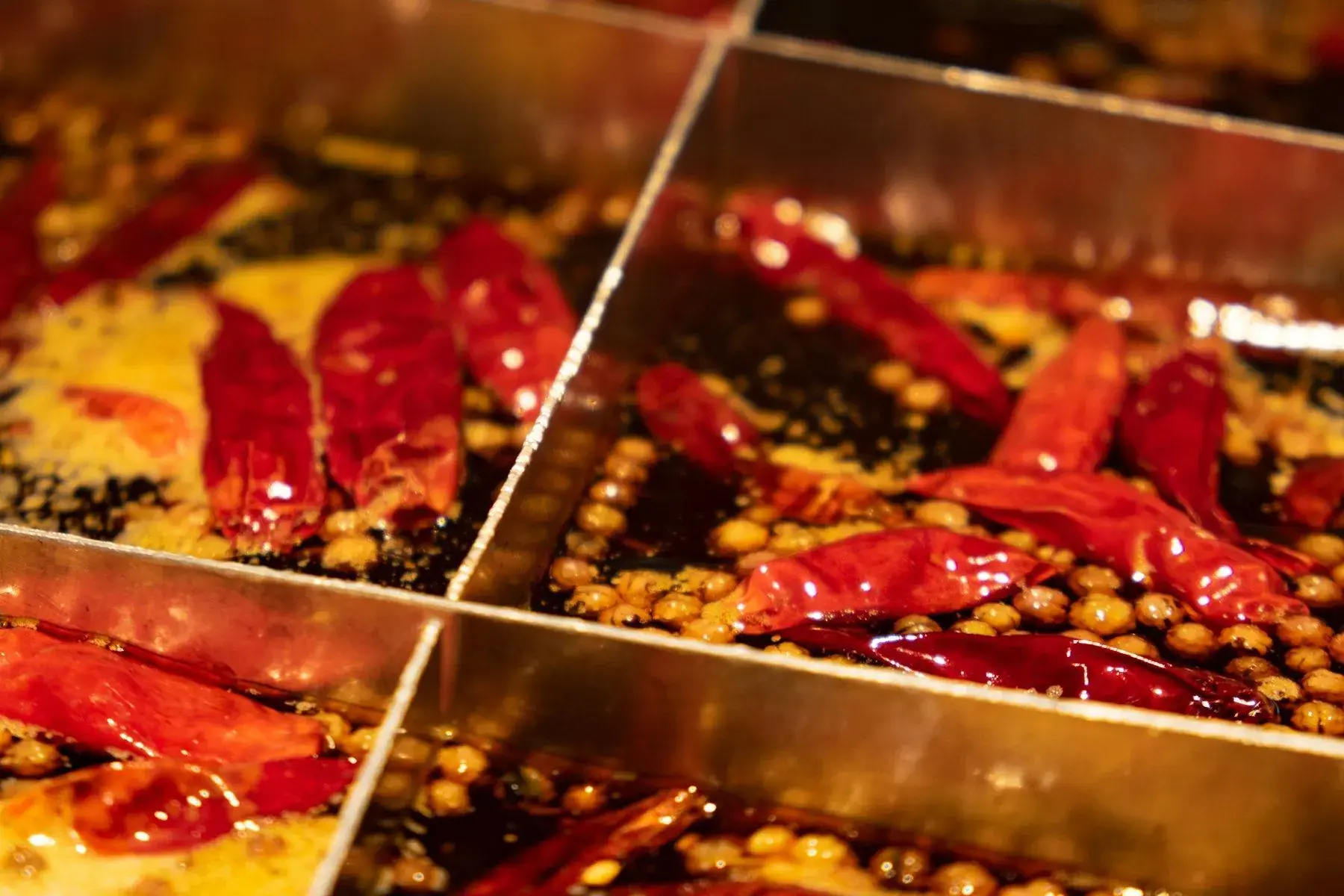
You cook the best-known Sichuan dishes yourself, step by step, at your own flame, with the chef walking the line. There is a moment in every session where somebody puts the chilli in too early and the whole garden finds out — and that, genuinely, is when people learn what the sequence is for.
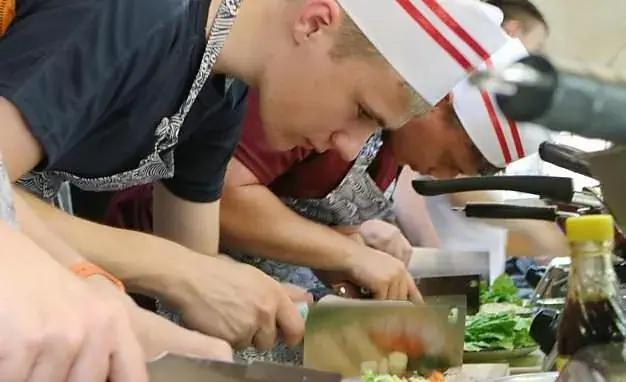
10:40The stories behind it
Food culture · and the reasons behind the rules
Alongside the cooking there is the explanation: why the cut changes the dish, why some things go into cold oil and some into smoking oil, and where the famous numbing heat actually comes from. Sichuan food has a logic, and once you have it you stop needing recipes for anything that isn't written down.
11:20The point of it
Together · in the garden · however long it takes
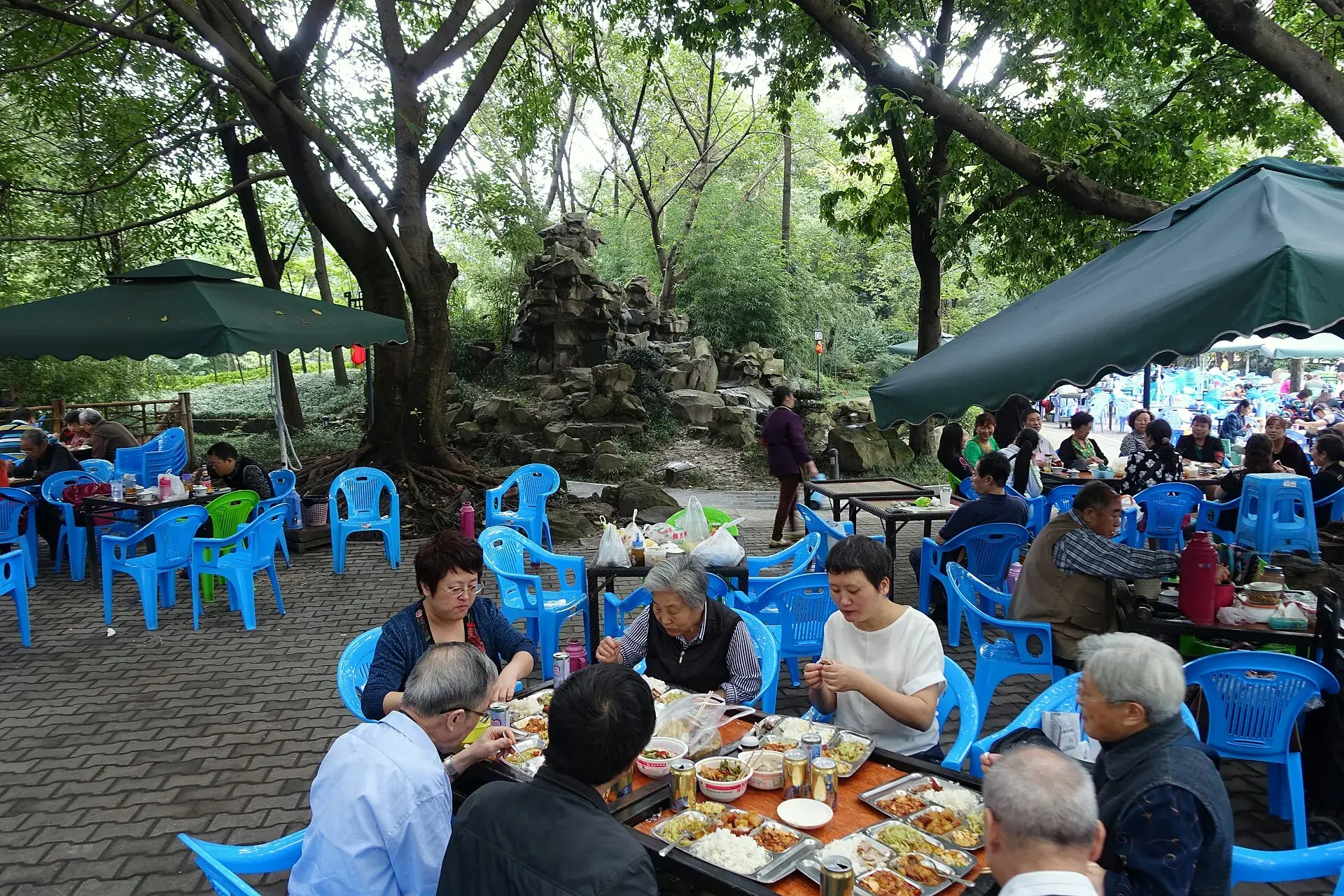
Everything comes to one table and you eat it together, in the garden, comparing whose worked. This is the actual end of the experience rather than a formality tacked onto it — and it is why the class is scheduled for four hours instead of two.
The bit that outlasts the day
Almost every cooking class in the world sends you home with a photograph and a full stomach, and by the following month you could not reproduce a single thing you made.
This one hands you the recipes for what you cooked, written to be used in your own kitchen with what you can actually buy — a small thing to include, and the reason people write back months later.
It also runs twice a day, morning and afternoon, which makes it the easiest thing on this list to fit around everything else you are doing in Chengdu.
Runs twice a day, every day, on its own. Tell us a date and whether you want the morning or the afternoon.
Start planning