3 Days
Beijing
北京



16 Days & 15 Nights — Private · Custom Itinerary


6 Days · 1813 Arrows and the World's Oldest Tea
Why it earns its place
Beijing and Xi'an open the trip with the imperial canon at access tiers most group tours skip — the Forbidden City's 1813 Tianli Society arrow, the Terracotta Army's actual 1974 discoverer at home, and the Guinness-certified world's oldest tea leaves walked on glass floors above active excavation.
The trip opens with an unhurried Beijing arrival on Day one. Day two stacks the imperial peak: Tian'anmen Square at opening hour leads into the Forbidden City, where your guide stops at the Gate of Thriving Imperial Clan to point out the arrow lodged in its plaque — the relic of the 1813 Tianli Society uprising that Emperor Jiaqing kept as a warning to his descendants. An a la carte Peking Duck welcome lunch follows (CNY 150 value), then Yonghe Temple — the most revered Tibetan Buddhist temple outside Tibet — and the Temple of Heaven's Altar of Prayer for Good Harvests. Day three runs Mutianyu Great Wall on round-trip cable car for maximum sightseeing time, then a 40-minute Shichahai hutong rickshaw ride into a real siheyuan family home. Day four pivots west by HSR. Day five at Xi'an heads to the Terracotta Warriors, then visits Yang Zhifa — the farmer who unearthed the first warrior on March 23, 1974 — at home. Day six adds Han Yang Ling's Guinness-record 2,100-year-old tea before the flight to Guilin. Practical tips: Yang Zhifa home visit needs 24h advance request — your guide books on Day 1 to lock the slot; bring a notebook if you want him to sign as the first discoverer. Han Yang Ling closes Mondays — your guide moves the visit to Tuesday morning if Day 6 falls on a Monday, swapping the museum for an extended Muslim Quarter snack tour.
Why it earns its place
Beijing and Xi'an open the trip with the imperial canon at access tiers most group tours skip — the Forbidden City's 1813 Tianli Society arrow, the Terracotta Army's actual 1974 discoverer at home, and the Guinness-certified world's oldest tea leaves walked on glass floors above active excavation.
The trip opens with an unhurried Beijing arrival on Day one. Day two stacks the imperial peak: Tian'anmen Square at opening hour leads into the Forbidden City, where your guide stops at the Gate of Thriving Imperial Clan to point out the arrow lodged in its plaque — the relic of the 1813 Tianli Society uprising that Emperor Jiaqing kept as a warning to his descendants. An a la carte Peking Duck welcome lunch follows (CNY 150 value), then Yonghe Temple — the most revered Tibetan Buddhist temple outside Tibet — and the Temple of Heaven's Altar of Prayer for Good Harvests. Day three runs Mutianyu Great Wall on round-trip cable car for maximum sightseeing time, then a 40-minute Shichahai hutong rickshaw ride into a real siheyuan family home. Day four pivots west by HSR. Day five at Xi'an heads to the Terracotta Warriors, then visits Yang Zhifa — the farmer who unearthed the first warrior on March 23, 1974 — at home. Day six adds Han Yang Ling's Guinness-record 2,100-year-old tea before the flight to Guilin. Practical tips: Yang Zhifa home visit needs 24h advance request — your guide books on Day 1 to lock the slot; bring a notebook if you want him to sign as the first discoverer. Han Yang Ling closes Mondays — your guide moves the visit to Tuesday morning if Day 6 falls on a Monday, swapping the museum for an extended Muslim Quarter snack tour.
3 Days · Li River Cruise to a Hilltop Panorama
Why it earns its place
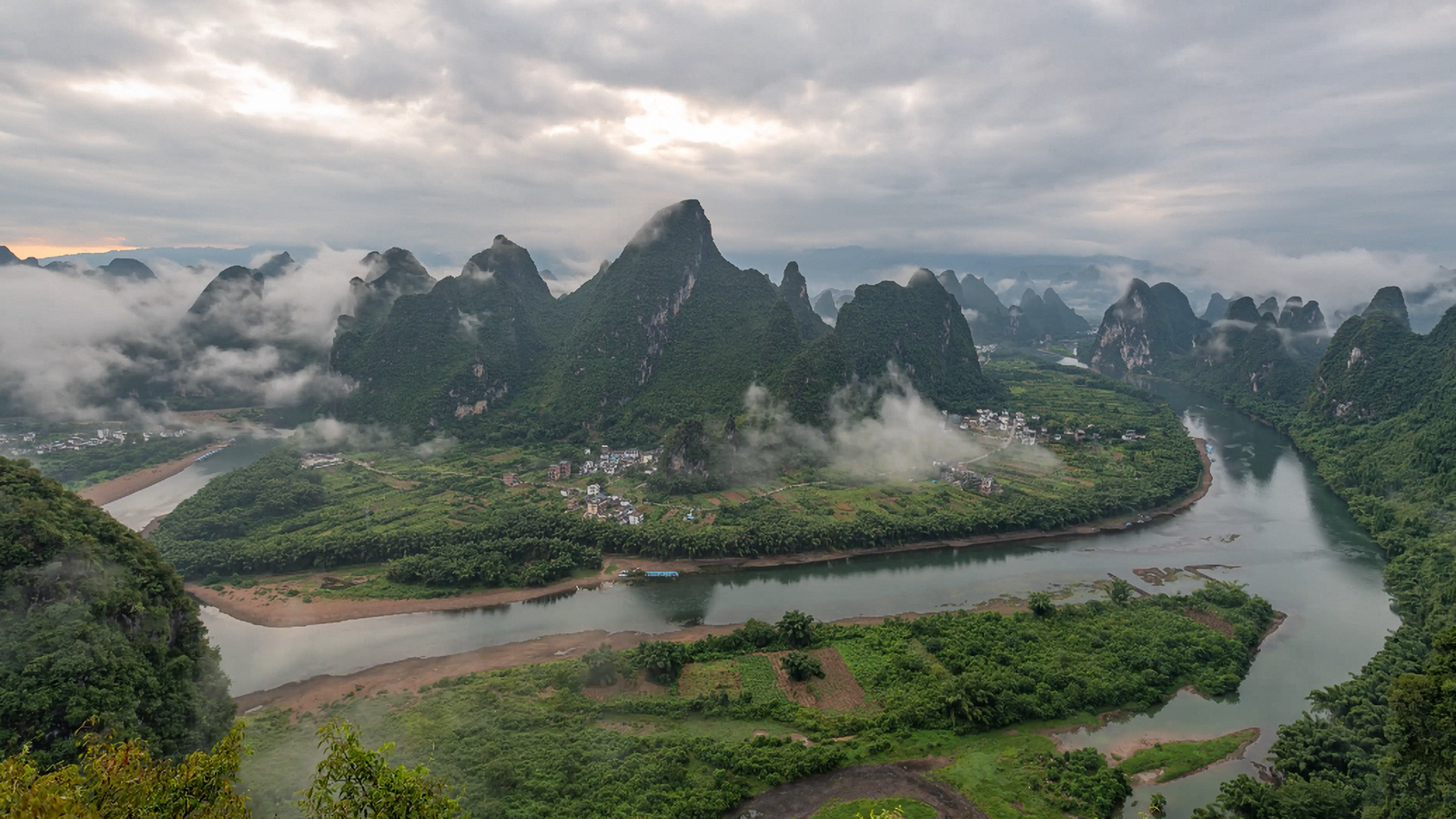
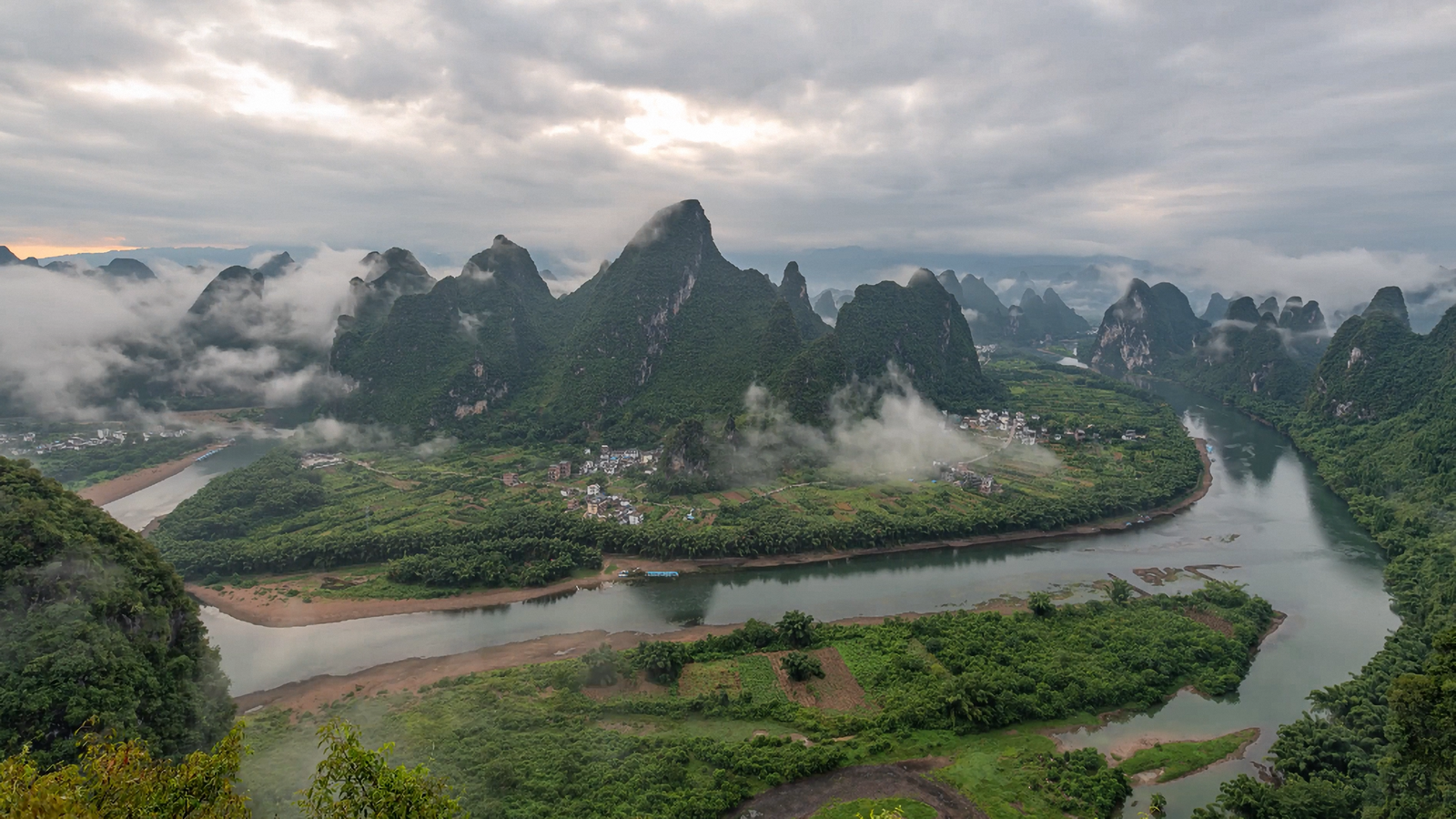
Guilin and Yangshuo deliver the karst peaks featured on the 20-yuan banknote with a layered access tier — a four-hour cruise, an hour of countryside cycling, and the hilltop panorama most cruise-only tours never climb to.
The flight from Xi'an reaches Guilin in the evening for a hotel night before the trip's most photographed cruise. Day seven runs the Li River from Guilin to Yangshuo — four hours past the karst peaks featured on the 20-yuan banknote, with an onboard box lunch served as the boat passes the exact scene marker. Bringing your own snack is the operator's discreet recommendation in case the box meal isn't to your taste. After disembarking, a one-hour countryside cycle past rice paddies and water buffalo gives the rural-immersion layer cruise-only tours skip; non-cyclists can opt for car or guided walking. Day eight leaves the morning free in Yangshuo — West Street shopping, Yulong River bamboo drifting, or rock climbing on a karst hill — before the drive back to Guilin. The detour climbs Xianggong Hill for the panoramic full-Li-River view from above, then closes at Elephant Trunk Hill, the natural landmark that looks like an elephant drinking from the Li River. Day nine flies to Chengdu. Practical tips: Li River cruise schedules are weather-dependent — boats run rain or shine, but karst peaks gain misty atmospheric layers on rainy days that photographers actually prefer over harsh sunlight. Xianggong Hill's summit is a 20-minute climb with stairs — wear trainers for Day 8 and bring a wide-angle lens; the panorama beats any in-cruise photo angle.
Why it earns its place
Guilin and Yangshuo deliver the karst peaks featured on the 20-yuan banknote with a layered access tier — a four-hour cruise, an hour of countryside cycling, and the hilltop panorama most cruise-only tours never climb to.
The flight from Xi'an reaches Guilin in the evening for a hotel night before the trip's most photographed cruise. Day seven runs the Li River from Guilin to Yangshuo — four hours past the karst peaks featured on the 20-yuan banknote, with an onboard box lunch served as the boat passes the exact scene marker. Bringing your own snack is the operator's discreet recommendation in case the box meal isn't to your taste. After disembarking, a one-hour countryside cycle past rice paddies and water buffalo gives the rural-immersion layer cruise-only tours skip; non-cyclists can opt for car or guided walking. Day eight leaves the morning free in Yangshuo — West Street shopping, Yulong River bamboo drifting, or rock climbing on a karst hill — before the drive back to Guilin. The detour climbs Xianggong Hill for the panoramic full-Li-River view from above, then closes at Elephant Trunk Hill, the natural landmark that looks like an elephant drinking from the Li River. Day nine flies to Chengdu. Practical tips: Li River cruise schedules are weather-dependent — boats run rain or shine, but karst peaks gain misty atmospheric layers on rainy days that photographers actually prefer over harsh sunlight. Xianggong Hill's summit is a 20-minute climb with stairs — wear trainers for Day 8 and bring a wide-angle lens; the panorama beats any in-cruise photo angle.
5 Days · Bamboo Feeding to the Three Gorges Dam
Why it earns its place
Chengdu and the Yangtze cruise pair China's most beloved animal at active feeding hour with three nights drifting through the Three Gorges — the trip's deliberate comfort-pace anchor between intensive city blocks.
The flight from Guilin reaches Chengdu for Day ten's panda morning at the Research Base of Giant Panda Breeding, when cubs climb trees and romp through grass at active bamboo-feeding hour. Jinsha Site Museum follows — built on the 12th-century BC Shu Kingdom capital ruins, with the Gold Foil of the Sun God Bird (now China's cultural heritage symbol) as the centrepiece. The afternoon slows down at Xiaojiahe Community: lunch at Yongle Restaurant, a local vegetable market walk, and tea on the river bank where elders play mahjong as your guide pours coffee in a traditional covered tea bowl. Day eleven runs HSR to Chongqing for a Ciqikou (Porcelain Village) walk before boarding the Yangtze cruise. Day twelve disembarks at Fengdu Ghost City — the 2,000-year-old netherworld built on Chinese underworld legend. Day thirteen drifts through Qutang, Wu and Xiling Gorges, with a sampan tributary tour up Shennong Stream past the Ba people's hanging coffins on limestone walls. Day fourteen tours the Three Gorges Dam (3,335m long) before HSR or flight to Shanghai. Practical tips: Pandas sleep through afternoons — the morning visit isn't optional if you want them awake; arrive at the Research Base by 08:30 for the active feeding window. New Century Cruises serve buffet dinner Day 11; Victoria Cruises do not — if you board Victoria, your guide arranges a Chongqing hotpot dinner downtown before the gangway.
Why it earns its place
Chengdu and the Yangtze cruise pair China's most beloved animal at active feeding hour with three nights drifting through the Three Gorges — the trip's deliberate comfort-pace anchor between intensive city blocks.
The flight from Guilin reaches Chengdu for Day ten's panda morning at the Research Base of Giant Panda Breeding, when cubs climb trees and romp through grass at active bamboo-feeding hour. Jinsha Site Museum follows — built on the 12th-century BC Shu Kingdom capital ruins, with the Gold Foil of the Sun God Bird (now China's cultural heritage symbol) as the centrepiece. The afternoon slows down at Xiaojiahe Community: lunch at Yongle Restaurant, a local vegetable market walk, and tea on the river bank where elders play mahjong as your guide pours coffee in a traditional covered tea bowl. Day eleven runs HSR to Chongqing for a Ciqikou (Porcelain Village) walk before boarding the Yangtze cruise. Day twelve disembarks at Fengdu Ghost City — the 2,000-year-old netherworld built on Chinese underworld legend. Day thirteen drifts through Qutang, Wu and Xiling Gorges, with a sampan tributary tour up Shennong Stream past the Ba people's hanging coffins on limestone walls. Day fourteen tours the Three Gorges Dam (3,335m long) before HSR or flight to Shanghai. Practical tips: Pandas sleep through afternoons — the morning visit isn't optional if you want them awake; arrive at the Research Base by 08:30 for the active feeding window. New Century Cruises serve buffet dinner Day 11; Victoria Cruises do not — if you board Victoria, your guide arranges a Chongqing hotpot dinner downtown before the gangway.
Why it earns its place
Chengdu and the Yangtze cruise pair China's most beloved animal at active feeding hour with three nights drifting through the Three Gorges — the trip's deliberate comfort-pace anchor between intensive city blocks.
The flight from Guilin reaches Chengdu for Day ten's panda morning at the Research Base of Giant Panda Breeding, when cubs climb trees and romp through grass at active bamboo-feeding hour. Jinsha Site Museum follows — built on the 12th-century BC Shu Kingdom capital ruins, with the Gold Foil of the Sun God Bird (now China's cultural heritage symbol) as the centrepiece. The afternoon slows down at Xiaojiahe Community: lunch at Yongle Restaurant, a local vegetable market walk, and tea on the river bank where elders play mahjong as your guide pours coffee in a traditional covered tea bowl. Day eleven runs HSR to Chongqing for a Ciqikou (Porcelain Village) walk before boarding the Yangtze cruise. Day twelve disembarks at Fengdu Ghost City — the 2,000-year-old netherworld built on Chinese underworld legend. Day thirteen drifts through Qutang, Wu and Xiling Gorges, with a sampan tributary tour up Shennong Stream past the Ba people's hanging coffins on limestone walls. Day fourteen tours the Three Gorges Dam (3,335m long) before HSR or flight to Shanghai. Practical tips: Pandas sleep through afternoons — the morning visit isn't optional if you want them awake; arrive at the Research Base by 08:30 for the active feeding window. New Century Cruises serve buffet dinner Day 11; Victoria Cruises do not — if you board Victoria, your guide arranges a Chongqing hotpot dinner downtown before the gangway.
2 Days · Yu Garden to the Bund
Why it earns its place
Shanghai closes the trip with the past-present-future contrast no other Chinese city can stage — a 1559 Ming garden, the colonial Bund, and Pudong's contemporary skyline across the Huangpu in a single afternoon.
The HSR or flight from Yichang reaches Shanghai by late afternoon Day fourteen, with a private transfer to a Bund-adjacent hotel for an unhurried first night looking out at Pudong's towers across the Huangpu. Day fifteen opens at the Shanghai Urban Planning Exhibition Hall, where a giant scale-model traces the city's growth from fishing village to metropolis with photos, videos and interactive displays. Yu Garden follows — the 1559 Ming-dynasty private garden of a Sichuan official, with classical Jiangnan rockeries, koi ponds and the Bridge of Nine Turnings — paired with a walk through Yuyuan Bazaar before the a la carte farewell lunch (CNY 150 value, Shanghai and Cantonese cuisine). The afternoon strolls Tianzifang's old longtang lanes for artsy boutiques and cafés, then runs the Huangpu River cruise where the Bund's old Euromerican buildings face Pudong's skyscrapers — past, present and future of Shanghai in a single frame. The Bund's free-time walk closes the day. Day sixteen is the goodbye morning, with private transfer to Pudong (PVG) or Hongqiao (SHA) Airport. Practical tips: Yu Garden's bazaar is busiest 11:00–14:00 — your guide times the courtyard visit before 10:30, then routes lunch through the bazaar's quieter upstairs floors. Huangpu River cruises depart hourly from 11:00 — afternoon sailings around 16:30 catch the Bund's late-afternoon light before Pudong's evening illumination begins.
Free PDF
We’ll send this itinerary guide to your inbox for free.
No spam, ever. Unsubscribe anytime.
Talk to Vivian
From itinerary details to practical travel prep, if there’s anything you’d like to clarify, we’re happy to talk it through with you first.
Quick question
Drop us a note — we reply within 24 hours.
Private China Route Concierge
"A bilingual planning desk for route-v2 journeys."
Our China team tunes pacing, hotels and local hosts around each route style.
PRE-TRIP
BEFORE DEPARTURE
ON THE GROUND
No template. No group you didn't choose. Just one specialist, building your trip from scratch.
Step 01
Not your dates and budget — your curiosity. Where have you always wanted to go? What do you want to feel? We start there.
24h
First concept delivered
Step 02
Your specialist builds the itinerary from scratch — routes, hosts, hotels, and experiences you won't find anywhere else.
100%
Bespoke, never off-the-shelf
Step 03
When the plan feels right, a 10% deposit holds your entire trip. Balance due 30 days before departure.
10%
Deposit to secure everything
Step 04
Your Trip Pack arrives before you fly. On the road, your concierge is one message away — for the expected and everything you didn't plan for.
24/7
Support throughout your journey
No pressure. Browse our trips, or talk to a real person. Either way, your inbox stays clean.