3 Days
Xi'an
西安



10 Days & 9 Nights — Private · Custom Itinerary
3 Days · Where the Ancient Trade Corridor Began
Why it earns its place
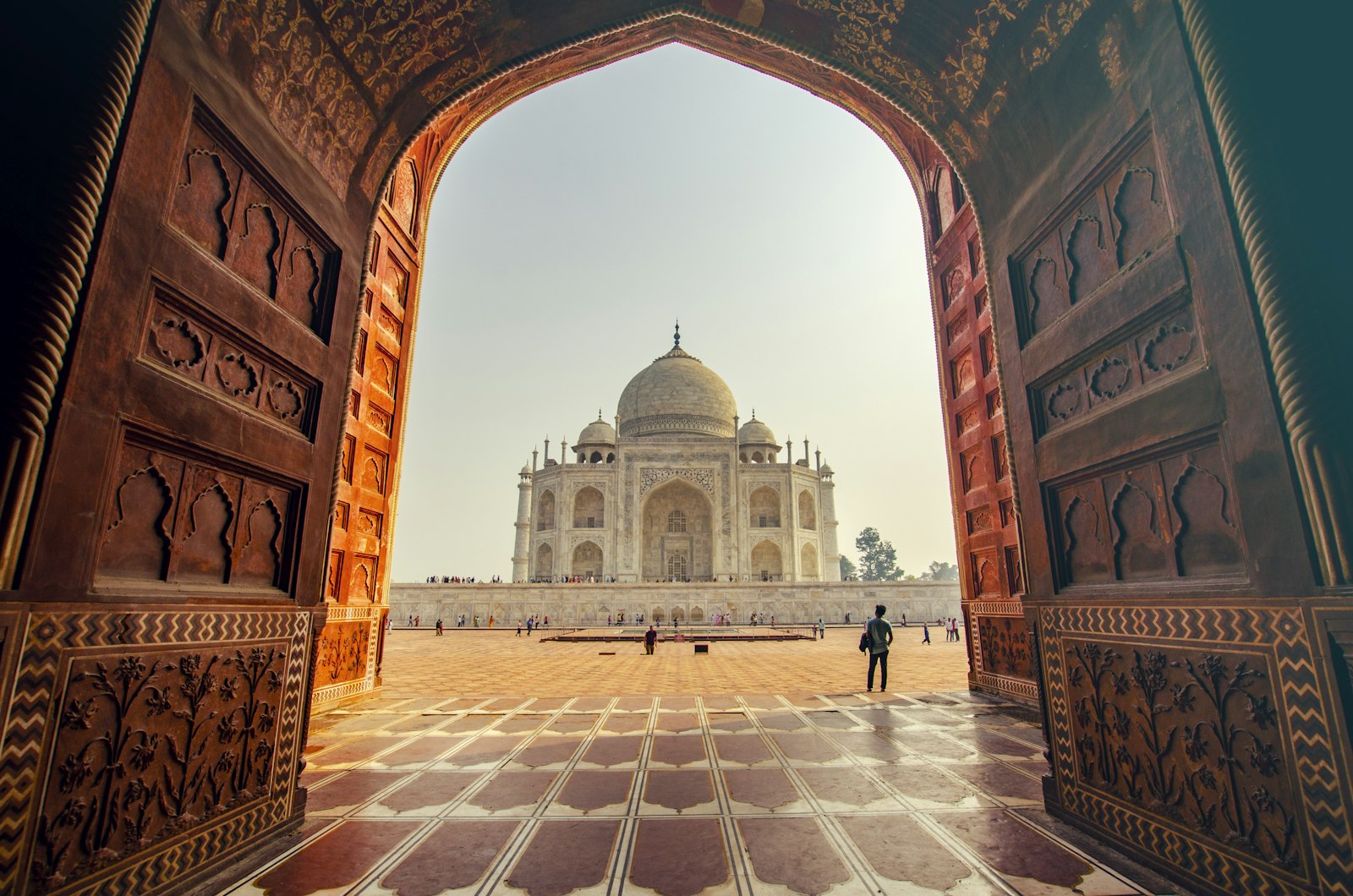
Xi'an is the trip's eastern anchor — not just home to the Terracotta Warriors, but the Tang-dynasty Chang'an from which Silk Road caravans actually departed for the western territories.
The journey opens inside Xi'an's intact Ming-dynasty city walls — your guide collects you at the airport and the rest of the day stays unhurried for jet-lag recovery. Day two is the headline morning at the Terracotta Warriors, but framed differently than most tours present it: Pit One's army is the funerary spectacle, but the bronze chariot hall reveals the metallurgical and trade networks the Qin emperor inherited from Silk Road predecessors. The afternoon walks the Big Wild Goose Pagoda — built specifically to house the Buddhist sutras the monk Xuanzang carried back from India along the same route this trip will follow. Day three pairs the city wall (with optional cycling along the 14km battlement) with the Muslim Quarter food crawl — the Hui community's hand-pulled noodles, paomo soup and persimmon cakes are the tangible legacy of centuries of Central Asian merchants settling in Chang'an. The afternoon high-speed train heads west into the Hexi Corridor toward Jiayuguan. Practical tips: Terracotta Warriors photography requires no flash and shoulders covered — bring a light layer for the air-conditioned pits. The Muslim Quarter's busiest hour is 19:00–21:00; arrive at 17:00 for shorter food queues and clearer photos.
4 Days · Gobi Forts and UNESCO Caves
Why it earns its place
Jiayuguan and Dunhuang form the Hexi Corridor's defensive and spiritual core — the lonely western Wall meets the world's most important Buddhist grotto network within a single five-hour desert drive.
Jiayuguan is the Wall most travellers never see. Day four walks the main pass — rammed-earth ramparts, not the dressed stone of the eastern Wall, with panoramic Gobi views from the watchtower. The First Pier of the Great Wall sits dramatically on the Yellow River cliff edge, while the Overhanging Wall climbs Heishan Mountain at a 45-degree slope. Day five is a five-hour road transfer through pure Gobi to Dunhuang, the most important Silk Road junction east of Kashgar. Day six opens at Mogao Caves — 735 grottoes inscribed with 1,000 years of Buddhist art, where photography is forbidden but the 30-metre Tang-era Maitreya carving rewards every minute of restraint. The afternoon turns to the Singing Sand Dunes and Crescent Moon Spring, with optional camel rides at golden hour. Day seven adds Yulin Caves — Mogao's quieter sister site, where the murals are better preserved and the visitor numbers a fraction. The afternoon transfers to Liuyuan Station for the high-speed train to Turpan. Practical tips: Mogao Caves photography is strictly prohibited inside the grottoes — leave cameras in the locker, your guide will provide reference postcards. Singing Sand Dunes are coldest at sunrise and hottest at midday — the 16:00–18:00 window has the best light and tolerable temperatures.
Why it earns its place
Jiayuguan and Dunhuang form the Hexi Corridor's defensive and spiritual core — the lonely western Wall meets the world's most important Buddhist grotto network within a single five-hour desert drive.
Jiayuguan is the Wall most travellers never see. Day four walks the main pass — rammed-earth ramparts, not the dressed stone of the eastern Wall, with panoramic Gobi views from the watchtower. The First Pier of the Great Wall sits dramatically on the Yellow River cliff edge, while the Overhanging Wall climbs Heishan Mountain at a 45-degree slope. Day five is a five-hour road transfer through pure Gobi to Dunhuang, the most important Silk Road junction east of Kashgar. Day six opens at Mogao Caves — 735 grottoes inscribed with 1,000 years of Buddhist art, where photography is forbidden but the 30-metre Tang-era Maitreya carving rewards every minute of restraint. The afternoon turns to the Singing Sand Dunes and Crescent Moon Spring, with optional camel rides at golden hour. Day seven adds Yulin Caves — Mogao's quieter sister site, where the murals are better preserved and the visitor numbers a fraction. The afternoon transfers to Liuyuan Station for the high-speed train to Turpan. Practical tips: Mogao Caves photography is strictly prohibited inside the grottoes — leave cameras in the locker, your guide will provide reference postcards. Singing Sand Dunes are coldest at sunrise and hottest at midday — the 16:00–18:00 window has the best light and tolerable temperatures.
2 Days · Ruins Older Than Pompeii
Why it earns its place
Turpan is the Silk Road's archaeological crown jewel — Gaochang's leaf-shaped ruined city, Bezeklik's cliff-cut Buddhist caves, and the 2,000-year underground irrigation that turns desert into vineyards.
The Turpan basin sits 154 metres below sea level — China's hottest summer city, but in spring and autumn an oasis of grape trellises, melon fields and Uyghur courtyard houses. Day eight is the long archaeological day. Gaochang City Ruins occupy a leaf-shaped plateau where a complete Silk Road oasis city stood from the Han through the Yuan dynasties — three hundred years older than Pompeii, abandoned without conquest, just slowly emptied as trade routes shifted. The Bezeklik Thousand Buddha Caves carve into the cliff above the Murtuk River gorge, holding rare Manichaean murals alongside the Buddhist art. The Flaming Mountains drive-by closes the morning — the legendary range from Journey to the West that genuinely glows red at noon. Day nine opens at the Emin Minaret, China's tallest ancient minaret made entirely of patterned mud brick, and the Karez Well System, where you walk down into the cool underground channels still irrigating the city today. The afternoon transfers to Urumqi airport for the flight to Kashgar. Practical tips: Gaochang Ruins have almost no shade — visit before 11:00 and bring 1.5 litres of water per person. The Karez underground tunnel is 8°C cooler than the surface — bring a light layer even in summer.
4 Days · Sunday Bazaar and Heavenly Lake
Why it earns its place
Kashgar and Urumqi are the Uyghur cultural climax — Central Asia's largest weekly market, the holiest mosque in Xinjiang, and an alpine lake counterpoint to the desert.
Kashgar feels closer to Tashkent than Beijing — closer geographically, too. Day ten opens at Id Kah Mosque, where 10,000 worshippers gather for Friday prayers, then the Abakh Khoja Tomb, a 17th-century five-generation Islamic family mausoleum better known to Chinese visitors as the resting place of Emperor Qianlong's "Fragrant Concubine." The afternoon belongs to the Sunday Bazaar — Central Asia's largest market, where locals still trade goats, camels, horses, hand-knotted carpets, doppa hats and rolls of silk the way Persian merchants did a thousand years ago. Day eleven walks Kashgar Old Town's mud-brick alleys before the flight back to Urumqi. Day twelve is the alpine counterpoint at Heavenly Lake (Tianchi) — 1,900 metres up, framed by snow-capped Bogda Peak, with Kazakh yurts on the shoreline serving lunch the traditional way. The afternoon explores Erdaoqiao Bazaar's daily Uyghur market and the Xinjiang Museum's Loulan Beauty mummy. Day thirteen is the goodbye morning to Urumqi Diwopu International Airport. Practical tips: The livestock half of Kashgar's bazaar runs Sunday only — your trip is timed to land Sunday in Kashgar; confirm with your guide if dates shift. Xinjiang requires foreign-traveller registration with your guide's permit; carry your passport at all times for hotel and checkpoint screening.
Why it earns its place
Kashgar and Urumqi are the Uyghur cultural climax — Central Asia's largest weekly market, the holiest mosque in Xinjiang, and an alpine lake counterpoint to the desert.
Kashgar feels closer to Tashkent than Beijing — closer geographically, too. Day ten opens at Id Kah Mosque, where 10,000 worshippers gather for Friday prayers, then the Abakh Khoja Tomb, a 17th-century five-generation Islamic family mausoleum better known to Chinese visitors as the resting place of Emperor Qianlong's "Fragrant Concubine." The afternoon belongs to the Sunday Bazaar — Central Asia's largest market, where locals still trade goats, camels, horses, hand-knotted carpets, doppa hats and rolls of silk the way Persian merchants did a thousand years ago. Day eleven walks Kashgar Old Town's mud-brick alleys before the flight back to Urumqi. Day twelve is the alpine counterpoint at Heavenly Lake (Tianchi) — 1,900 metres up, framed by snow-capped Bogda Peak, with Kazakh yurts on the shoreline serving lunch the traditional way. The afternoon explores Erdaoqiao Bazaar's daily Uyghur market and the Xinjiang Museum's Loulan Beauty mummy. Day thirteen is the goodbye morning to Urumqi Diwopu International Airport. Practical tips: The livestock half of Kashgar's bazaar runs Sunday only — your trip is timed to land Sunday in Kashgar; confirm with your guide if dates shift. Xinjiang requires foreign-traveller registration with your guide's permit; carry your passport at all times for hotel and checkpoint screening.
Free PDF
We’ll send this itinerary guide to your inbox for free.
No spam, ever. Unsubscribe anytime.
Talk to Vivian
From itinerary details to practical travel prep, if there’s anything you’d like to clarify, we’re happy to talk it through with you first.
Quick question
Drop us a note — we reply within 24 hours.
Private China Route Concierge
"A bilingual planning desk for route-v2 journeys."
Our China team tunes pacing, hotels and local hosts around each route style.
PRE-TRIP
BEFORE DEPARTURE
ON THE GROUND
No template. No group you didn't choose. Just one specialist, building your trip from scratch.
Step 01
Not your dates and budget — your curiosity. Where have you always wanted to go? What do you want to feel? We start there.
24h
First concept delivered
Step 02
Your specialist builds the itinerary from scratch — routes, hosts, hotels, and experiences you won't find anywhere else.
100%
Bespoke, never off-the-shelf
Step 03
When the plan feels right, a 10% deposit holds your entire trip. Balance due 30 days before departure.
10%
Deposit to secure everything
Step 04
Your Trip Pack arrives before you fly. On the road, your concierge is one message away — for the expected and everything you didn't plan for.
24/7
Support throughout your journey
No pressure. Browse our trips, or talk to a real person. Either way, your inbox stays clean.