2 Days
Shanghai
上海



21 Days & 20 Nights — Private · Custom Itinerary



2 Days · Where East meets West on the Bund
Why it earns its place
Shanghai opens your China journey where the country's modern ambitions meet its trading-port past—the Bund's colonial facades face Pudong's glass towers across the Huangpu, setting the contrast that defines the weeks ahead.
Your private guide meets you at the airport and transfers you directly to your hotel, handling check-in so you can settle in without stress. On day two, the Bund unfolds in the morning light—Art Deco banks and neoclassical trading houses line the waterfront, their 1920s elegance intact. Across the river, the skyline declares a different century entirely. In the afternoon, Yuyuan Garden offers your first encounter with classical Chinese architecture. Rockeries, pavilions, and koi ponds occupy a compact space in the old city, each element placed according to principles refined over centuries. The garden's walls block out the surrounding streets, creating a pocket of stillness. Around it, the old town bazaar hums with vendors and the smell of steamed dumplings. Shanghai is not one city but several, layered across time and still coexisting. Practical tips: The Bund is best in early morning or evening when light softens the colonial facades and the Pudong skyline begins to glow. Yuyuan Garden gets crowded by midday; arrive when it opens to experience the pavilions and rockeries in relative quiet. Shanghai's metro is efficient and English-signed; your guide will show you how to navigate it for any evening explorations on your own.


1 Day · Classical gardens and silk-road canals
Why it earns its place
Suzhou refines what Shanghai introduced—here, classical Chinese aesthetics reach their peak in UNESCO gardens where every rock, pond, and pavilion placement follows centuries of design philosophy.
A short drive from Shanghai brings you to Suzhou, where the Humble Administrator's Garden spreads across five hectares of ponds, pavilions, and carefully composed views. Built in 1509, the garden demonstrates how Chinese landscape design creates the illusion of vast nature within walled confines. Each window frames a different scene; each pathway reveals a new arrangement of water, stone, and plant. Your guide explains the symbolism—rockeries represent mountains, ponds suggest lakes, and the zigzag bridges slow your pace to match the garden's contemplative intent. In the afternoon, Tongli Water Town offers a living version of the canal culture that once defined this region. Stone bridges arch over narrow waterways, whitewashed houses lean toward the water, and wooden boats pole past doorsteps. It's quieter than the more famous Zhouzhuang, with fewer tour groups and more of the daily rhythms that have persisted for centuries. Practical tips: Humble Administrator's Garden is Suzhou's most visited; arrive at opening time to photograph pavilions and ponds before crowds gather. Tongli Water Town is an hour from central Suzhou; the drive passes through countryside that shows the region's agricultural roots.


2 Days · Where granite peaks pierce the mist
Why it earns its place
Huangshan delivers your first major natural wonder—granite peaks that rise through clouds, twisted pines clinging to cliff faces, and an overnight stay on the mountain that lets you witness sunrise from 1,800 meters.
The journey begins at Hongcun Village, an 800-year-old settlement where Anhui-style houses cluster around a moon pond. White walls, black tiles, and horse-head gables create the architecture that appears in classical Chinese paintings. Farmers still work the surrounding fields, and the village's water system—designed in 1131—still functions, channeling streams past every doorstep. At Huangshan's south gate, a shuttle bus and the Yungu Cable Car deliver you to the mountain's peak in thirty minutes. Your guide, experienced in mountain routes, offers two options based on your energy. Energetic hikers descend to the hotel, then tackle the West Sea Grand Canyon—a three-hour loop through the first and second rings to the canyon base, with an optional push to Flying-over Rock and Bright Top for sunset. Beginners and families take a gentler thirty-minute walk to the hotel, then explore the canyon's first ring at their own pace, saving energy for sunset at Cloud-dispelling Pavilion. You spend the night on the mountain—a rare experience, as accommodation is limited and books out months ahead. Morning brings the reason: sunrise from the North Sea or Shixin Peak, when the first light catches the granite spires and the valleys fill with cloud. The peaks seem to float. After breakfast, you hike among the formations that have inspired Chinese painters for a thousand years—the Umbrella Pine, Black Tiger Pine, Dream Flower Pine—each named for its shape or the legend attached to it. Practical tips: Book mountain-top hotels months in advance; availability is extremely limited and prices reflect the location's uniqueness. Pack light for the overnight—porters are available but expensive; bring only essentials and layers for the 10-15°C temperature drop at altitude. Sunrise viewing depends on weather; clouds can obscure the view, but the mist-shrouded peaks have their own beauty. The West Sea Grand Canyon's three-hour route is steep in sections; assess your fitness honestly and choose the shorter option if needed.


1 Day · Where poets found their muse for 1,200 years
Why it earns its place
Hangzhou centers on West Lake, a UNESCO site that has inspired Chinese poets and painters for twelve centuries—its willow-lined causeways, pagoda-topped hills, and tea terraces embody the landscape ideals that shaped Chinese aesthetics.
West Lake stretches before you, its surface reflecting the hills that ring the water. For over 1,200 years, this lake has been a muse—poets wrote of its beauty, emperors built pavilions along its shores, and the landscape became the template for classical Chinese garden design. You walk the Su Causeway, planted with willows and crossed by arched bridges, then visit Lingyin Temple, where Buddhist monks have chanted sutras since 328 AD. The temple's halls hold gilded statues, and the surrounding hills are carved with hundreds of Buddhist figures, their details softened by centuries of weather. In the afternoon, Meijiawu Tea Village takes you into the hills where Hangzhou's famous Longjing tea grows. A tea artist demonstrates the process: selecting leaves, preparing the set, heating the water to the precise temperature, and brewing with movements refined over generations. You learn the etiquette—how to smell the aroma, how to taste in small sips, letting the flavor develop. Five different teas follow, each with distinct character and some with herbal properties. It's an education in a culture where tea is not just a drink but a practice, a social ritual, and a connection to the land. Practical tips: West Lake is large; focus on the Su Causeway and one or two pavilions rather than trying to circle the entire perimeter in a day. Lingyin Temple sees heavy crowds on weekends and holidays; weekday mornings offer a quieter, more contemplative experience. Meijiawu Tea Village is in the hills west of the lake; the drive takes thirty minutes and passes through terraced tea plantations.


3 Days · Karst peaks and terraced hillsides
Why it earns its place
Guilin and Yangshuo deliver the landscapes that define Chinese scenery in the Western imagination—karst peaks rising from rivers, rice terraces carved into hillsides, and a rural rhythm that slows the journey after the cities.
Guilin introduces you to karst topography—limestone peaks that rise abruptly from flat plains, their shapes sculpted by millions of years of water erosion. The Reed Flute Cave takes you underground, where stalactites and stalagmites fill chambers lit in colors that emphasize their bizarre forms. Above ground, Elephant Trunk Hill demonstrates how the karst formations resemble animals, objects, or mythical creatures, each one named for what locals see in its shape. The next day, you drive two hours north to Longsheng, where the Longji Rice Terraces climb the hillsides in thousands of steps. Zhuang and Yao minority families have carved these terraces over 700 years, creating a patchwork of green and gold that shifts with the seasons—water-filled mirrors in spring, green waves in summer, golden harvest in autumn, silver frost in winter. You walk among the terraces, visit a minority family home, and share a lunch of bamboo rice and oil tea, dishes specific to this region and these communities. On day three, the Li River cruise carries you from Guilin to Yangshuo over four hours. Karst peaks line both banks, rising from the water in shapes that have appeared in Chinese paintings for centuries. Water buffalo patrol the fields, farmers work the paddies, and bamboo rafts float past. In Yangshuo, the countryside opens up—you cycle or take a battery car through villages and fields, the karst peaks always in view. West Street offers a break, its cafes and shops catering to the travelers who have discovered this town's charm, but the surrounding countryside remains quiet, agricultural, and photogenic. Practical tips: Longji Rice Terraces are most photogenic in May (water-filled) and October (golden harvest); summer is green but less dramatic. The Li River cruise takes four hours; bring sun protection, water, and a camera with zoom lens for distant karst formations. Yangshuo countryside is best explored by bicycle if you're comfortable riding; battery cars are available for those who prefer not to pedal.


Why it earns its place
Guilin and Yangshuo deliver the landscapes that define Chinese scenery in the Western imagination—karst peaks rising from rivers, rice terraces carved into hillsides, and a rural rhythm that slows the journey after the cities.
Guilin introduces you to karst topography—limestone peaks that rise abruptly from flat plains, their shapes sculpted by millions of years of water erosion. The Reed Flute Cave takes you underground, where stalactites and stalagmites fill chambers lit in colors that emphasize their bizarre forms. Above ground, Elephant Trunk Hill demonstrates how the karst formations resemble animals, objects, or mythical creatures, each one named for what locals see in its shape. The next day, you drive two hours north to Longsheng, where the Longji Rice Terraces climb the hillsides in thousands of steps. Zhuang and Yao minority families have carved these terraces over 700 years, creating a patchwork of green and gold that shifts with the seasons—water-filled mirrors in spring, green waves in summer, golden harvest in autumn, silver frost in winter. You walk among the terraces, visit a minority family home, and share a lunch of bamboo rice and oil tea, dishes specific to this region and these communities. On day three, the Li River cruise carries you from Guilin to Yangshuo over four hours. Karst peaks line both banks, rising from the water in shapes that have appeared in Chinese paintings for centuries. Water buffalo patrol the fields, farmers work the paddies, and bamboo rafts float past. In Yangshuo, the countryside opens up—you cycle or take a battery car through villages and fields, the karst peaks always in view. West Street offers a break, its cafes and shops catering to the travelers who have discovered this town's charm, but the surrounding countryside remains quiet, agricultural, and photogenic. Practical tips: Longji Rice Terraces are most photogenic in May (water-filled) and October (golden harvest); summer is green but less dramatic. The Li River cruise takes four hours; bring sun protection, water, and a camera with zoom lens for distant karst formations. Yangshuo countryside is best explored by bicycle if you're comfortable riding; battery cars are available for those who prefer not to pedal.


3 Days · Where Avatar's mountains became real
Why it earns its place
Zhangjiajie delivers otherworldly scenery—quartzite sandstone pillars that rise like the floating mountains in Avatar, glass walkways suspended over chasms, and the world's highest outdoor elevator ascending 335 meters in two minutes.
Zhangjiajie National Forest Park reveals its signature landscape immediately: thousands of sandstone pillars rising vertically from the forest floor, their tops often shrouded in mist. The Bailong Sightseeing Elevator—the world's highest and fastest—lifts you 335 meters up a cliff face in two minutes, its glass walls offering views of the Sandstone Peak Forest as you ascend. At the top, Yuanjiajie spreads before you, its attractions including the First Bridge (a natural stone arch) and the Hallelujah Mountain, the pillar that inspired Avatar's floating peaks. Director James Cameron's team photographed these formations, then digitally suspended them in the sky. Mount Tianzishan, meaning "Son of Heaven Mountain," offers what locals call the Four Natural Spectacles: misty clouds encircling the peaks, sunrise vistas, moonlit nights, and snow-capped winter landscapes. You'll likely witness at least one, depending on weather and season. The views stretch for kilometers, pillars receding into the distance in layers of blue-gray haze. On day two, Tianmen Mountain takes you higher. A cable car ascends to the summit, where the Tianmen Mountain Glass Walkway awaits those brave enough: a 60-meter-long path of reinforced glass suspended 1,430 meters above the ground, extending from a sheer cliff. Looking down, you see the valley floor through the transparent surface. It's thrilling and terrifying in equal measure. The Zhangjiajie Grand Canyon Glass Bridge offers a similar experience—the world's longest and highest glass-bottomed bridge when it opened, spanning a canyon 430 meters deep. Practical tips: Bailong Elevator queues can reach 1-2 hours during peak season; arrive early or consider the hiking alternative if you're fit and have time. Glass walkway requires shoe covers (provided) and has restrictions: no acrophobia, heart conditions, or high blood pressure; assess honestly before committing. Weather dramatically affects views; mist creates atmosphere but obscures distant pillars, while clear days offer vast panoramas. Zhangjiajie is large; three days allows thorough exploration, but prioritize Yuanjiajie and Tianmen Mountain if time is limited.


2 Days · China's first empire, still breathing
Why it earns its place
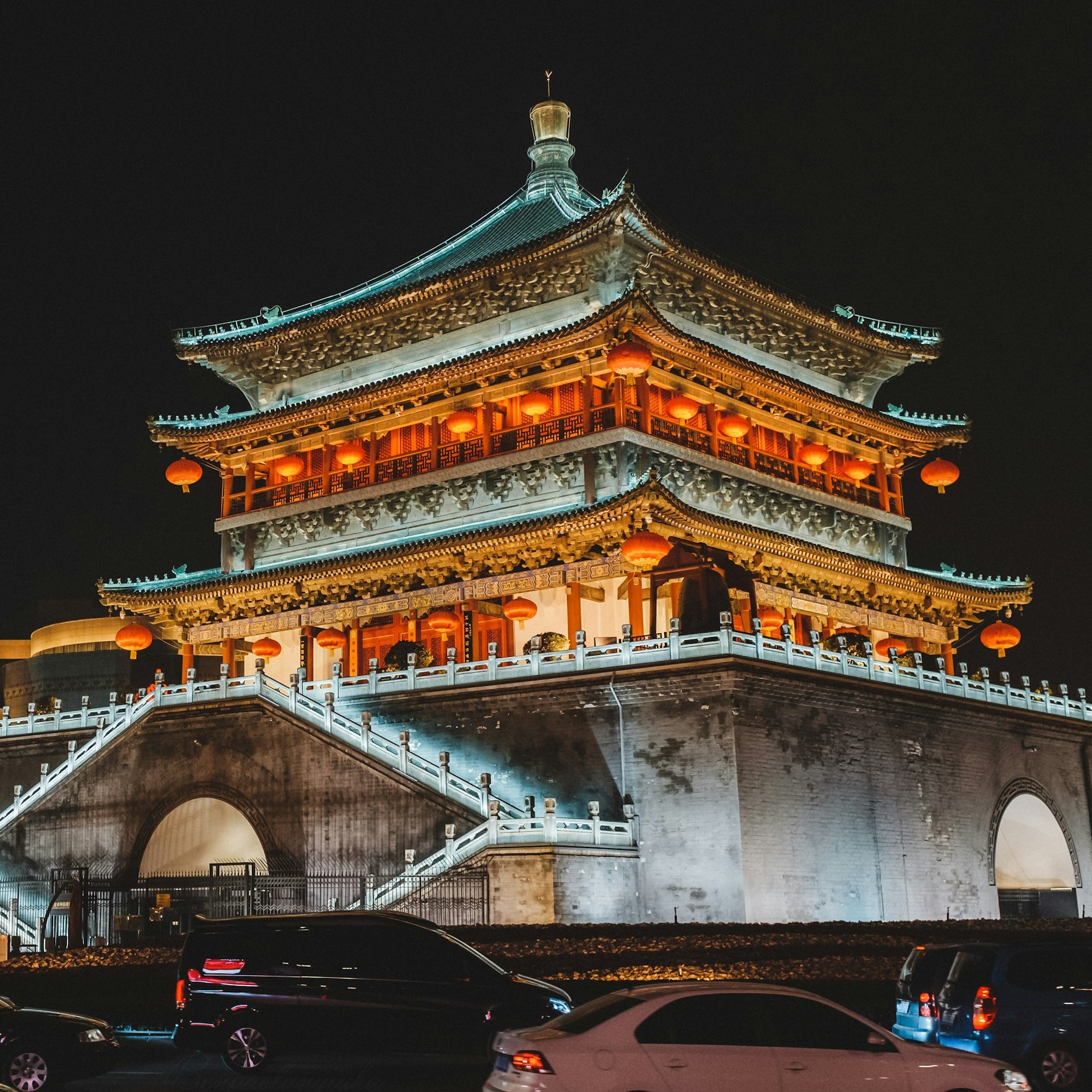
Xi'an anchors your journey in China's imperial origins—the Terracotta Warriors guard the first emperor's tomb, the city walls enclose the old capital, and the Muslim Quarter pulses with the food culture that defines this noodle capital.
The Terracotta Warriors confront you with scale and precision. Discovered by farmers digging a well in 1974, the army of over 7,000 life-sized soldiers, archers, horses, and chariots has guarded Emperor Qin's tomb since 210 BC. Each figure is unique—different faces, hairstyles, expressions—and the three excavation pits housed in protective hangars show the ongoing work. Pit 1 holds the main army in battle formation, Pit 2 contains cavalry and archers, and Pit 3 appears to be the command center. The scale suggests the emperor's ambition: unify China, then take an army into the afterlife. After the warriors, you visit a cave dwelling family workshop in the countryside, where a local artisan teaches you the process of crafting miniature Terracotta Warriors. It's hands-on, tactile, and surprisingly difficult—the clay must be shaped, features carved, and proportions maintained. The artisan's skill becomes evident as you struggle with your own attempt. The Big Wild Goose Pagoda follows, a seven-story brick structure built in 652 AD to house Buddhist scriptures brought from India by the monk Xuanzang after his epic journey. The temple complex around it holds halls with gilded statues and murals depicting Buddhist stories. On day two, the Small Wild Goose Pagoda and Xi'an Museum offer a quieter, less-visited counterpoint to the previous day's crowds. The museum's collection spans Xi'an's 3,000-year history, with artifacts from multiple dynasties displayed in a modern building that incorporates the Tang Dynasty temple grounds. In the afternoon, the Muslim Quarter immerses you in Xi'an's food culture. This is the noodle capital of China, and the stalls lining the streets prove it: biang biang noodles (wide, hand-pulled, named for the sound they make), roujiamo (Chinese hamburger with spiced meat), yangrou paomo (crumbled flatbread in lamb soup). Your guide navigates you past the tourist traps to the stalls locals frequent, where the food is authentic and the atmosphere chaotic. Practical tips: Terracotta Warriors site is large and crowded; arrive when it opens and visit Pit 1 first before tour groups arrive in force. Cave dwelling workshop is in the countryside, about 30 minutes from the warriors; it's a genuine cultural experience, not a shopping stop. Muslim Quarter is best in late afternoon and evening when the street food stalls are busiest and the atmosphere most vibrant. Xi'an's city wall can be cycled (14km perimeter, 2-3 hours); rent a bike if you have extra time and want a bird's-eye view of the old city.


2 Days · Buddhist art carved into cliffs
Why it earns its place
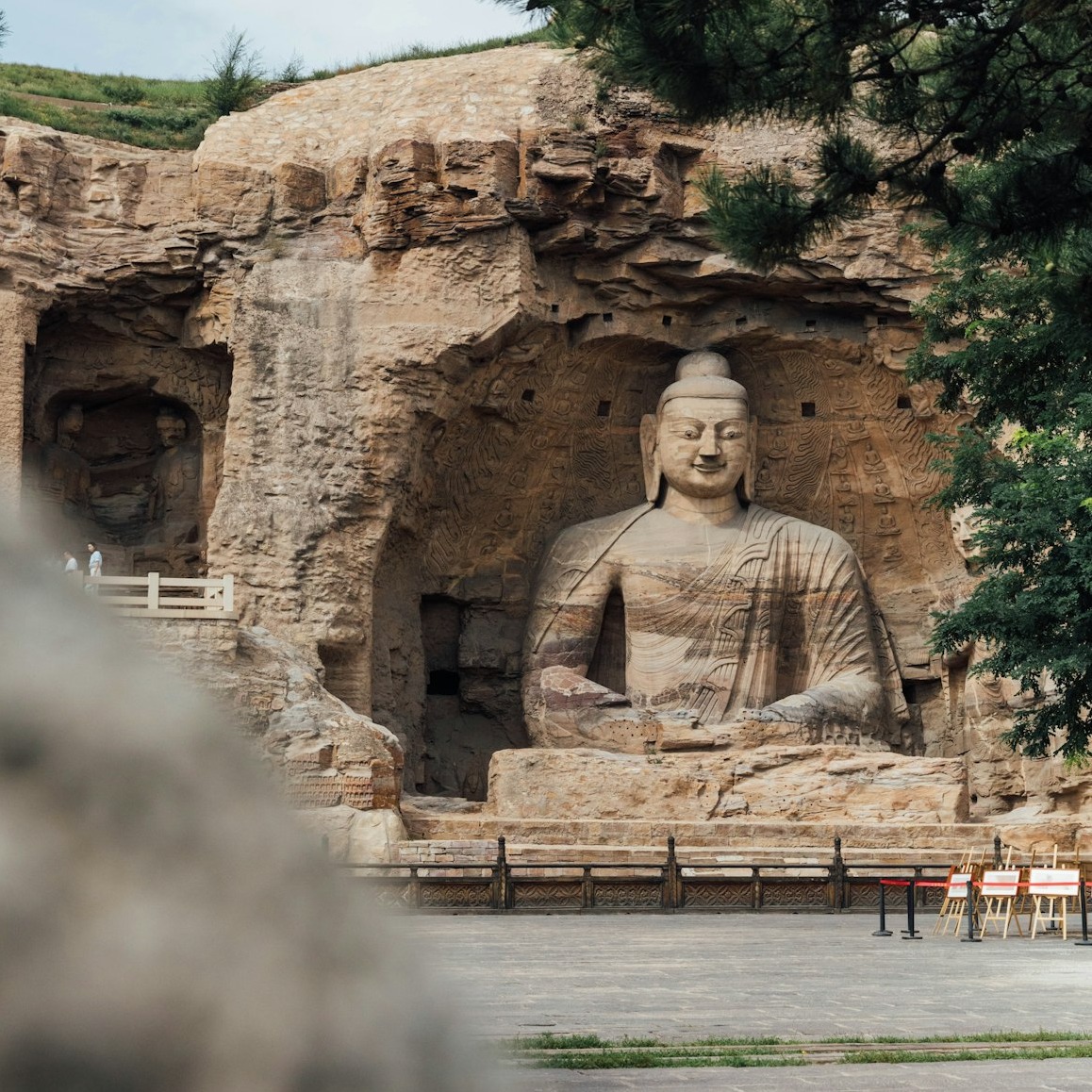
Datong takes you off the standard China tour route to two engineering and artistic marvels—the Yungang Grottoes' intricate Buddhist sculptures and the Hanging Monastery built into a cliff face 50 meters above ground, surviving 1,500 years of earthquakes and floods.
A six-hour high-speed train from Xi'an brings you to Datong, a northern city that served as capital during the Northern Wei Dynasty (386-534 AD). The Yungang Grottoes, carved into sandstone cliffs between 460 and 525 AD, contain 51,000 Buddhist statues across 252 caves. The scale varies from tiny figures to a 17-meter-tall seated Buddha, and the detail is remarkable—flowing robes, serene expressions, intricate halos, and scenes from Buddhist scriptures covering every surface. The caves show Indian, Persian, and Central Asian influences, evidence of the Silk Road's cultural exchange. Your guide explains the symbolism: hand gestures (mudras) indicating teaching, meditation, or protection; the ushnisha (cranial bump) representing enlightenment; the elongated earlobes suggesting the Buddha's princely origins. The Hanging Monastery, an hour from Datong, defies logic. Built into a cliff face on Mount Heng, the wooden structure clings to the rock 50 meters above the ground, supported by wooden pillars that seem too slender for the task. Constructed over 1,500 years ago, it has survived earthquakes, floods, and erosion through a combination of clever engineering and the cliff's overhang, which protects it from rain. You walk through its narrow halls and steep staircases, feeling the structure sway slightly—a reminder that you're suspended above a significant drop. The monastery is unique in housing Buddhist, Taoist, and Confucian statues, a rare example of China's three teachings coexisting in one space. Huayan Temple, back in Datong, offers a more grounded experience. This well-preserved Liao Dynasty temple complex contains 31 meticulously crafted statues and 21 vibrant Qing Dynasty frescoes. The main hall, one of the largest Buddhist halls in China, demonstrates the architectural principles of the era: massive wooden beams, sweeping roof curves, and a sense of space that encourages contemplation. Practical tips: The six-hour train from Xi'an to Datong is comfortable in business class; bring entertainment, as the scenery is mostly agricultural plains. Yungang Grottoes are extensive; focus on caves 5, 6, 16-20 (the earliest and most significant) if time is limited. Hanging Monastery has narrow passages and steep stairs; it's not suitable for those with mobility issues or severe acrophobia. Datong is colder than Xi'an or Beijing; bring layers, especially if visiting in spring or autumn.


3 Days · Where the journey culminates in imperial grandeur
Why it earns its place
Beijing brings your three-week journey to its grand conclusion—the Forbidden City's 9,999 rooms, the Great Wall winding across mountain ridges, and the hutongs where old Beijing life persists in grey-brick lanes and courtyard homes.
The Lama Temple introduces you to Tibetan Buddhism in the heart of Beijing. Built in 1694 as a prince's residence, it became a lamasery in 1744 and remains one of the most important Tibetan Buddhist temples outside Tibet. The Hall of Infinite Happiness holds an 18-meter-tall sandalwood Buddha carved from a single tree, and the air is thick with incense and the sound of monks chanting. Day two takes you to Mutianyu, the Great Wall section that balances accessibility with authenticity. Less crowded than Badaling, Mutianyu's Ming Dynasty fortifications wind along steep ridges, watchtowers appearing every few hundred meters. A cable car delivers you to the wall, bypassing the initial climb, and you hike at your own pace. The views stretch for kilometers—the wall snaking over mountains, forests spreading below, and the sense of scale that comes from standing on a structure built to defend an empire. The watchtowers once held soldiers who lit signal fires to warn of invasions: one fire and one cannon meant fewer than 100 enemies, five of each signaled over 10,000 approaching. In the afternoon, a hutong tour by rickshaw takes you into old Beijing's grey-brick lanes. These narrow alleys, lined with courtyard homes, are where Beijing residents have lived for centuries. You visit a local family, see their courtyard layout (designed according to feng shui principles), and share tea while learning about daily life in these traditional neighborhoods that are slowly disappearing as the city modernizes. On your final full day, the Forbidden City delivers the imperial grandeur that defined Chinese power for 500 years. Your expert guide selects the most iconic areas: the Hall of Supreme Harmony where emperors held court, the Palace of Heavenly Purity where they lived, and the Imperial Garden where they relaxed. The scale is overwhelming—9,999 rooms (a traditional number; the actual count is around 980), red walls and golden roofs stretching in every direction, and courtyards large enough to hold thousands. The guide explains the symbolism: yellow tiles reserved for the emperor, the number nine (associated with the emperor) appearing in door studs and architectural details, and the layout following cosmic principles with the emperor at the center of the universe. Practical tips: Forbidden City tickets must be booked online in advance with passport information; your tour operator handles this, but provide accurate details. The Forbidden City is vast; wear comfortable shoes and expect 2-3 hours of walking, with limited seating areas for rest. Mutianyu Great Wall is 1.5 hours from central Beijing; the drive is scenic, passing through countryside and small villages. Hutong neighborhoods are disappearing; the rickshaw tour offers a glimpse of old Beijing that may not exist in another generation.


Free PDF
We’ll send this itinerary guide to your inbox for free.
No spam, ever. Unsubscribe anytime.
Talk to Vivian
From itinerary details to practical travel prep, if there’s anything you’d like to clarify, we’re happy to talk it through with you first.
Quick question
Drop us a note — we reply within 24 hours.
Private China Route Concierge
"A bilingual planning desk for route-v2 journeys."
Our China team tunes pacing, hotels and local hosts around each route style.
PRE-TRIP
BEFORE DEPARTURE
ON THE GROUND
No template. No group you didn't choose. Just one specialist, building your trip from scratch.
Step 01
Not your dates and budget — your curiosity. Where have you always wanted to go? What do you want to feel? We start there.
24h
First concept delivered
Step 02
Your specialist builds the itinerary from scratch — routes, hosts, hotels, and experiences you won't find anywhere else.
100%
Bespoke, never off-the-shelf
Step 03
When the plan feels right, a 10% deposit holds your entire trip. Balance due 30 days before departure.
10%
Deposit to secure everything
Step 04
Your Trip Pack arrives before you fly. On the road, your concierge is one message away — for the expected and everything you didn't plan for.
24/7
Support throughout your journey
No pressure. Browse our trips, or talk to a real person. Either way, your inbox stays clean.