



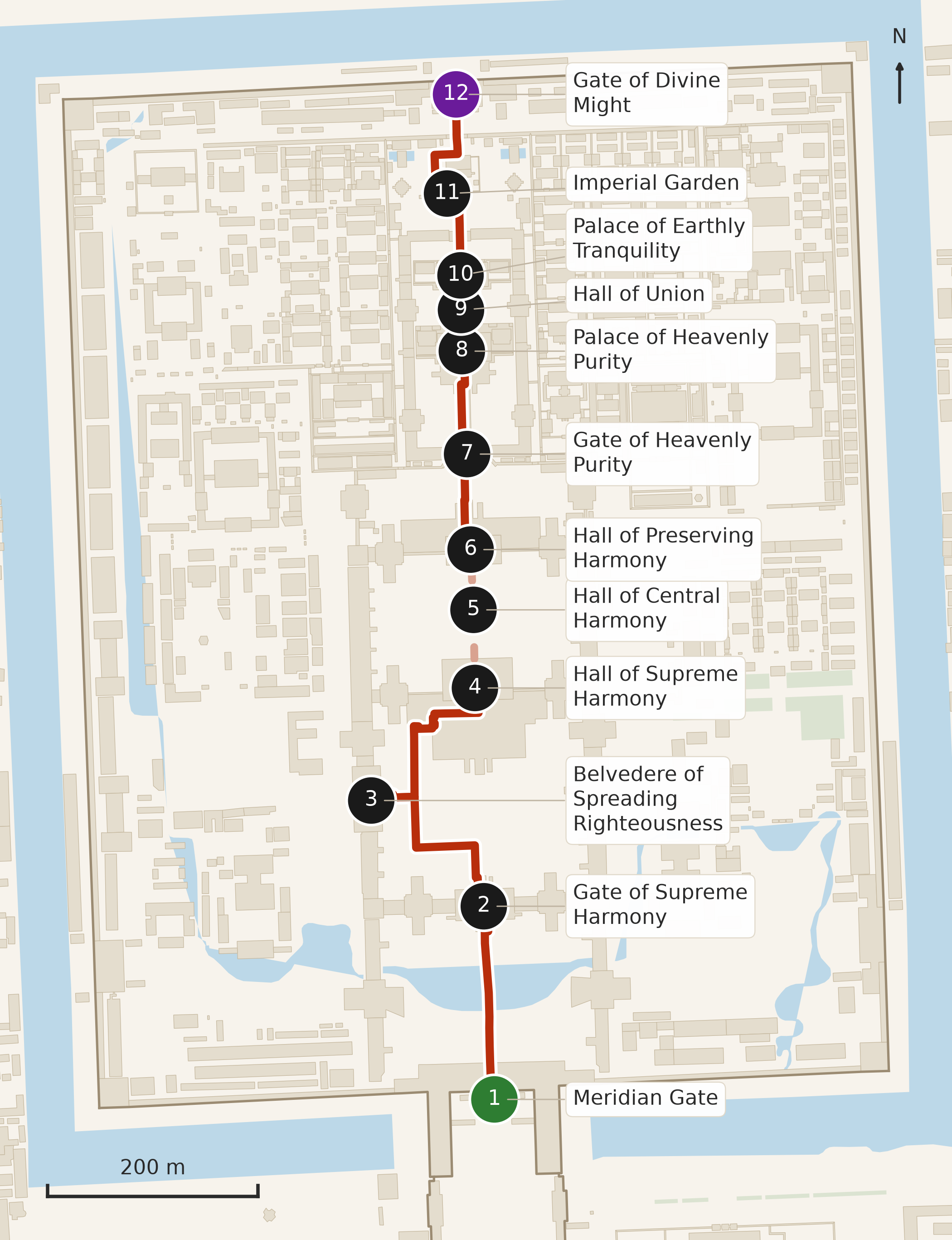
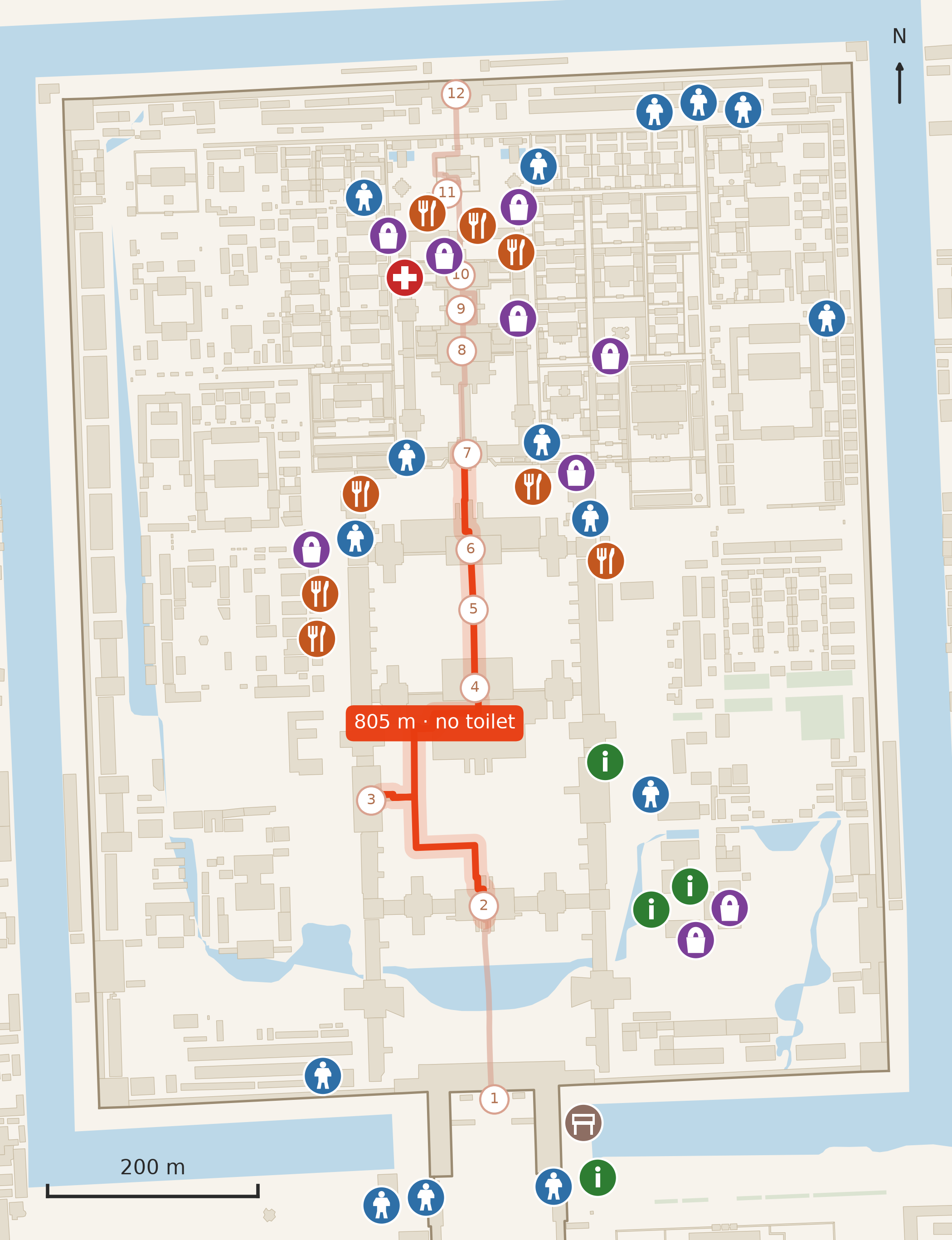
The Forbidden City is the Ming and Qing imperial palace at the centre of Beijing. The classic visit walks the central axis from south to north — twelve stops, about 1,417 metres, two and a half to three hours. Tickets are online-only and sell out.
When to go
Closed every Monday except public holidays. Doors open 8:30 year-round, but last entry is 16:00 in peak season and 15:30 from November — arrive in the morning or you will be walking the inner court against the clock.
- First half of April and first half of November are the two best windows — mild, clear, and the light on the marble is low enough to read the carving.
Tickets
60 RMB in peak season, 40 RMB from November, online only. Tickets go on sale seven days ahead at 20:00 Beijing time and there are no same-day sales — if you have not booked, you are not getting in today.
With a foreign passport
A passport is an accepted booking document. Book under the one you will actually carry — entry is name-checked against that exact document and there is no paper ticket to collect.
| Channel | Works with a foreign passport | When | What actually happens |
|---|---|---|---|
| Forbidden City official booking site (the Palace Museum) | yes | 7 days ahead, 20:00 Beijing time | The booking page is Chinese-first; browser translation works. Set the document type to "Passport / 护照". If the field rejects your number, stop — there is no on-site window that sells same-day tickets, so retry the next release rather than travelling on hope. |
| Ticket window at the gate | no | — | Same-day tickets are not sold at all. The windows handle refunds and assistance, not sales — turning up without a booking means not getting in. |
The route, with a story at every stop
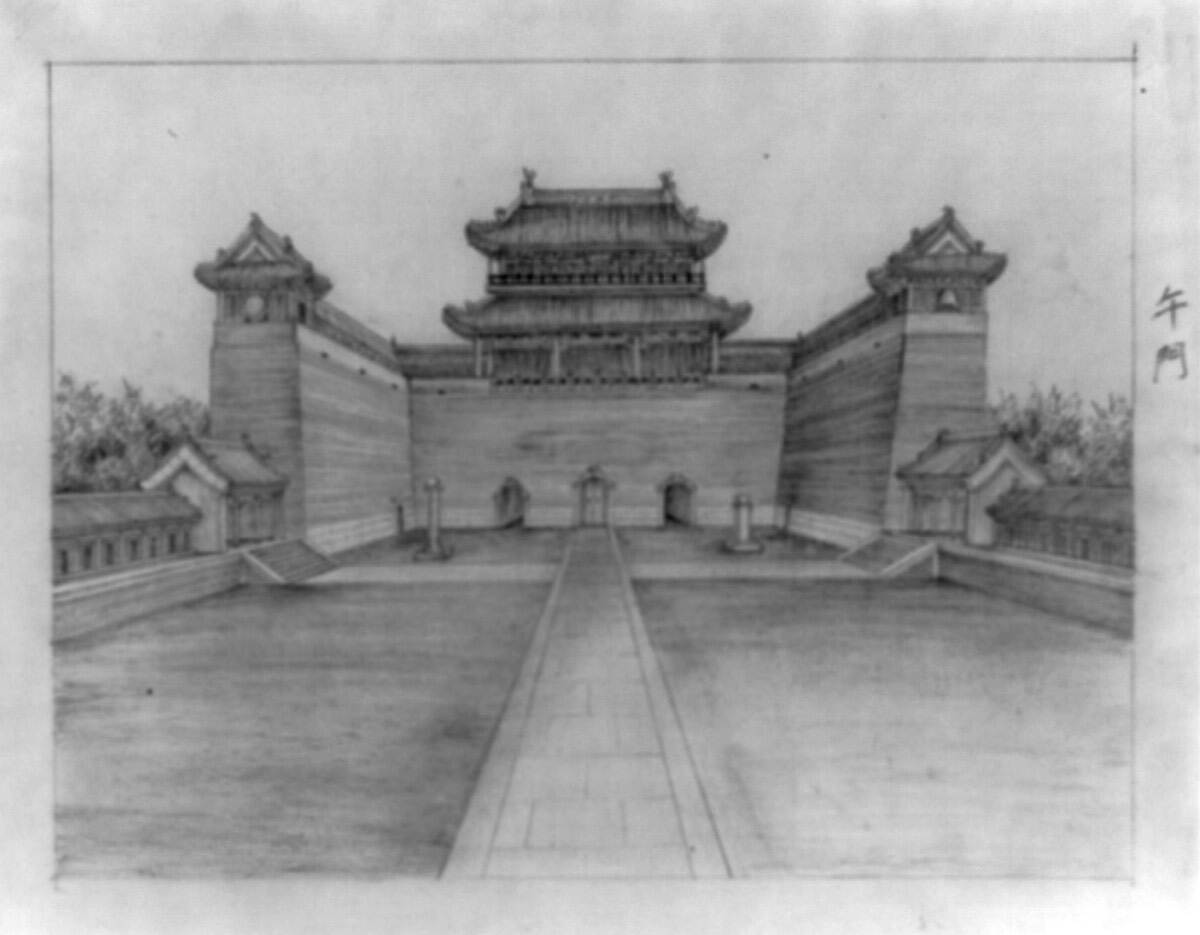
Meridian Gate
Read the story 4:51
Narrated with synthetic voices. Script written and source-checked by our editorial team.
Everyone enters here, and almost everyone walks straight through. Stop under the arch and look up: five openings, not three. The two you cannot see from the front were the point — this gate was built to sort people by rank before they ever reached the emperor.
The building
Sources for this stop: s_7e6a2080 · s_313ba49d — documented
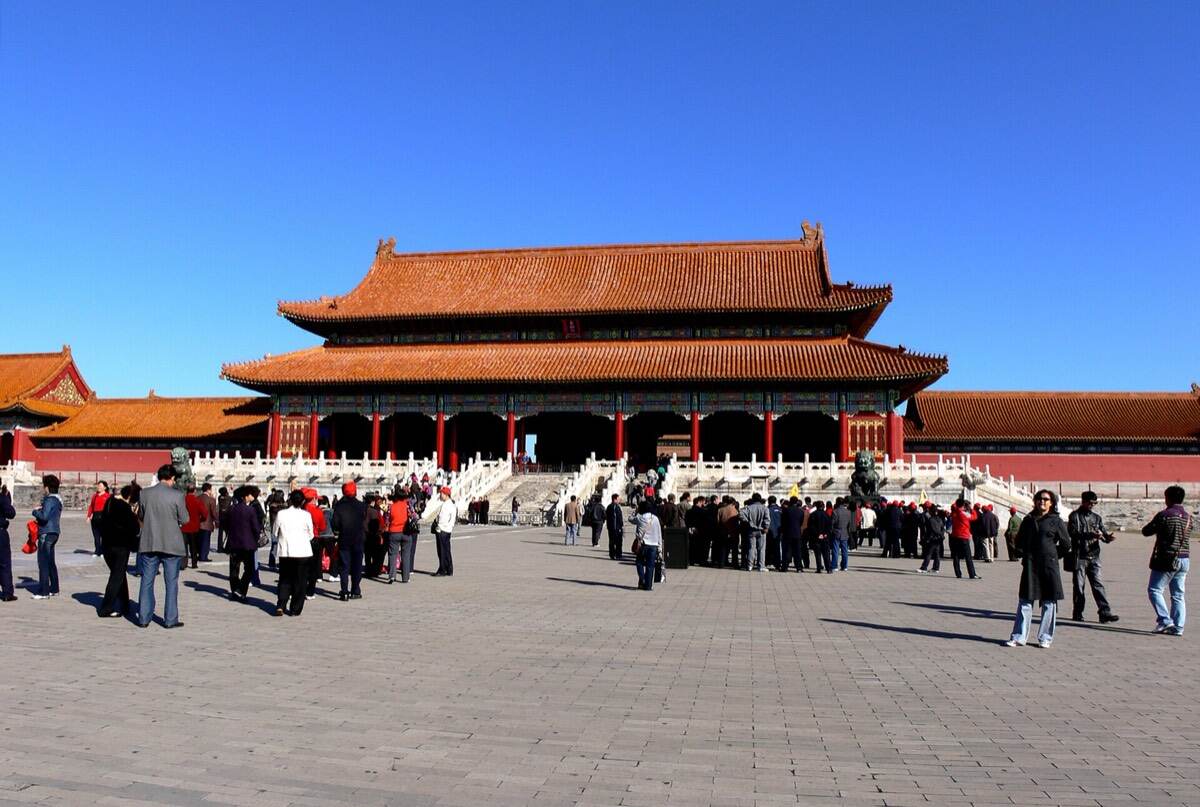
Gate of Supreme Harmony
Read the story 5:39
Narrated with synthetic voices. Script written and source-checked by our editorial team.
The largest gate inside the walls, and the one that burned. Look at the bronze lions and the five marble bridges in front of it — those are Ming. The gate behind them is not: it went up in flames in 1888 and was rebuilt the next year, in a hurry, for a wedding.
The building
Sources for this stop: s_160d385f · s_313ba49d · s_313ba49d · s_f5f58869 — documented
Belvedere of Spreading Righteousness
Read the story 2:21
Narrated with synthetic voices. Script written and source-checked by our editorial team.
Most people walk past this two-storey pavilion without a glance. It is a deliberate piece of restraint: built to exactly seven-tenths the height of the Hall of Supreme Harmony, high enough not to look trivial, low enough never to compete.
The building
Sources for this stop: s_d30dbc5b · s_9d719a66 — documented
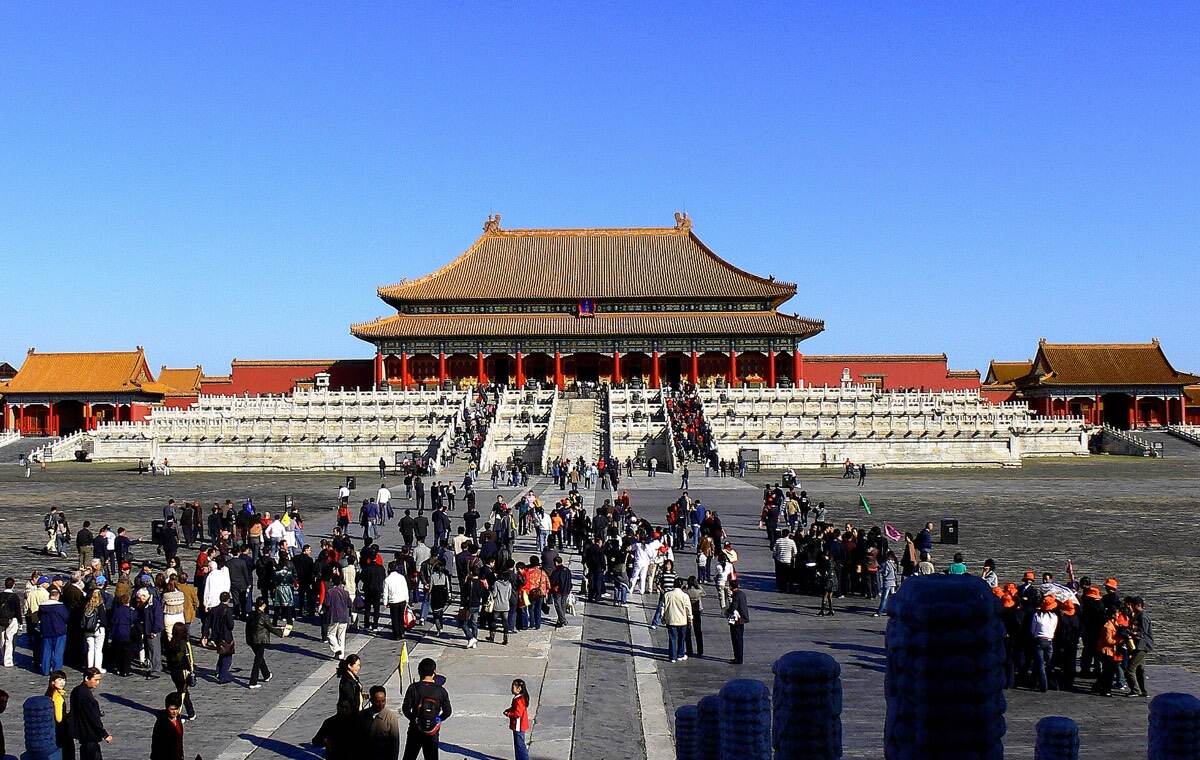
Hall of Supreme Harmony
Read the story 5:50
Narrated with synthetic voices. Script written and source-checked by our editorial team.
The largest wooden hall in the complex, and the emperor used it perhaps a dozen times a year. Everything you can see was sized to be looked at from where you are standing now — outside, below, at a distance. Almost nobody was ever admitted inside.
The building
Sources for this stop: s_e288f2ea · s_fbaa1e8f — documented
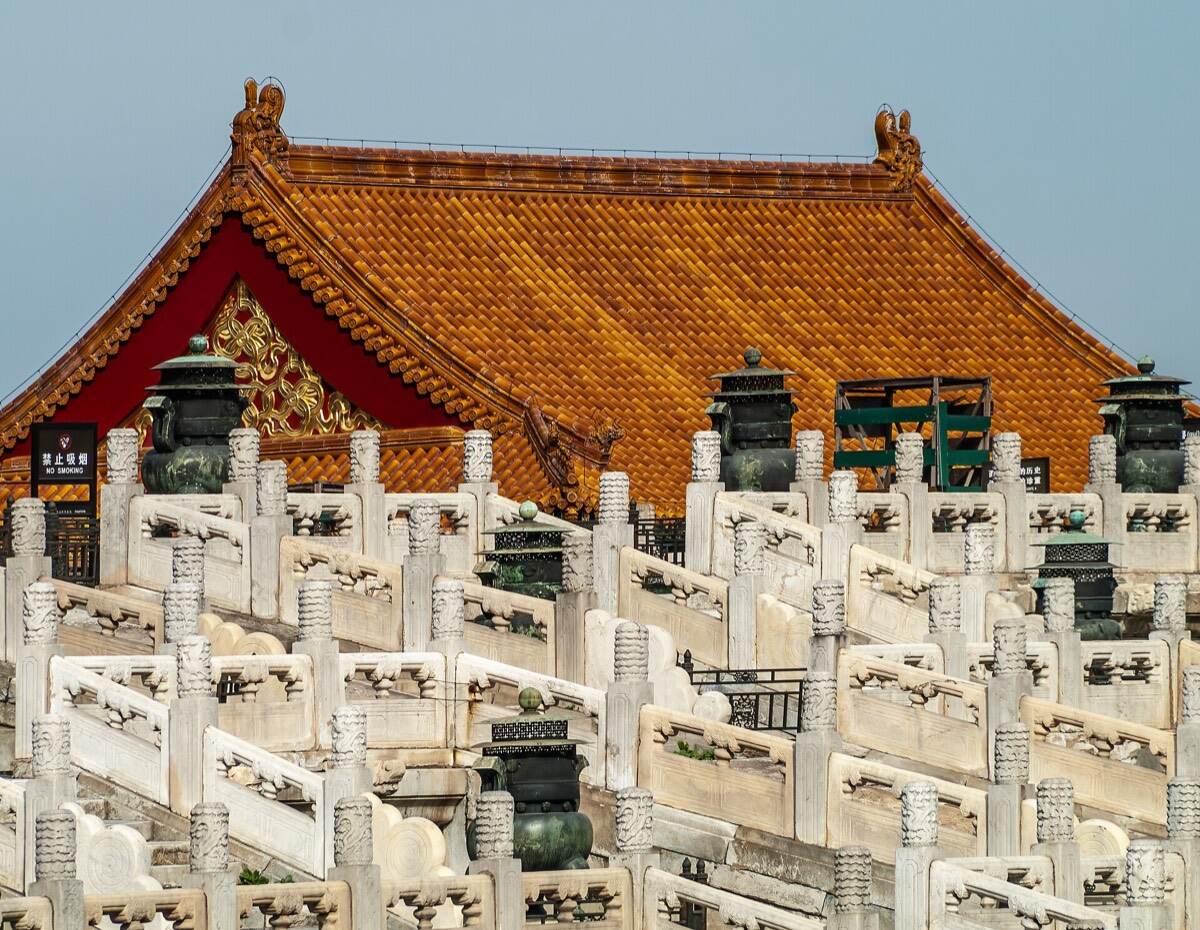
Hall of Central Harmony
Read the story 2:29
Narrated with synthetic voices. Script written and source-checked by our editorial team.
A square hall between the two big ones, easy to walk past. It was the waiting room — where the emperor rested before a ceremony and checked the text he was about to read out. Its name comes from a line in the Book of Rites.
The building
Sources for this stop: s_2056bf40 · s_0b3f18f7 — documented
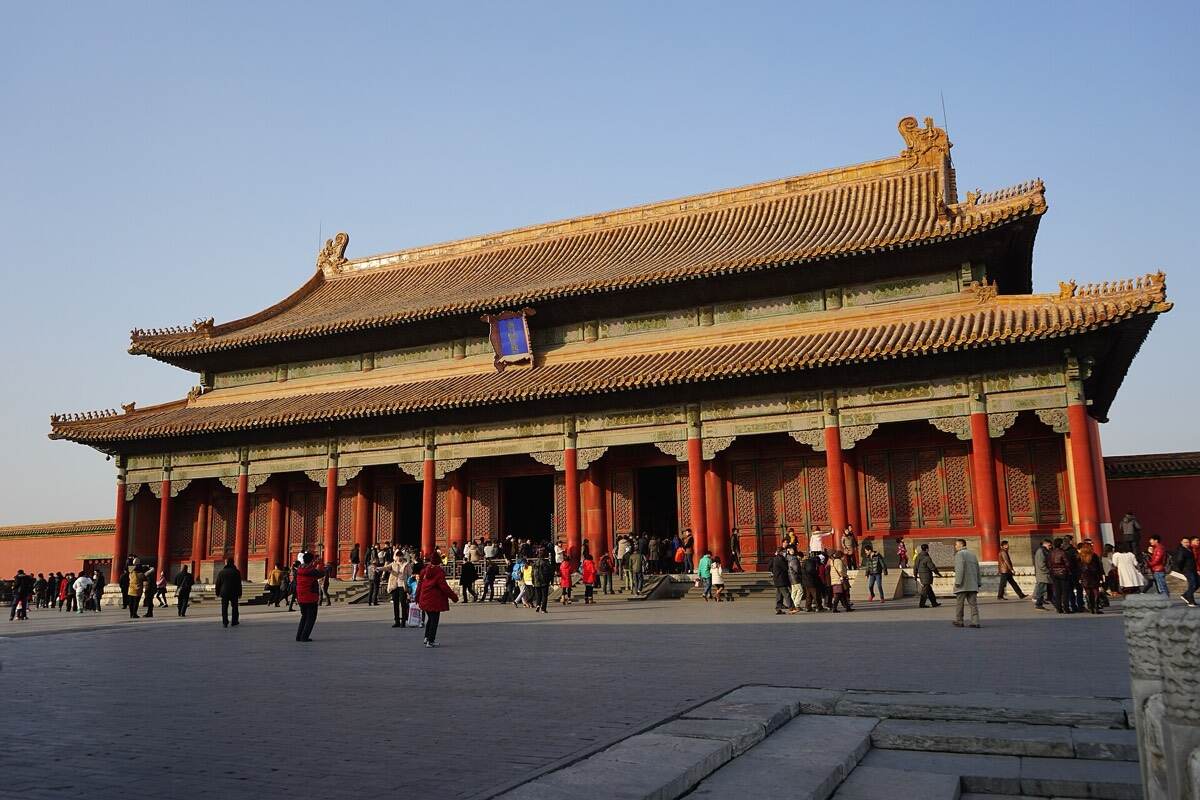
Hall of Preserving Harmony
Read the story 5:23
Narrated with synthetic voices. Script written and source-checked by our editorial team.
The third of the great halls, and the one where things actually happened. Two Qing emperors lived here while their own palace was being repaired, and from 1789 the final imperial examination was held in this room.
The building
Sources for this stop: s_efe2fb40 · s_e288f2ea — documented
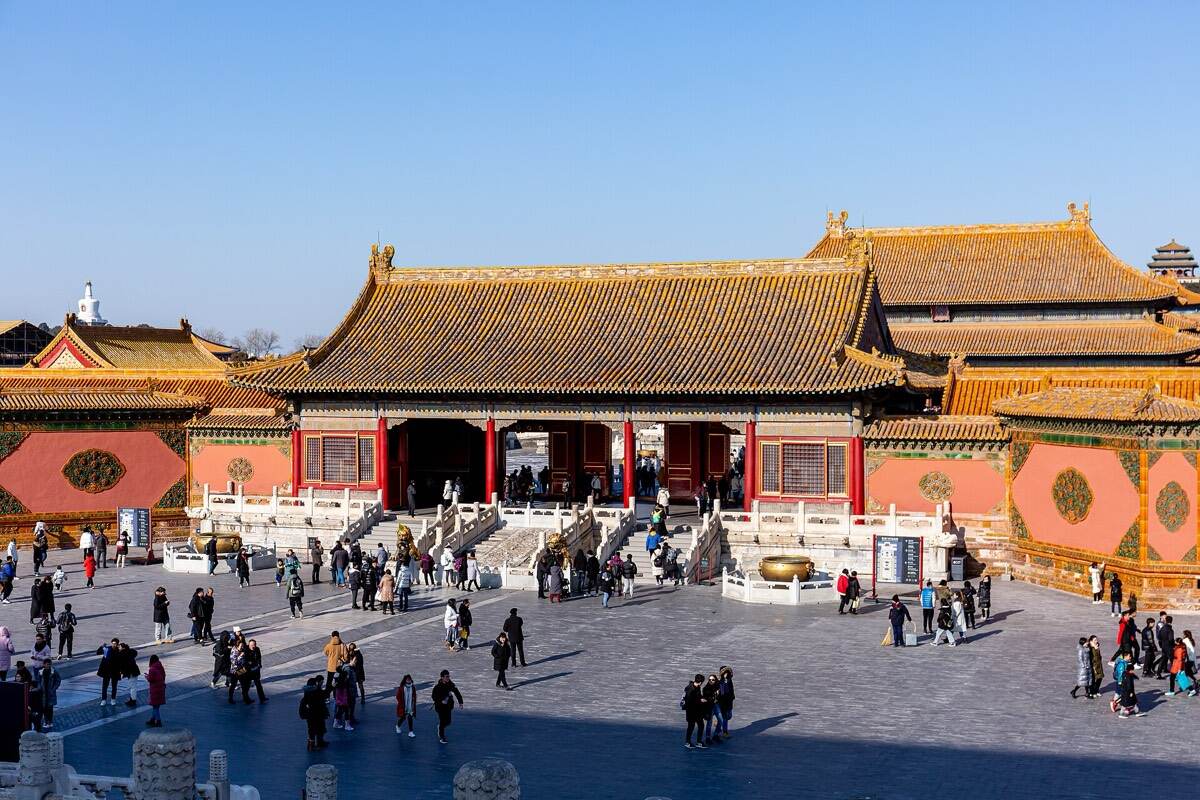
Gate of Heavenly Purity
Read the story 2:27
Narrated with synthetic voices. Script written and source-checked by our editorial team.
The line between the public palace and the private one. Everything south of this gate was the state; everything north was the household. And for much of the Qing dynasty, the emperor conducted government standing right here, outdoors.
The building
Sources for this stop: s_1d9e29c0 · s_0b3f18f7 — documented
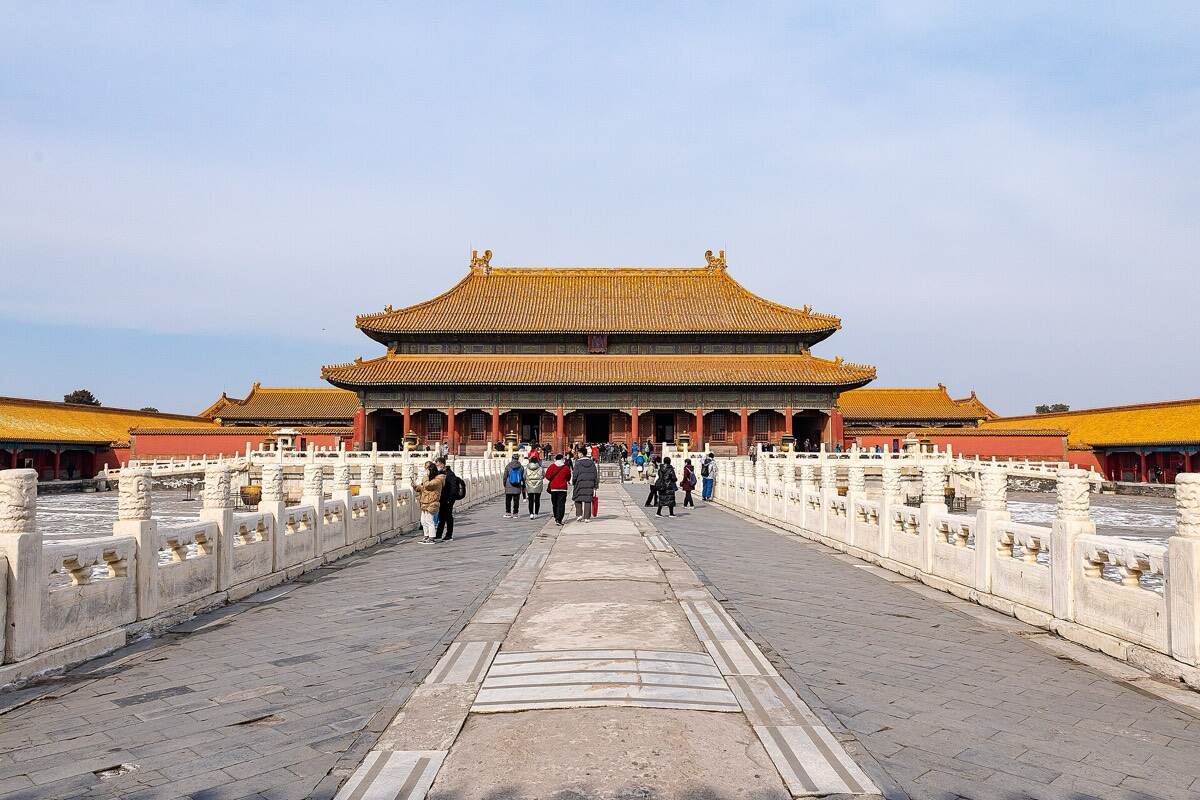
Palace of Heavenly Purity
Read the story 5:14
Narrated with synthetic voices. Script written and source-checked by our editorial team.
Fourteen Ming emperors slept in this building. Above the throne hangs a plaque reading "upright and honourable" — and behind that plaque, for most of the Qing dynasty, was hidden the name of the next emperor.
The building
Sources for this stop: s_52a5766d · s_afed00e6 — documented
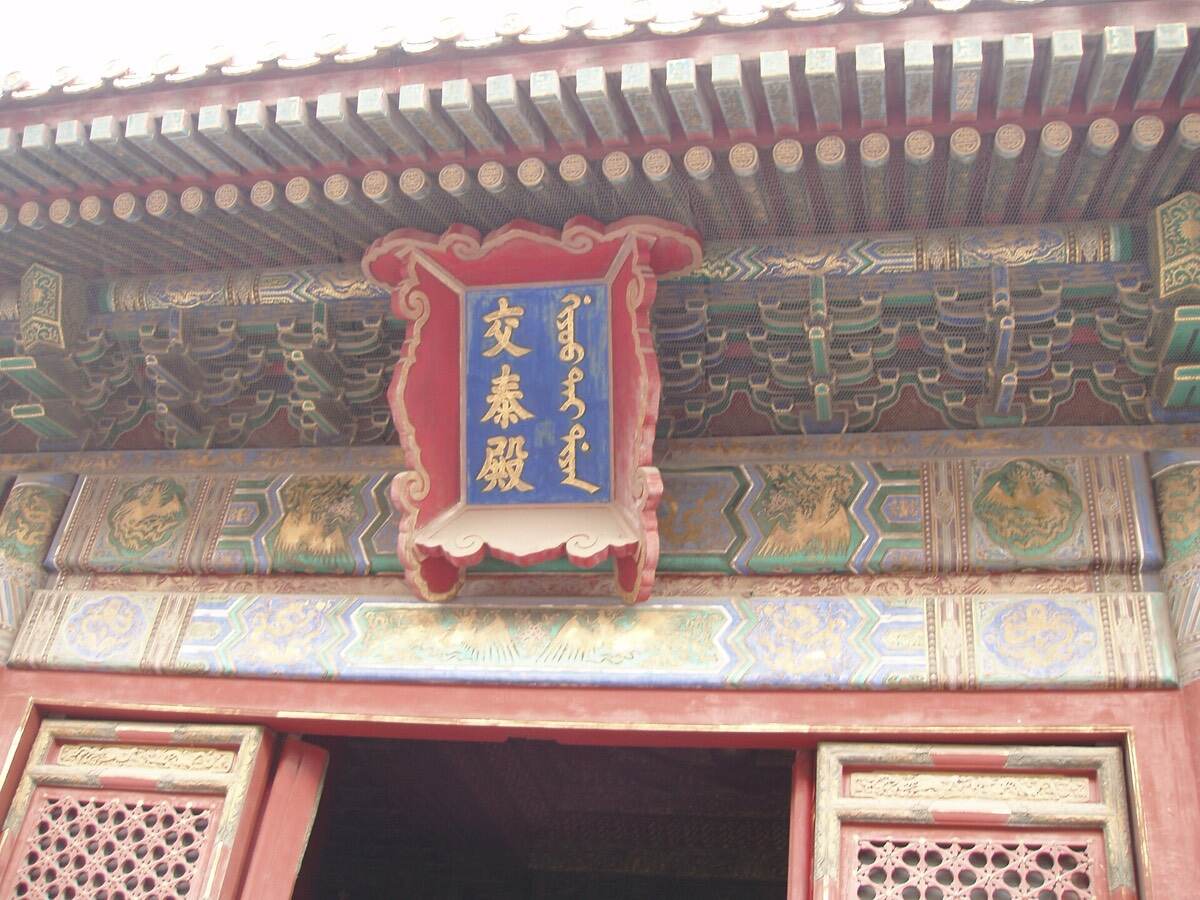
Hall of Union
Read the story 2:35
Narrated with synthetic voices. Script written and source-checked by our editorial team.
A small square hall between the emperor's palace and the empress's. It held the twenty-five imperial seals, a water clock, a chiming clock that set the time for the whole palace — and an iron tablet forbidding the inner court from meddling in government.
The building
Sources for this stop: s_bf32ae97 · s_05be0b42 — documented
Palace of Earthly Tranquility
Read the story 4:45
Narrated with synthetic voices. Script written and source-checked by our editorial team.
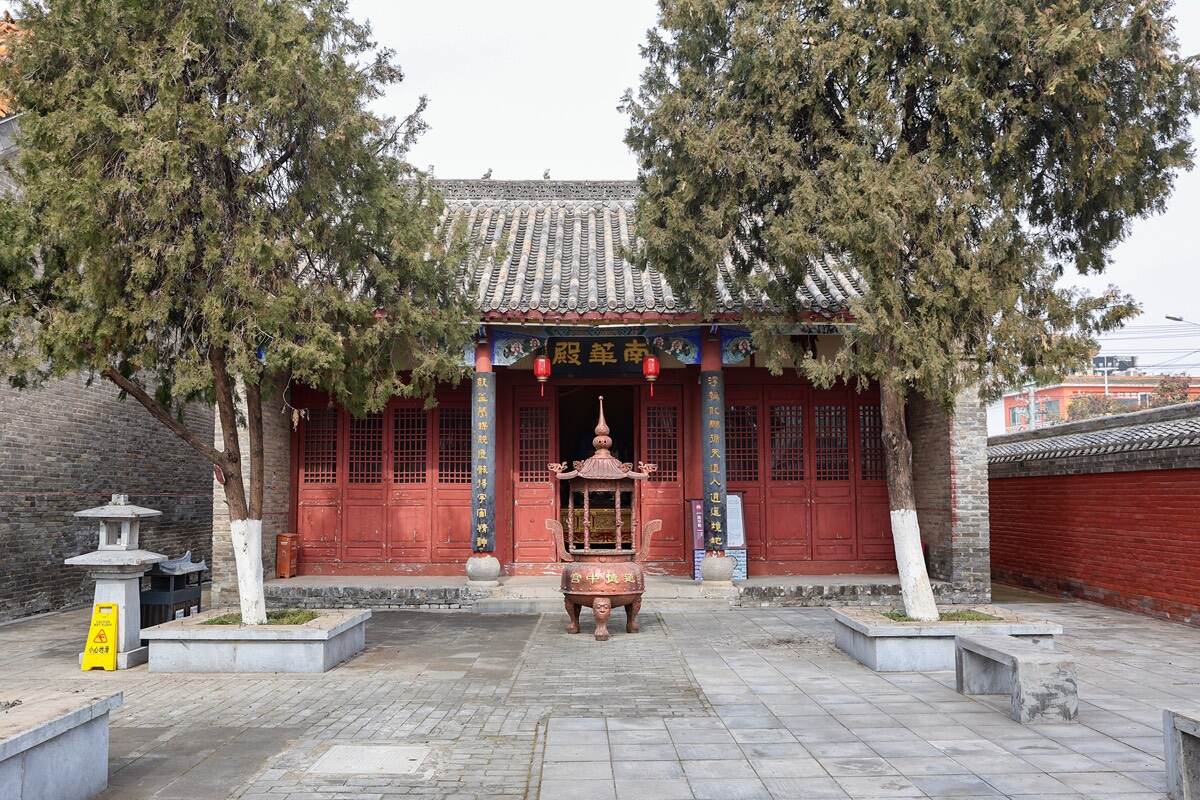
The empress's palace under the Ming. Then the Qing rebuilt the interior on the model of a hall in Shenyang, moved the door off-centre, and installed cooking stoves — and it became the main site of shamanic sacrifice inside the Forbidden City.
The building
Sources for this stop: s_6fbc05bf · s_844de9c2 — documented
Imperial Garden
Read the story 2:33
Narrated with synthetic voices. Script written and source-checked by our editorial team.
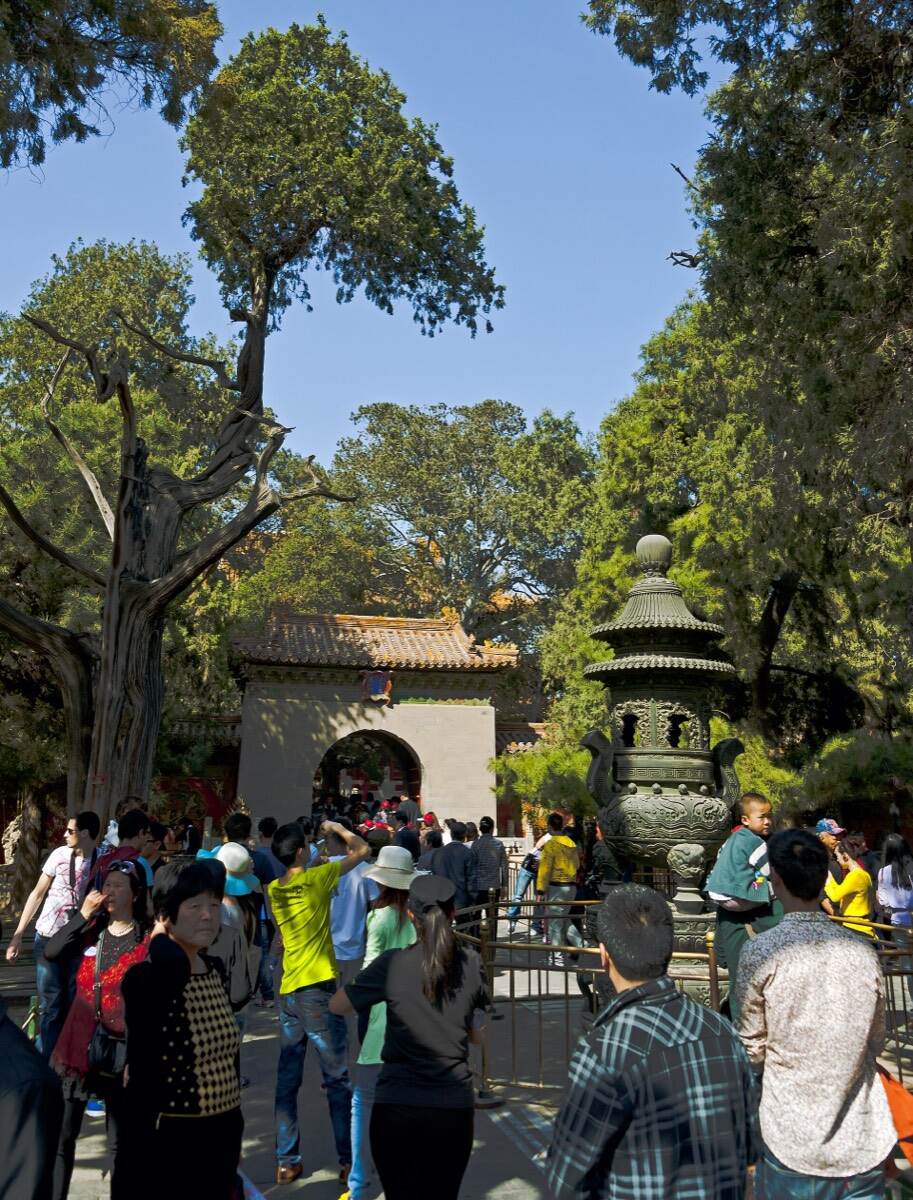
After eight hundred metres of axis, the garden. Stop at the small well pavilion west of the Gate of Heavenly Unity: four columns, a square plan that turns into an octagon overhead, and a roof left open to the sky on purpose.
The building
Sources for this stop: s_37a6a116 · s_e288f2ea — documented
Gate of Divine Might
Read the story 4:43
Narrated with synthetic voices. Script written and source-checked by our editorial team.
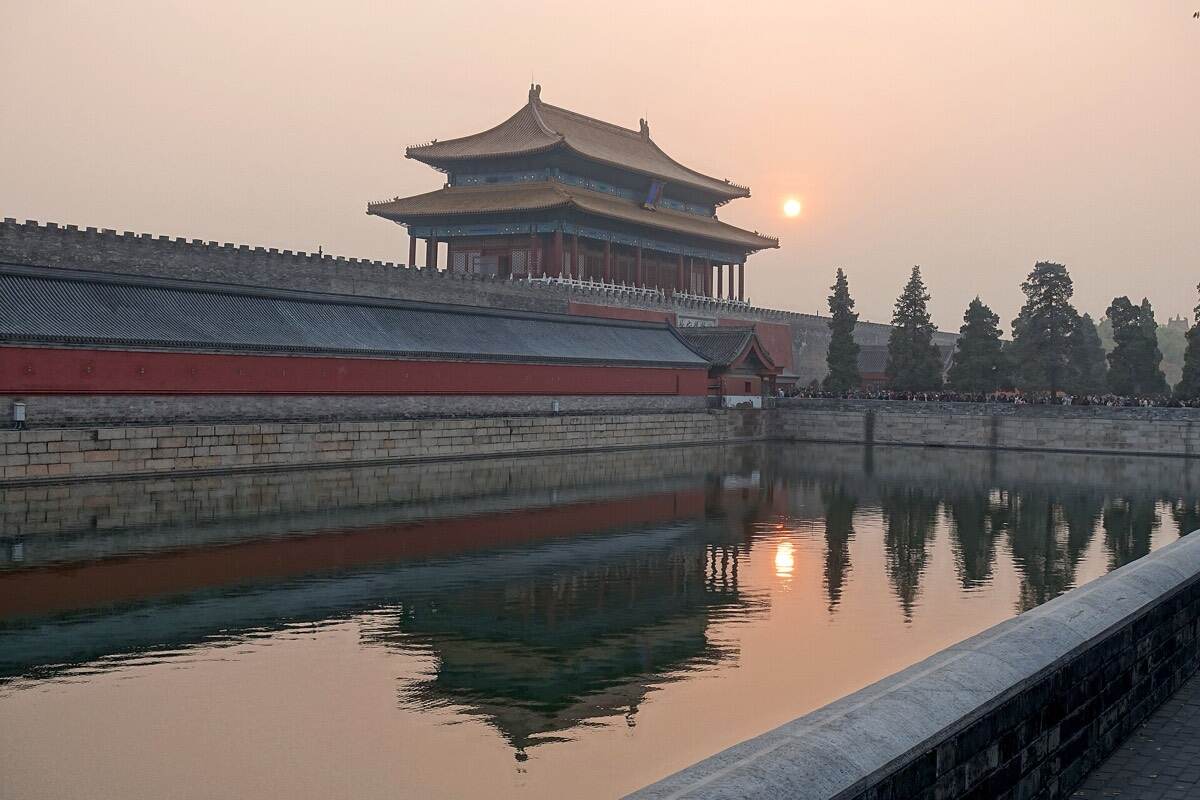
The back door, and your way out. It was called the Gate of the Dark Warrior until the Kangxi Emperor's personal name made that character unusable. For centuries a bell rang here 108 times at dusk — unless the emperor was at home.
The building
Sources for this stop: s_6db62765 · s_313ba49d · s_0b3f18f7 — documented
Toilets, shade and somewhere to sit
Getting out
Two exits: the Gate of Divine Might at the north and the East Prosperity Gate on the east. The north gate has a bus stop 129 metres away but the nearest metro is 1,230 metres; the east gate is 837 metres from Jinyu Hutong station. Decide before you reach the garden.
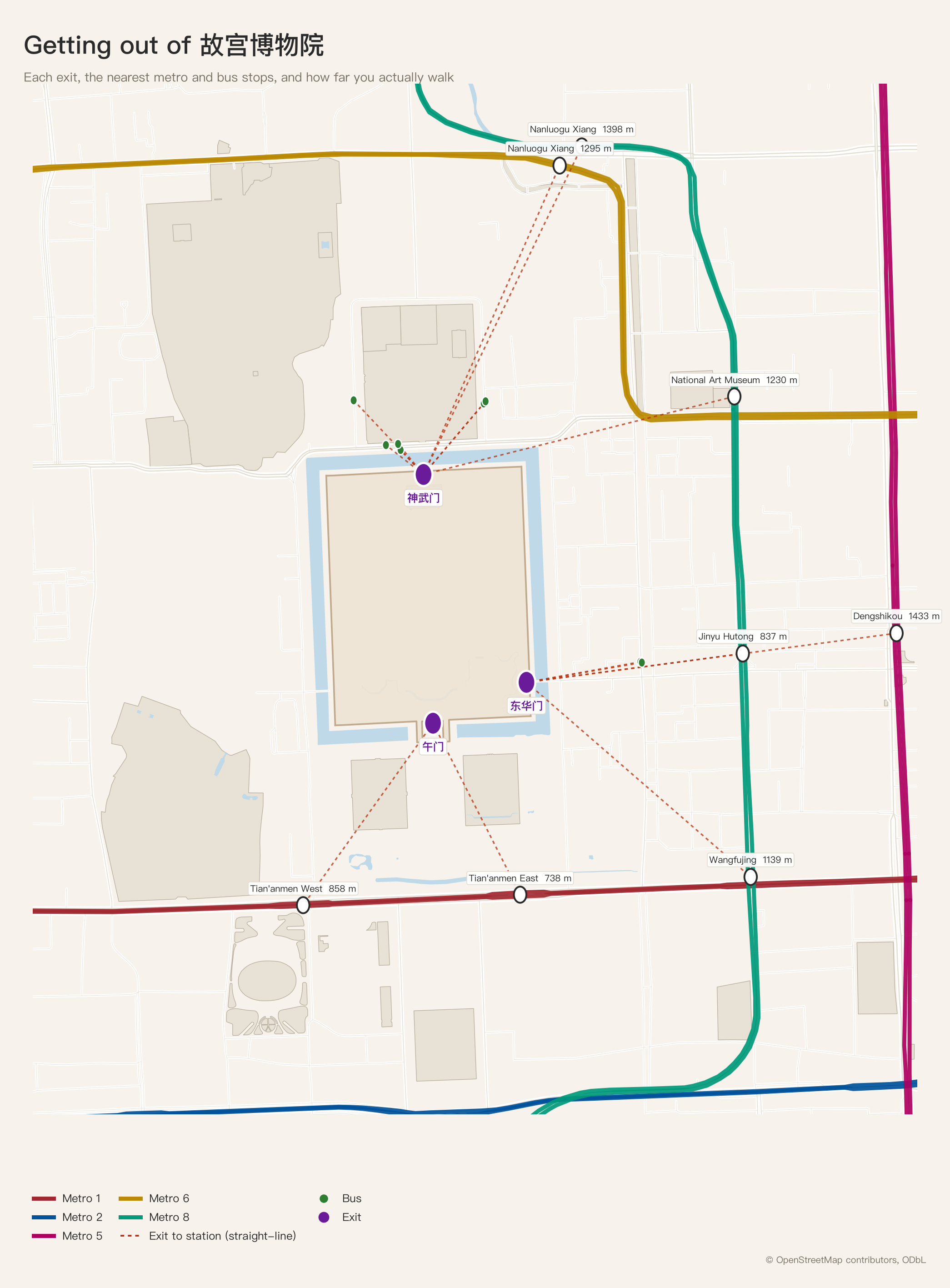
- Metro
- Tian'anmen East · 738 mTian'anmen West · 858 m
- Bus
- 西华门 · 501 m西华门 · 557 m
- Metro
- National Art Museum · 1.2 kmNanluogu Xiang · 1.3 kmNanluogu Xiang · 1.4 km
- Bus
- 神武门 · 129 m神武门 · 153 m神武门 · 183 m
- Metro
- Jinyu Hutong · 837 mWangfujing · 1.1 kmDengshikou · 1.4 km
- Bus
- 锡拉胡同 · 444 m锡拉胡同 · 449 m东安门 · 464 m
Where the photographs are
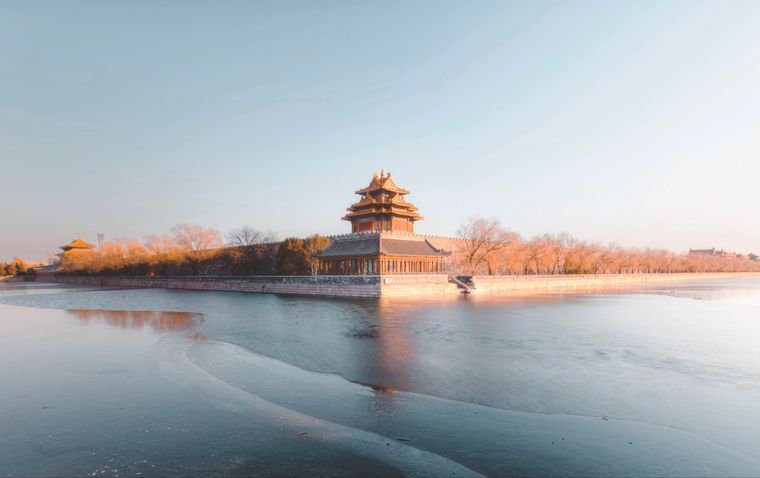
North-west corner tower, reflected in the moat
- Where to stand
- Outside the walls at the north-west angle, on the far side of the moat
- Facing
- South-east, from the far bank of the moat towards the tower
- Best time
- Late afternoon; the water is stillest before the wind picks up.
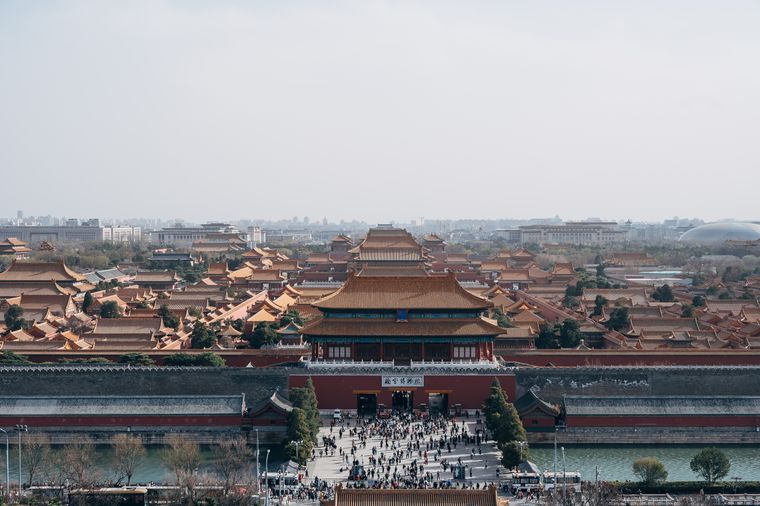
Jingshan summit, looking south over the whole complex
- Where to stand
- The pavilion at the top of Jingshan, directly north across the road
- Facing
- Due south, down the central axis
- Best time
- Just before closing, when the roofs are lit from the west.
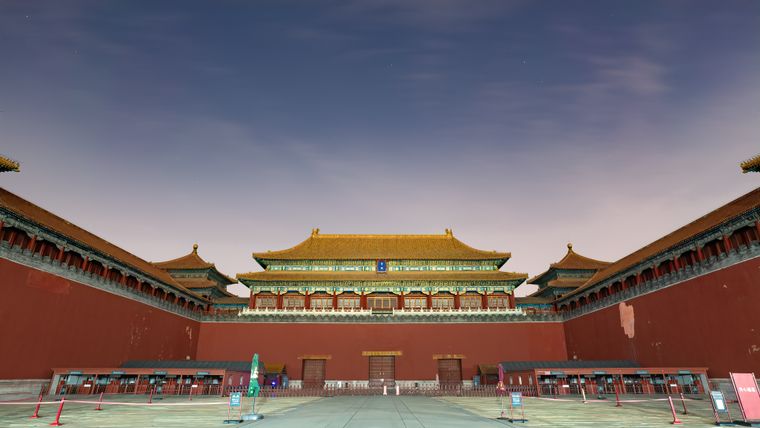
Inside the U of the Meridian Gate
- Where to stand
- The middle of the courtyard formed by the gate's own arms
- Facing
- North, into the U of the gate
- Best time
- Early, before the entry crowd fills the courtyard.
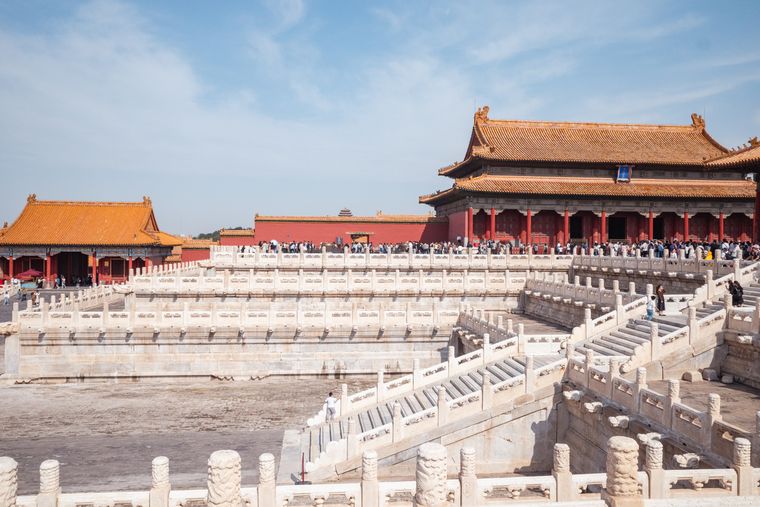
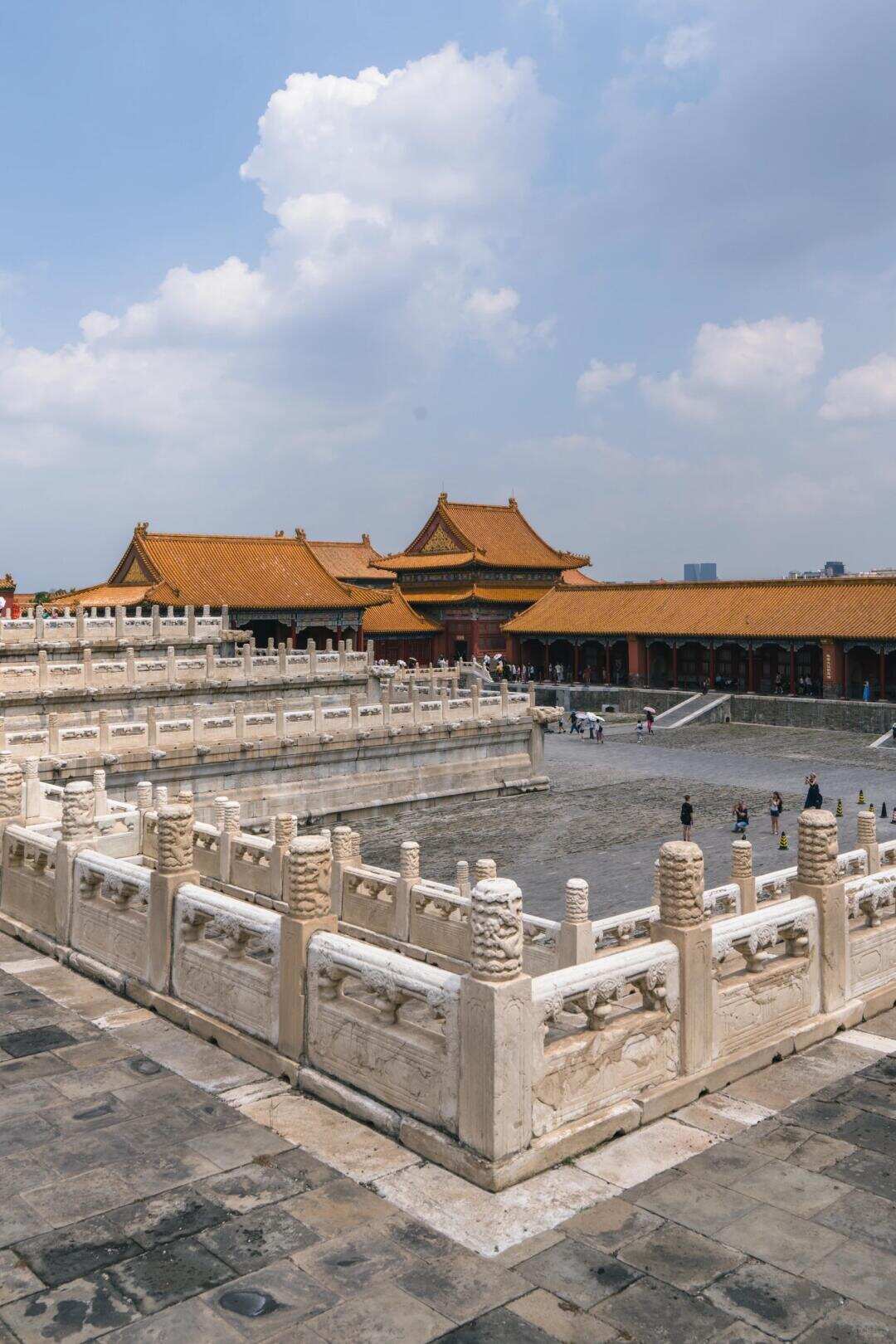
The marble terrace of the Hall of Supreme Harmony
- Where to stand
- Either end of the marble terrace, by the sundial or the grain measure
- Facing
- North towards the hall for the building, south for the square below
- Best time
- Morning light, or during a summer downpour for the drains.
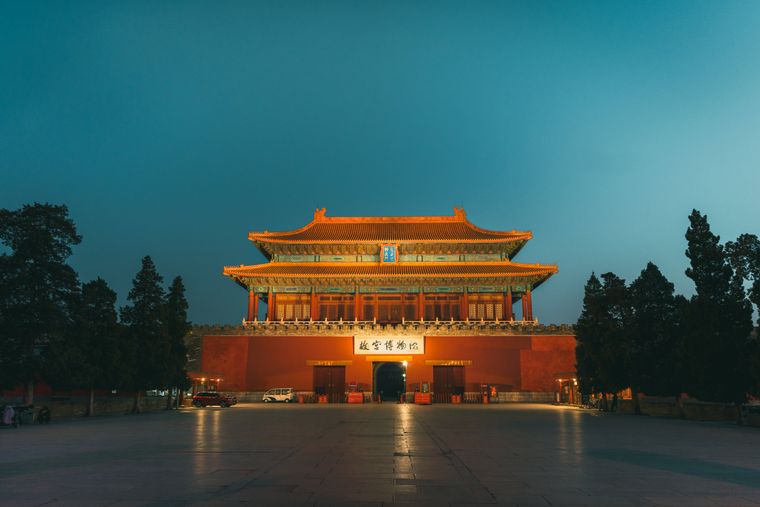
The Gate of Divine Might from the road outside
- Where to stand
- Across the road on the north side, after you have exited
- Facing
- South, from the north side of the road
- Best time
- After you exit — you cannot re-enter on the same ticket.
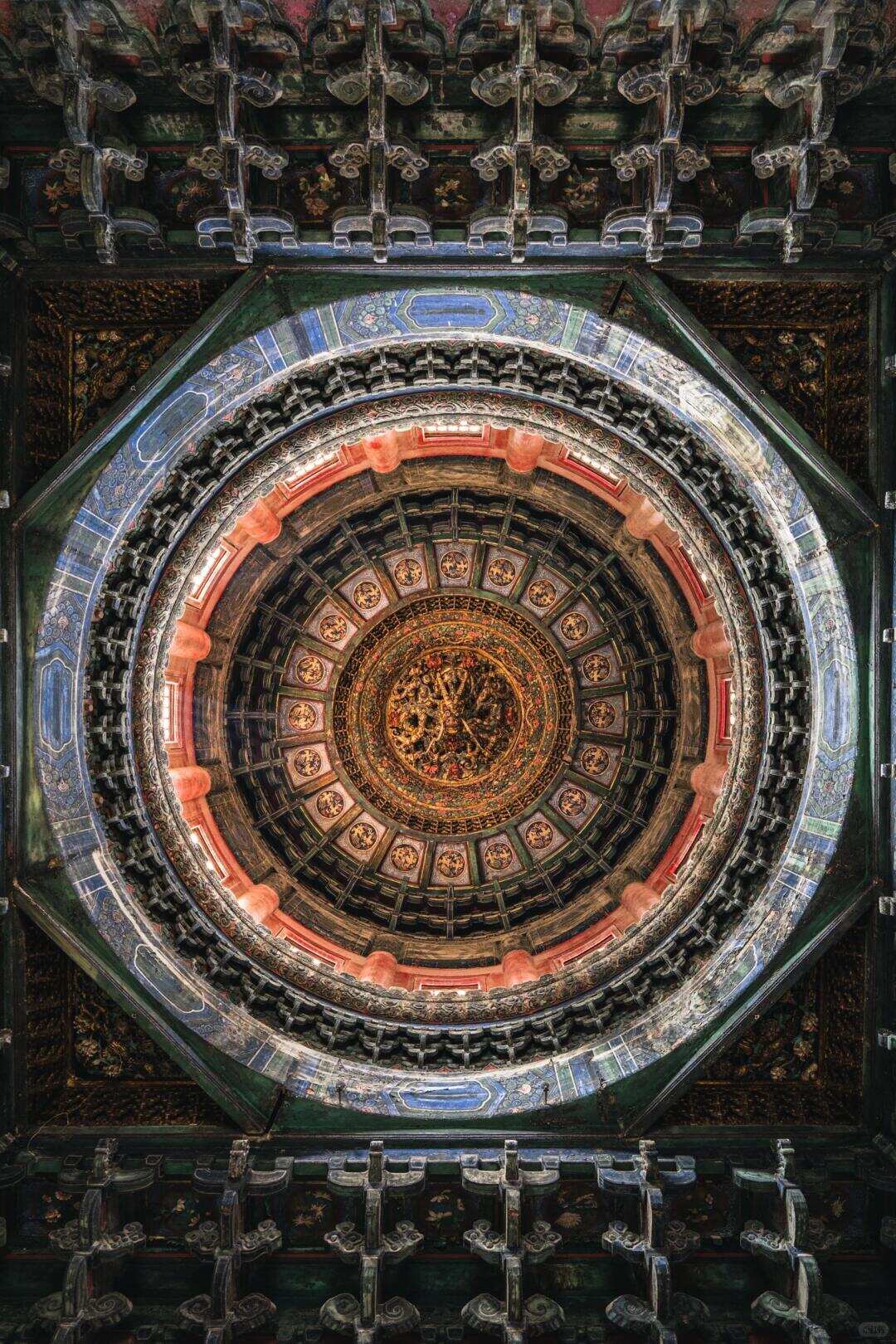
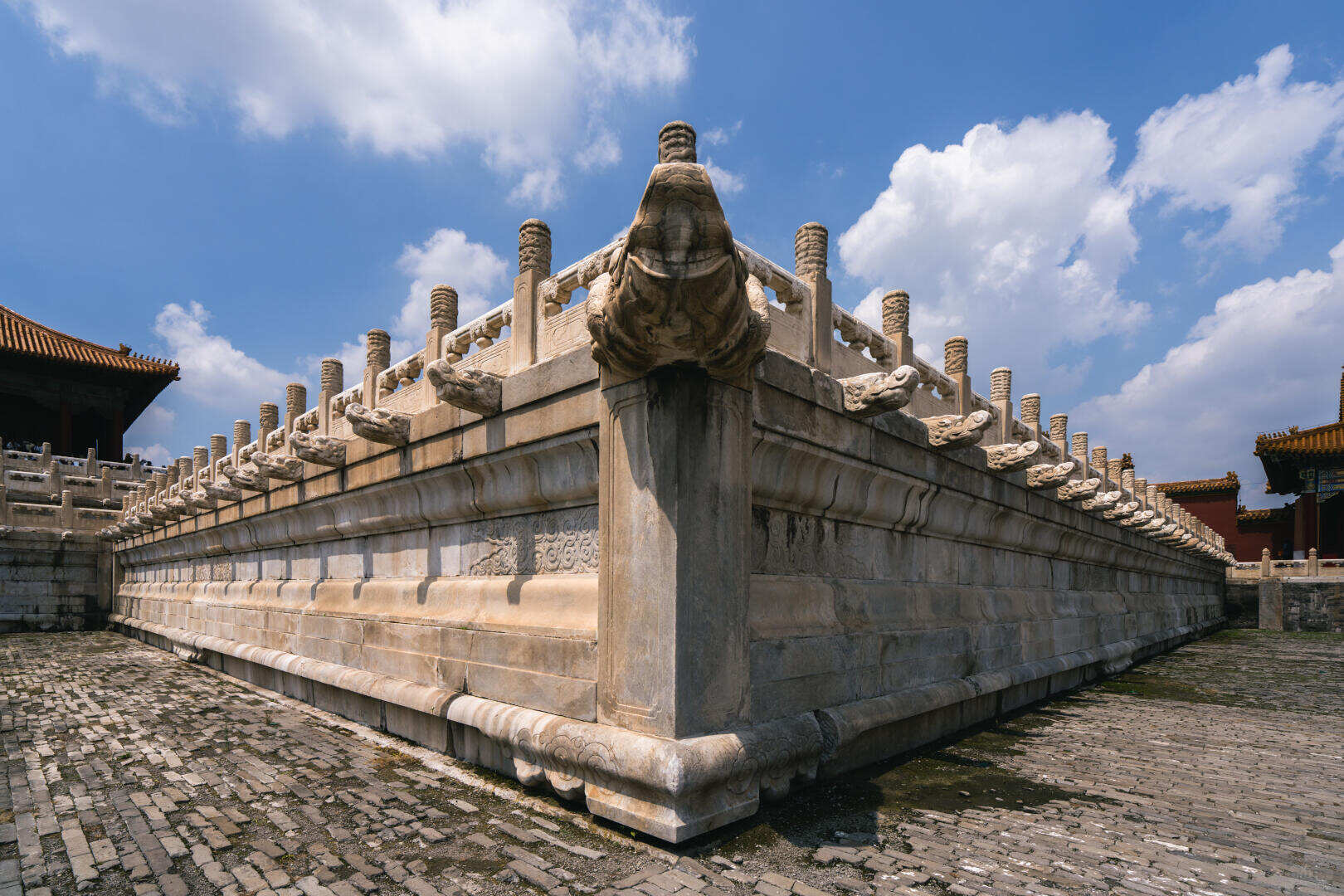
Want someone who knows the place to show you round?
Tell us your dates and how you like to travel, and we will match you with a licensed guide — several languages to choose from, all of them people who know the ground: they will steer you clear of the crowds and take you straight to what matters. Need a car? Want the itinerary tailored? We will sort that out too.
Asking costs nothing — talk to us first, decide later.
Start planningWhat we checked, and how
Show all sources (21)
- official 故宫博物院 · 在线订票(购票与实名规则) retrieved 2026-08-24
- reference Wikipedia · Hall of Union retrieved 2026-08-24
- own_measurement OSM 步道寻路:故宫中轴线路线与设施间隔 retrieved 2026-08-24
- reference Wikipedia · Hall of Supreme Harmony retrieved 2026-08-24
- reference Wikipedia · Forbidden City retrieved 2026-08-24
- official 故宫博物院 · 太和门 retrieved 2026-08-24
- official 故宫博物院 · 乾清门 retrieved 2026-08-24
- official 故宫博物院 · 中和殿 retrieved 2026-08-24
- official 故宫博物院 · 参观(开放时间、票价、入口出口) retrieved 2026-08-24
- official 故宫博物院 · 御花园西井亭 retrieved 2026-08-24
- official 故宫博物院 · 乾清宫 retrieved 2026-08-24
- official 故宫博物院 · 神武门 retrieved 2026-08-24
- official 故宫博物院 · 坤宁宫 retrieved 2026-08-24
- official 故宫博物院 · 午门 retrieved 2026-08-24
- reference Wikipedia · Palace of Earthly Tranquility retrieved 2026-08-24
- official 故宫博物院 · 体仁阁 retrieved 2026-08-24
- reference Wikipedia · Palace of Heavenly Purity retrieved 2026-08-24
- official 故宫博物院 · 交泰殿 retrieved 2026-08-24
- official 故宫博物院 · 弘义阁 retrieved 2026-08-24
- official 故宫博物院 · 太和殿 retrieved 2026-08-24
- official 故宫博物院 · 保和殿 retrieved 2026-08-24
Image and data credits
- Cover — Pixelflake / Wikimedia Commons · CC BY-SA 3.0
- Stop 1 — I︠U︡din, G. V. (Gennadiĭ Vasilʹevich), 1 / Wikimedia Commons · Public domain
- Stop 2 — Gisling / Wikimedia Commons · CC BY 3.0
- Stop 4 — Gisling / Wikimedia Commons · CC BY 3.0
- Stop 5 — Ermell / Wikimedia Commons · CC BY-SA 4.0
- Stop 6 — Jan Bockaert / Wikimedia Commons · CC BY-SA 2.0
- Stop 7 — Balon Greyjoy / Wikimedia Commons · CC0
- Stop 8 — N509FZ / Wikimedia Commons · CC BY-SA 4.0
- Stop 9 — Dquai / Wikimedia Commons · CC BY-SA 4.0
- Stop 10 — Windmemories / Wikimedia Commons · CC BY-SA 4.0
- Stop 11 — Daniel Case / Wikimedia Commons · CC BY-SA 3.0
- Stop 12 — Luka Peternel / Wikimedia Commons · CC BY-SA 4.0
- North-west corner tower, reflected in the moat — Cencial _ / Pexels
- Jingshan summit, looking south over the whole complex — 征宇 郑 / Pexels
- Inside the U of the Meridian Gate — JackerKun / Pexels
- The marble terrace of the Hall of Supreme Harmony — Yan Zhang / Pexels
- The Gate of Divine Might from the road outside — zhang kaiyv / Pexels